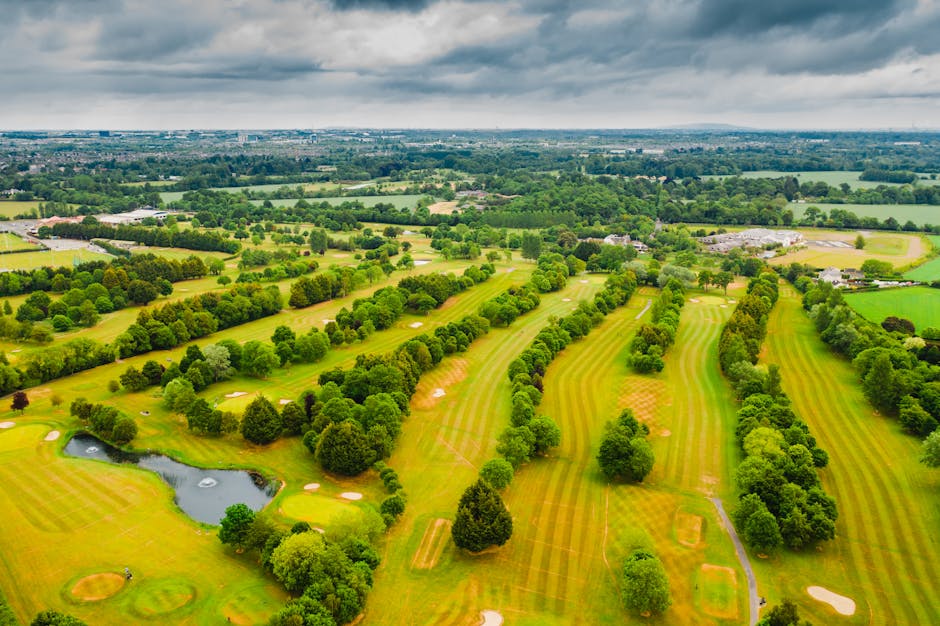
Southeast Ireland is emerging as one of the most rewarding golf destinations in the country, offering a compelling blend of championship courses, dramatic coastal scenery, and authentic Irish hospitality. Spanning three counties—Wicklow, Wexford, and Kilkenny—this region delivers everything from world-ranked links courses to parkland masterpieces, all within an easy hour’s drive from Dublin. Whether you’re a seasoned golfer seeking championship challenges or a leisure player looking to combine golf with scenic exploration, southeast Ireland’s golf courses provide the perfect foundation for an unforgettable golfing holiday.
Why Southeast Ireland Is a Premier Golf Destination
The southeast region punches well above its weight in Irish golf circles. Home to multiple internationally recognized courses, this area remains less crowded than the more famous west coast links, making it ideal for visitors seeking authentic experiences without excessive queuing or premium pricing. Located just 35-60 minutes south of Dublin, the region offers exceptional accessibility alongside remarkable variety. You’ll discover Ireland’s only true links course in the southeast at Rosslare, multiple championship parkland courses designed by world-renowned architects, and hidden gems that challenge even experienced travelers to Ireland’s golf scene.
The three-county region encompasses diverse landscapes: the Wicklow Mountains provide a dramatic backdrop for numerous courses, Wexford’s coastal position creates challenging links conditions, and Kilkenny’s inland valleys offer verdant parkland settings. This geographical diversity ensures that visitors can experience multiple course styles within a compact area, making it possible to design varied itineraries that showcase Irish golf’s full spectrum.
County Wicklow: Championship Courses and Coastal Links
County Wicklow dominates southeast Ireland’s golf landscape, offering the highest concentration of quality courses in the region. Often called the “Garden of Ireland” for its natural beauty, Wicklow provides stunning backdrops for championship golf. The county stretches from the Irish Sea westward toward the Wicklow Mountains, creating varied terrain that architects have leveraged to create courses of genuine distinction.
Druids Glen Hotel & Golf Resort
Druids Glen stands as the marquee resort golf destination in southeast Ireland, earning its nickname as the “Augusta of Europe” through meticulous course design and comprehensive resort facilities. Located near Newtownmountkennedy, approximately 30-40 minutes south of Dublin, Druids Glen houses two championship courses on its 400-acre estate positioned dramatically between the Wicklow Mountains and the Irish Sea.
The flagship Druids Glen Course was designed by Pat Ruddy and Tom Craddock, opening in 1995 before undergoing extensive restoration completed in 2023. The championship layout now stretches to 7,222 yards at par-72, playing as a pure test of championship golf. The course weaves through carefully maintained parkland with strategic water features, mature specimen trees, and bunker complexes that demand precision from the tee. The resort’s 5-star Marriott Hotel provides luxury accommodation directly overlooking the courses, with facilities including a championship-standard practice range, spa, and multiple dining options.
Druids Heath, the second course, opened in 2003 under Pat Ruddy’s design and provides an excellent companion round. Playing at par-71, Druids Heath presents a different challenge through a mix of heathland, parkland, and links-like elements, providing 18 stimulating holes without the relentless difficulty of the flagship course. This two-course setup makes Druids Glen an ideal multi-day destination, allowing players to experience different design philosophies and challenge levels.
The European Club (Brittas Bay)
The European Club, located at Brittas Bay approximately 58 kilometers south of Dublin, represents one of the world’s most dramatic golf settings. Perched on towering cliffs overlooking the Irish Sea, this course offers visual spectacle matched by testing golf conditions. The course has been ranked as Ireland’s 4th best and maintains a position within the world’s top 100 courses, testament to its architectural significance and playing challenge.
The club underwent significant transition in 2025 when it was acquired and subsequently redesigned by celebrated course architect Kyle Phillips. With reopening scheduled for 2027, the redesigned European Club will present a refreshed interpretation of this iconic location, maintaining the dramatic clifftop setting while incorporating modern course management principles and updated playing conditions. Golfers who have experienced the original layout praise its unique position—few courses anywhere offer such a commanding coastal panorama combined with legitimate championship difficulty.
Powerscourt Golf Club
Powerscourt Golf Club occupies a remarkable setting on a 12th-century Anglo-Norman estate, combining historical significance with contemporary golf architecture. The club features two distinct courses reflecting different design philosophies and eras of course construction. The East Course opened in 1996 and comprises 18 holes that wind through the estate’s hilly landscape, creating elevation changes unusual for Irish parkland courses. Players encounter steep ascents and descents between tees and greens, with the historic estate’s architectural features and mature trees framing the design.
The West Course, completed in 2003, was designed by the same team responsible for the acclaimed Bandon Dunes in Oregon, bringing American minimalist aesthetics to the Irish parkland setting. The West Course emphasizes generous fairways and expansive greens framed by native trees and natural rough, creating a course that appears open yet demands accuracy on approach shots. The dramatic difference between the two layouts makes Powerscourt an excellent multi-round destination, offering contrasting experiences within the same estate setting.
Arklow Golf Club and Woodenbridge Golf Club
Arklow Golf Club, established in 1927, occupies a genuine links setting along the County Wicklow coast. The 18-hole course stretches to 6,516 yards at par-69, navigating classic links terrain including humps and hollows, sand hills, gorse, marram grass, and strategically positioned bunkers. The course rewards shot-making and course management, with the natural undulation demanding varied approach strategy depending on wind conditions. Arklow provides authentic links golf at a fraction of the price and prestige of more famous coastal courses, making it excellent value for visitors seeking genuine seaside challenge.
Woodenbridge Golf Club, dating to 1884 and designed by Patrick Merrigan, offers contrasting parkland golf mere kilometers from Arklow. The par-71 course plays as an elegant routing through established trees and meadowland, with the signature feature being water—the beautiful Avoca and Aughrim rivers come into play on no fewer than 10 holes. This water-intensive design creates both challenge and aesthetic appeal, with the sound of flowing rivers adding to the atmospheric experience. The combination of Arklow and Woodenbridge provides excellent variety for visitors spending time in the Arklow area.
Blainroe Golf Club
Blainroe Golf Club occupies a spectacular cliff-top location approximately 20 kilometers north of Arklow Town, positioned to offer panoramic views across the Irish Sea. On clear days, Mount Snowdon in Wales features regularly as a backdrop, providing visual spectacle few Irish courses can match. The course plays as a genuine links layout, with gorse, rough, and elevation changes creating an engaging test that varies significantly with wind conditions. The clifftop setting ensures persistent wind, requiring adjustment to club selection and shot strategy throughout the round.
County Wexford: Links Excellence and Coastal Golf
County Wexford, positioned at Ireland’s southeastern extremity, offers a distinctly different golf experience from County Wicklow. Where Wicklow emphasizes parkland and mixed terrain, Wexford showcases links golf in its purest form. The county’s maritime history and coastal geography have created genuine seaside conditions where traditional links architecture flourishes. For golfers prioritizing links golf experiences, Wexford holds particular appeal despite offering fewer total courses than Wicklow.
Rosslare Golf Club
Rosslare Golf Club stands as the premier links course in southeast Ireland and the only true links course in the region. Situated on a narrow sandy spit at Rosslare, the club overlooks Wexford Harbour to the east and the open Irish Sea to the west, creating the geographic conditions that define authentic links golf. The club’s significance is reflected in its status as one of only 40 true links courses in Ireland and its consistent ranking among the country’s top courses.
Rosslare features two distinct courses providing varied experiences. The Old Course represents an 18-hole championship layout designed by Hawtree and Taylor in 1905, making it one of Ireland’s historically significant courses. The design emphasizes the site’s natural contours, with traditional links challenges including deep bunkers, rough native vegetation, and dramatic elevation changes. The Old Course proves particularly challenging when Atlantic winds blow, as they frequently do, creating the demanding conditions that define genuine links golf.
The Burrow Course, redesigned in 2005 by Christy O’Connor Jr, offers a more forgiving 12-hole option ideal for time-constrained golfers or those seeking a lighter schedule. Playable in approximately two hours, the Burrow Course still captures the essential links character while presenting more manageable challenges. Rosslare welcomes visitors of all abilities at modest green fees, making it more accessible than many equivalent status courses. The club’s position on ferry routes to Continental Europe adds strategic value for travelers arriving by water.
St. Helen’s Bay Golf Resort
St. Helen’s Bay Golf Resort, located at Rosslare Harbour, represents a modern resort development combining golf with integrated accommodation. The resort opened in 1993 as Ireland’s first golf resort purpose-built with on-site individual holiday cottages, establishing a model subsequently replicated elsewhere. The 18-hole championship course stretches to 6,641 yards at par-72, combining primarily parkland routing with interesting links elements on the final four holes.
The course was designed by Philip Walton and Larry Byrne, incorporating panoramic views of the bay and Tuskar Rock throughout the layout. St. Helen’s Bay welcomes visitors daily, offering accessible golf without the prestige-driven pricing of exclusive clubs. The resort features comprehensive amenities including a recently refurbished clubhouse with bar and dining, driving range, and four-star cottage-style accommodation providing family-friendly options. Contact the resort at +353 53 9133234 for booking and inquiry.
Additional Wexford Courses
The wider Wexford golf landscape includes Enniscorthy Golf Club in the county town and New Ross Golf Club serving the Barrow Valley area. While smaller in international profile than Rosslare and St. Helen’s Bay, these clubs provide authentic local golf experiences and welcome visitors. The addition of these venues makes Wexford feasible as a multi-round destination, though most touring golfers prioritize Rosslare and St. Helen’s Bay as the primary courses warranting multi-round play.
County Kilkenny: Parkland Championship Golf
County Kilkenny, positioned inland from the coastal counties, offers a distinctly different golf character. Where Wicklow mixes parkland and links elements, and Wexford emphasizes pure links golf, Kilkenny showcases parkland championship golf at its finest. The county’s rolling green landscape and established estates create ideal settings for parkland course architecture. For golfers prioritizing pristine parkland conditions over links challenge, Kilkenny delivers exceptional experiences.
Mount Juliet Estate
Mount Juliet Estate stands as the definitive parkland championship course in southeast Ireland and arguably the region’s single finest golf destination. Located at Thomastown in County Kilkenny, Mount Juliet comprises a Jack Nicklaus Signature Design across 180 acres of rolling Irish countryside with up to 7,200 yards of championship length (listed as 7,112 yards in most guides). The course’s architectural pedigree—bearing Nicklaus’s personal design mark—and its exceptional setting have earned it the regional nickname “the Augusta of Ireland,” a designation reflecting both its pristine course conditions and its positioning as a pilgrimage destination for serious golfers.
The course layout emphasizes classic parkland architecture with magnificent specimen trees, verdant pastures, miles of rushing river, and strategic water features defining the design. Eight holes play over water, creating memorable challenges while maintaining the course’s parkland character. The design philosophy prioritizes aesthetic beauty alongside competitive challenge, with each hole presenting both visual drama and genuine playing difficulty. The course routing creates an escalating challenge sequence, with early holes establishing patterns that later holes subvert through subtle design modifications.
Mount Juliet’s estate setting includes comprehensive resort facilities with the Mount Juliet Hotel providing four-star accommodation alongside championship practice facilities, spa, and multiple dining venues. The estate encompasses 600 acres, creating a self-contained destination ideal for multi-day golf packages. Tee time availability for visitors can be arranged through Mount Juliet’s booking system, with competitive rates available for multi-round packages. The combination of Nicklaus design credentials, exceptional course condition, and resort facilities positions Mount Juliet as the southeast region’s premier destination for players prioritizing championship parkland golf.
Kilkenny Golf Club
Kilkenny Golf Club provides a quality parkland alternative to Mount Juliet, serving the county town while welcoming visiting golfers. The club operates as a traditional members’ club with visitor access available, offering authentic Irish golf club experience alongside competitive play. While less internationally prominent than Mount Juliet, Kilkenny Golf Club provides accessible parkland golf within the county, making it useful for visitors dividing their time between Mount Juliet and other regional courses.
Planning Your Southeast Ireland Golf Trip
Optimal Timing and Season
Southeast Ireland golf can be enjoyed year-round, though distinct seasonal characteristics affect the experience. Spring (April-May) and autumn (September-October) offer ideal conditions with moderate temperatures, wildflower displays, and typically manageable weather. Summer (June-August) brings warmth and consistent daylight but increased tourist crowds and occasional humid conditions. Winter (November-February) presents challenging weather with shortened daylight hours but fewer crowds and special winter rates at many venues.
Suggested Itineraries
Three-Day Wicklow Focused Itinerary: Day one, arrive in Dublin and proceed south to Druids Glen Resort for overnight, playing either Druids Glen or Druids Heath. Day two, play the second Druids course or travel to Arklow for rounds at Arklow Golf Club and Woodenbridge Golf Club. Day three, experience Powerscourt’s two courses or visit Blainroe Golf Club for its dramatic clifftop links experience. This itinerary emphasizes championship courses within easy reach of Dublin while minimizing travel time between venues.
Five-Day Southeast Circuit: Day one, arrive Dublin and proceed to Mount Juliet Estate in Kilkenny for overnight. Days two-three, play Mount Juliet and explore Kilkenny’s countryside. Day four, travel to Rosslare area for overnight at St. Helen’s Bay Resort. Day five, play Rosslare Golf Club’s Old Course and return to Dublin. This itinerary experiences each county with the two principal championship courses—Mount Juliet and Rosslare—as centerpieces, with day trips available to secondary courses based on available time and player preference.
Six-Day Comprehensive Journey: Base the first three days at Druids Glen Resort, experiencing both courses plus day trips to Arklow, Woodenbridge, Blainroe, or Powerscourt depending on playing ability and interest. Days four-five, relocate to Mount Juliet Estate in Kilkenny for Mount Juliet and Kilkenny Golf Club rounds with optional day trip to Carlow. Day six, travel to Rosslare for the morning round at Rosslare Golf Club before returning to Dublin. This extended itinerary enables comprehensive regional exploration while maintaining multi-night bases that minimize daily travel.
Accommodation Options
The region offers accommodation ranging from integrated resort properties to charming country house hotels. Druids Glen Hotel & Golf Resort and Mount Juliet Estate provide luxury on-property options with golf facilities, ideal for extended stays. Powerscourt Hotel, positioned near Powerscourt Golf Club, offers five-star property with golf package coordination. For visitors preferring independent accommodation, Woodlands Country House provides central positioning relative to both Wicklow and Wexford courses, while Whites of Wexford in Wexford Town offers four-star comfort with easy access to coastal clubs.
Driving Distances and Travel Logistics
Southeast Ireland’s principal advantage is accessibility from Dublin and Irish ferry ports. Dublin Airport to Druids Glen requires approximately 40 minutes driving; to Mount Juliet Estate requires approximately 90 minutes; to Rosslare requires approximately 120 minutes. These modest driving distances make the region ideal for short golf breaks from Dublin or for travelers arriving by ferry at Rosslare or Dun Laoghaire. The southeast region’s compact geography means that even five-course itineraries require minimal daily driving, typically 45-90 minutes maximum between overnight bases.
Car rental at Dublin Airport or ferry ports provides optimal flexibility, though numerous tour operators coordinate transportation, accommodation, and golf arrangements for visitors preferring guided itineraries. Club Choice Golf Holidays specializes in southeast packages, handling accommodation, transfers, car hire, and golf arrangements. This removes logistics complexity for travelers unfamiliar with Irish driving conditions or preferring guided experiences.
Green Fees and Pricing
Southeast Ireland courses offer competitive pricing relative to international championship courses. Links courses like Rosslare and Arklow typically charge moderate green fees reflecting their club-member culture, while championship resorts like Mount Juliet and Druids Glen command premium rates justified by their resort facilities and championship status. Visitors should expect to pay €100-150 for established links courses, €120-180 for secondary parkland courses, and €150-220+ for championship resort courses like Mount Juliet and Druids Glen. Multi-round packages through tour operators or direct negotiation with resorts frequently offer 15-25% discounts relative to daily green fee rates.
Practical Visitor Information
Tee Time Booking
Advance booking is essential for championship courses, particularly during peak season (May-September). Druids Glen and Mount Juliet should be booked 6-8 weeks in advance for guaranteed peak-time slots, though cancellations frequently create short-notice availability. Secondary courses like Arklow, Woodenbridge, and Rosslare typically accept bookings with 2-4 weeks notice, though advance planning is still recommended. Tour operators can often access preferential booking windows and reserved tee times; traveling golfers should evaluate tour operator packages when planning multi-course itineraries.
Equipment and Course Requirements
Irish courses enforce traditional dress codes: collared shirts required at championship venues, no denim, no t-shirts, soft spikes or spikeless shoes preferred over metal spikes. Pack waterproof outerwear year-round, as Irish weather transitions rapidly and rain can develop unexpectedly. Bring multiple layers including sweater or light jacket for morning rounds, as coastal courses particularly experience cool early-day temperatures. Golf shoes with waterproof protection are strongly recommended given Ireland’s frequent dampness.
Visitor Facilities
Championship resort courses (Druids Glen, Mount Juliet) offer comprehensive facilities including practice ranges, short-game areas, putting greens, club repair, equipment rental, and professional instruction. Secondary courses typically provide basic facilities including practice range, club rental, and refreshment facilities. All quality courses offer clubhouse dining and bar facilities; many offer pre-round breakfast service and post-round dining. Visitors should inquire about facility access policies—some clubs restrict certain facilities to members.
Combined Golf and Non-Golf Activities
Southeast Ireland offers exceptional non-golf appeal for traveling companions or rest days between rounds. Wicklow’s scenic hiking through the Wicklow Mountains, Glendalough monastic site, Powerscourt Estate gardens and waterfall, and coastal walks provide world-class outdoor activities. Wexford offers coastal heritage experiences, the Curracloe beach, and maritime history museums. Kilkenny’s medieval streets, castle ruins, craft workshops, and traditional pub culture create authentic cultural experiences. This activity diversity makes the southeast ideal for mixed-interest traveling groups where not all members prioritize golf exclusively.
Related Golf Resources for Southeast Ireland
Golfers planning southeast Ireland trips should reference our comprehensive East Coast Ireland golf guide for information about Drogheda, Laytown, and other courses north of Dublin. The Dublin golf course guide covers metropolitan courses accessible as day trips from southeast bases. For golfers continuing southward, our South of Ireland golf courses guide covers Cork, Kerry, and other southwestern destinations accessible via logical extensions of southeast itineraries.
Conclusion: Southeast Ireland’s Emerging Golf Prominence
Southeast Ireland has evolved from a secondary golf destination into a compelling primary attraction for discerning golfers. The combination of championship courses (Mount Juliet, Druids Glen, Rosslare, The European Club), accessible location relative to Dublin and ferry ports, resort facilities rivaling international standards, and exceptional natural scenery creates a golf destination rivaling regions with greater international prominence. Whether visiting for a weekend escape from Dublin or planning an extended golf holiday, golfers will discover that southeast Ireland’s courses, hospitality, and surrounding landscapes justify the region’s growing reputation as one of Ireland’s finest golf territories.
Leave a Reply