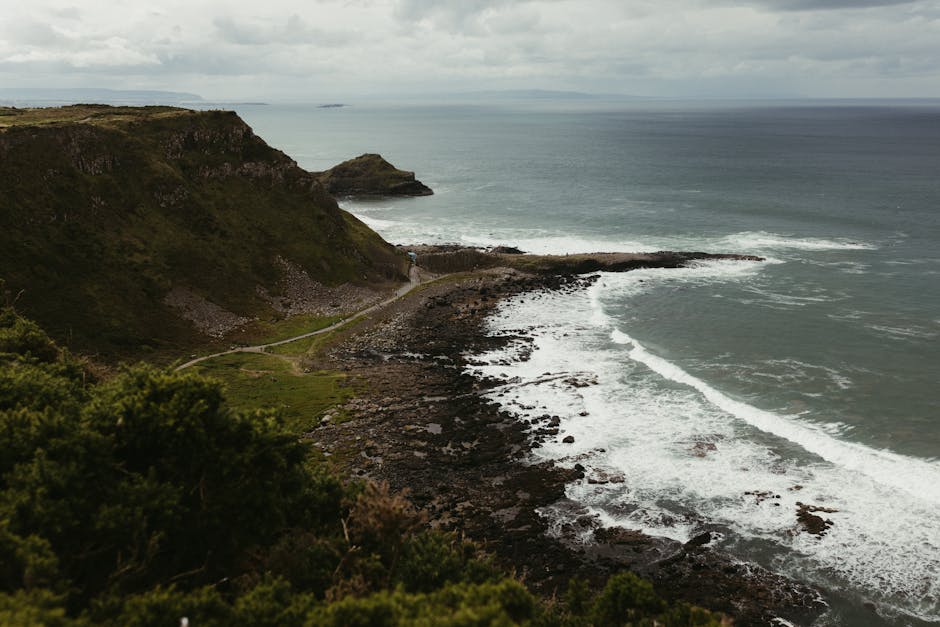
The greens are maintained at championship speed and run exceptionally true. Reading greens requires careful observation of subtle breaks and the surrounding dune formations, which often dictate water drainage and grain direction.
Royal Portrush Dunluce Course Review: A Complete Guide to One of Golf’s Greatest Links
Royal Portrush Golf Club stands as one of the most prestigious and challenging links courses in the world. Its Dunluce Course, designed by the legendary Harry Colt and recently refined for the 2019 Open Championship, consistently ranks among the top 10 courses in the UK and Ireland. With dramatic Atlantic Ocean views, expertly crafted holes, and hosting golf’s oldest major championship in 2025, Royal Portrush represents the pinnacle of Irish links golf. This comprehensive review will guide you through everything you need to know about playing this extraordinary course.
Course History and Significance
Royal Portrush Golf Club was founded in 1888, making it one of the older golf clubs in Ireland. The course has undergone several transformations since its inception, with the most significant being Harry Colt’s redesign in 1923. Colt, widely regarded as the godfather of modern golf course design, didn’t begin his major reconstruction until 1929, fundamentally reshaping the original Old Tom Morris layout into the championship course that exists today. His vision incorporated the natural amphitheater of massive sand dunes and Atlantic vistas that define the Dunluce Links experience.
The course’s modern era was shaped by its selection to host the Open Championship. Before the 2019 Open, Royal Portrush hadn’t hosted the tournament since 1951, when Max Faulkner won. Beginning in 2015, architect Martin Ebert of Mackenzie & Ebert led a major redesign project that lasted through 2019. This represented the first significant changes to the Harry Colt layout since the 1930s. Five new greens were constructed, eight new tee boxes were added, 10 new bunkers were created, and most notably, two entirely new holes—the 7th and 8th—were developed on land previously belonging to the Valley Links course.
The 2019 Open Championship was a landmark moment for Royal Portrush and Irish golf, with the championship returning to Northern Ireland for the first time in decades. The club again hosted the Open in 2025, cementing its status as a world-class venue. Today, Royal Portrush Dunluce ranks number 7 in the Top 100 UK&I Course Rankings and is consistently praised for its complete 18-hole layout with hardly any flaws in design.
For more information on Northern Ireland golf, visit our Northern Ireland golf guide.
Course Specifications and Layout
The Dunluce Links plays as a par-72 course, though for championship play it was extended to par-71 for the 2025 Open. The course measures 7,381 yards from the championship tees and plays to a challenging standard. The course composition includes three par-5s, four par-3s, and eleven par-4s—a well-balanced mix that tests all aspects of your game. The dramatic natural terrain means that tee and landing areas flow with the contours of the dunes, creating strategic opportunities and hazards.
Royal Portrush Golf Club actually offers two courses. The Valley Links, the companion 9-hole course, provides an excellent alternative or supplementary round. However, this article focuses on the championship Dunluce Links, which is the main attraction and the course where visitors should direct their initial efforts.
The routing is a masterclass in design. No two consecutive holes run in the same direction, meaning golfers are constantly adjusting to wind coming from different angles. This forces players to remain mentally sharp throughout the round and adapt their strategies hole by hole. The course features Harry Colt’s signature elaborate green designs with dynamic contours, enormous dunes framing the holes, and strategic bunkering that rewards precision and placement.
Hole-by-Hole Highlights: Signature Holes
While all 18 holes at Royal Portrush demand respect, several signature holes have earned their place in golf lore and merit special attention.
The 5th Hole: White Rocks (Par 4, 372 Yards)
The 5th hole presents one of the most scenic vistas in golf. This par-4 dogleg sits perched on elevated terrain with the Atlantic Ocean beyond. The green is positioned 50 feet above the shoreline, creating a breathtaking backdrop. From the elevated tee, golfers enjoy a wonderful platform to soak in the vista before tackling the hole’s strategic challenges.
Tactically, White Rocks offers two distinct approaches depending on conditions and wind direction. If playing downwind, aggressive golfers can cut the corner of the dogleg and get close to the green. However, this carries risk. Laying back off the tee leaves a tougher second shot to an angled green that doesn’t reward imprecision. In 2019, this hole proved relatively generous with four eagles, 111 birdies, but only 13 double bogeys or worse—testament to its playability despite its scenic difficulty.
The 15th Hole: Skerries (Par 4, 429 Yards)
The 15th hole, named Skerries after the small rocky islets visible from the tee, is a spectacular dogleg-left par-4 measuring 429 yards. This hole meanders left around a dune, creating a semi-blind tee shot that gives way to world-class views across the water to the north and west toward the rocky islets that inspired its name.
The strategic play typically involves an iron down the right side, provided you can carry the bunkers positioned along the right edge. The green sits between bunkers on the left and hollows on the right, demanding accuracy on the approach. This hole represents everything that makes links golf special: stunning scenery, strategic challenge, and the requirement to shape shots according to the natural landscape.
The 16th Hole: Calamity Corner (Par 3, 236 Yards)
Calamity Corner stands as perhaps the most infamous hole on the course and certainly lives up to its fearsome reputation. This par-3 sits at the highest point on the Dunluce Links, spectacularly positioned but offering little protection from the relentless Atlantic wind. During the 2019 Open Championship, just 41% of players found the green in regulation—the lowest percentage of any hole that week, earning it the nickname “card wrecker.”
The 236-yard par-3 features a green that is 39 yards deep and set diagonally from front left to back right. The subtle contours of this putting surface punish approach shots that aren’t precise. The primary bail-out option is Bobby Locke’s Hollow on the left of the green, which offers a better up-and-down opportunity than the cascading valley featuring heavy rough on the opposite side. The elevation, exposure to wind, and tiny target make this a hole that can demolish scorecard quickly. Yet it remains one of golf’s most thrilling challenges.
For more details on Irish championship venues, see our complete Ireland golf course reviews.
New Holes and Recent Redesign
Two holes stand out as the crown jewels of the recent redesign: the 7th and 8th, which were created entirely new on land previously part of the Valley Links.
The 7th Hole: Curran Point (Par 5)
The long par-5 7th is named Curran Point and provides golfers with a strategic three-shot hole. This new addition integrates beautifully with the existing landscape, offering routing that felt natural despite being entirely new construction.
The 8th Hole: Dunluce (Par 4, 434 Yards)
The 434-yard par-4 8th is named Dunluce and represents one of the most striking new holes. It calls for a demanding tee shot over a chasm with a spectacular view toward the distant ruins of Dunluce Castle, which sits on a cliff high above the North Coast shoreline. This dramatic par-4 immediately announces itself as a championship test and a signature hole that players will remember long after their round concludes.
These two new holes demonstrate how modern design can integrate seamlessly with historic linksland, providing both challenge and strategic interest while maintaining the character that Harry Colt established decades earlier.
Green Fees and Booking Information for 2025
Playing Royal Portrush requires advance planning, particularly regarding green fees and booking procedures. The course has seen significant price increases in anticipation of hosting the 2025 Open Championship.
Green Fee Rates
| Course | Season | Rate (2025) |
| Dunluce Links | April 1 – October 31 | £420 per person |
| Valley Links | April 1 – October 31 | £200 per person |
For context, these fees compare favorably to other prestigious courses. Pebble Beach, one of America’s most famous courses, costs $675 per round—$100 more than Royal Portrush. Visitors seeking a more economical introduction to the Royal Portrush complex can play the Valley Links for £200, which provides excellent value for a championship-quality links course.
Booking Procedures
Royal Portrush maintains strict eligibility requirements for visitors. To book a round, golfers must meet these criteria:
- Be a member of a recognized golf club
- Provide a valid handicap certificate showing a maximum handicap of 18 (for men) or 24 (for women)
- Obtain a letter of introduction from your home club
- Complete the club’s visitor booking form or contact the club directly
- Pay the full green fee at the time of booking (non-refundable)
Booking can be made through the Royal Portrush Golf Club website or by contacting the club directly. All green fees must be paid in full at the time of booking and are non-refundable in the event of cancellation, though tee time bookings can be cancelled without penalty up to 3 months before the date of play.
Best Times to Visit
The course is open to visitors seven days a week from April through September, though visitor play is restricted during peak member times. These months offer the best weather conditions and ensure greenside hospitality is fully staffed. May through September typically provides the most reliable golfing weather, though wind conditions are always a factor at this Atlantic-facing links. Spring and early autumn visits can offer slightly smaller crowds and dramatic seasonal lighting.
Summer holidays and weekends during peak season book well in advance, so plan accordingly. Off-season play (October through March) may be possible but requires direct contact with the club and typically sees more volatile weather.
Visitor Access Policies and What to Expect
Royal Portrush maintains the traditions of a prestigious private members’ club while welcoming serious golfers from around the world. Understanding club protocols ensures a smooth and enjoyable visit.
Membership Requirements
Visitors must be members of recognized golf clubs—public golfers cannot book single rounds. This maintains the club’s member-focused culture but also ensures visitors come prepared with proper handicap documentation and club affiliation. This policy is standard among championship links courses worldwide and reflects the club’s heritage.
Club Facilities and Amenities
Despite its championship status, Royal Portrush maintains a wonderfully welcoming feel for visitors. The clubhouse features stunning trophy cabinets and golf memorabilia chronicling the club’s history and championship tournaments. Excellent food and beverages are available, making the overall experience memorable beyond just the golf itself.
Visitors should expect formal dress codes in the clubhouse, typically requiring collared shirts and long trousers during lunch and evening hours. On the course, standard golf attire applies, though many links courses discourage denim.
Course Access and Playing Conditions
Once booked, visitors are treated as honored guests. The course maintains impeccable conditions year-round, with fast fairways and greens running true. The greens are deliberately kept firm to test shot-making precision and reward control, a hallmark of championship links golf. This approach means that traditional links technique—landing short and letting the ball run—often won’t work at Royal Portrush, as many greens feature raised elevations and false fronts that reject shots that don’t climb the putting surface decisively.
Course Conditions and What to Expect
Playing Royal Portrush requires understanding the specific characteristics of this championship links and how they differ from inland or parkland courses.
The Turf and Fairways
Royal Portrush is built on authentic linksland—low-lying, sandy terrain alongside the North Atlantic. The fairways are kept tight and firm, allowing balls to release and roll naturally in optimal conditions. However, this firmness also means that shots struck poorly will be punished with harsh bounces into rough or collection areas. The rough is notably unfriendly, with thick, wiry grasses that grab at the club and resist attempts to advance the ball. Golfers who can keep the ball in the fairway gain significant advantage.
The Greens
The greens at Royal Portrush are famous for their subtle, complex contours. Harry Colt designed elaborate putting surfaces that reward approach shots struck from the correct angle and penalize careless approaches. Many greens feature raised elevations with false fronts—sections that appear playable but reject shots, causing the ball to roll back down 20-30 yards. This requires precision in approach shot selection and club selection.
The greens are maintained at championship speed and run exceptionally true. Reading greens requires careful observation of subtle breaks and the surrounding dune formations, which often dictate water drainage and grain direction.
The Bunkers
The bunkers at Royal Portrush are deep and welcoming to shots struck off line. They are not aesthetic features—they are genuine hazards with steep walls and challenging lies. The sand itself is firm and consistent, rewarding good technique but punishing poor bunker play. Strategic bunker placement around greens means that approaches must be carefully planned to avoid these collections.
Leave a Reply