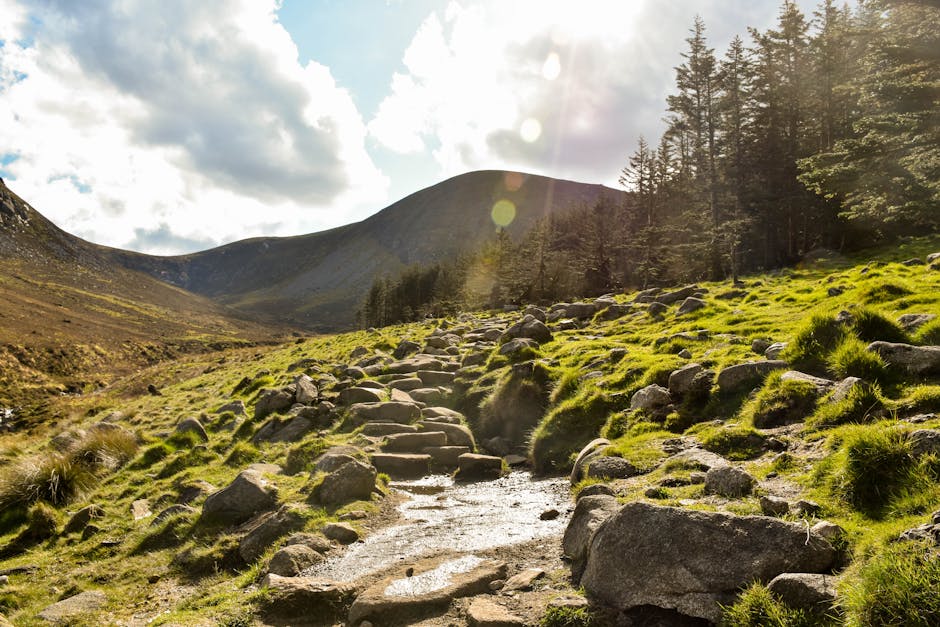
Royal County Down Golf Club stands as a monument to golf’s enduring appeal and natural artistry. Located on the Northern Irish coast near Newcastle, County Down, this legendary links course has dominated world golf rankings for nearly a decade, consistently earning the top spot on Golf Digest’s World’s 100 Greatest Golf Courses. With over 130 years of history, a pedigree of world-class designers, and a setting framed by the majestic Mourne Mountains and the Irish Sea, Royal County Down represents the gold standard of links golf. For golfers planning a pilgrimage to Ireland’s greatest courses, understanding what makes this venue truly special is essential to preparing for one of golf’s most transformative experiences.
Royal County Down: The World’s #1 Links Golf Course
In 2024, Royal County Down maintains its position as the world’s most prestigious links golf course, a distinction it has held consistently across the past decade of rankings. This status isn’t merely honorific—it reflects a convergence of exceptional course design, natural terrain, challenge, and setting that few courses in the world can rival. The Championship Links course measures 7,204 yards from the blue championship tees with a par of 71, a course rating of 75.9, and a slope rating of 145—a formidable examination for golfers of all abilities.
What distinguishes Royal County Down from other world-class links courses is its perfect storm of competitive characteristics. The course presents blind shots and unorthodox routing that test architectural philosophy itself. Snarling bunkers edged with marram grass create visual drama and strategic complexity. Shocking elevation changes—some dunes rise dramatically above playing surfaces while others drop 60 feet below—demand complete understanding of course topography. Wind plays a variable role that no course management strategy can entirely mitigate. Together, these elements produce what many golf historians and contemporary architects consider the finest front nine holes in championship golf.
A Course Design Legacy Spanning 135 Years
Royal County Down was founded on March 23, 1889, by a group of prominent Belfast business and professional men who recognized the potential of the Newcastle area as both a seaside resort destination and an ideal location for a championship golf course. The opening of the Belfast & County Down Railway to Newcastle provided the transportation catalyst that made the development feasible. However, the true genius of the course’s creation lay in the natural dune terrain that already existed on the property—terrain that, when properly developed, would require minimal earthmoving and maximum preservation of the land’s inherent beauty.
The original nine-hole layout was designed by George L. Baillie, a Scottish schoolteacher living in Belfast who had become a passionate advocate for developing golf courses throughout Northern Ireland. Recognizing the need for professional expertise, the club’s council commissioned Old Tom Morris—already legendary as a four-time Open Champion and the iconic course designer of St. Andrews—to travel from Scotland to Newcastle for an advisory fee of no more than £4. In July 1889, Morris spent two days examining the existing nine holes and advising on the addition of a second nine. His recommendations were implemented immediately, with three new holes added that autumn and six additional holes between autumn 1889 and spring 1890. The complete 18-hole course opened for play in July 1890.
Over the following decades, a succession of world-class architects refined and developed the course into its current championship form. James Braid, J.H. Taylor, and Harry Vardon all contributed their design philosophies to the course’s evolution. Most significantly, H.S. Colt undertook a major redesign in 1925, creating some of the course’s most celebrated holes. This multigenerational design process—spanning from the Victorian era through the Roaring Twenties—produced a course with remarkable coherence despite its long development timeline. Like Pine Valley in the United States, Royal County Down benefited from the input of numerous golf minds across generations, yet emerged with unified design purpose and exceptional character.
The Mourne Mountains and Newcastle’s Spectacular Setting
Perhaps more than any other factor, Royal County Down’s setting accounts for its supreme ranking. The course is situated in Newcastle, County Down, a charming Victorian-era seaside resort town positioned at the foot of Slieve Donard, Northern Ireland’s highest mountain peak at 2,789 feet. The Mourne Mountains—a dramatic range of granite peaks—form the course’s western boundary and provide a constantly evolving visual backdrop that changes with weather, light, and seasonal variation. To the east lies the Irish Sea, its presence marking every hole with the potential for bracing wind and salt-air conditions that define championship links golf.
Numerous golf writers and course evaluators have declared Royal County Down “the most scenic golf course in Britain and Ireland.” The combination of mountain scenery plunging dramatically to sea, golden dune-land threading between rocky outcroppings, and crystalline Irish light creates an almost transcendent golfing environment. Every hole presents views that capture the essence of Irish coastal beauty. The opening holes skirt the shoreline with the Mourne Mountains rising in the distance. The middle stretch winds through dramatic dune terrain with mountain vistas constantly shifting perspective. The closing holes return to the coastal plain with views extending across Newcastle Bay toward the mountains’ peaks. This natural theatre transforms every round into an aesthetic experience that transcends the ordinary competitive structure of golf.
Championship Links Course Specifications and Layout
Understanding Royal County Down’s precise specifications helps golfers prepare for the challenge ahead. The Championship Links plays to 7,204 yards from the blue championship tees with a par of 71 and a course rating of 75.9 from a slope of 145. This combination of length and difficulty produces a course that plays considerably harder than the distance alone might suggest. The course also features alternative tee positions for different ability levels, accommodating players from 28 handicap and better through championship-level competitors.
The 18-hole layout divides into outgoing and returning nines, each presenting distinct strategic challenges. The front nine, generally considered one of golf’s finest, establishes the course’s demanding character through blind shots, severe elevation changes, and strategic bunkering. Several holes play from elevated tees over vast dune terrain toward green complexes that remain partially hidden. The back nine, while slightly longer in total yardage, incorporates more visible routing yet maintains the course’s essential character through continued emphasis on accuracy and course management over pure distance.
Signature Holes and Strategic Architecture
The 4th Hole: A Rory McIlroy Favorite
The par-3 4th hole, measuring 229 yards from the championship tees, represents links golf at its purest and most visually striking. A short-iron hole by championship standards, the 4th descends nearly 20 feet from tee to green—a dramatic elevation change that makes club selection notoriously difficult. The hole features minimal bunkering by Royal County Down standards, instead relying on the natural slope and wind to create its central challenge. The 4th appears in prominent collections of the world’s greatest golf holes and has earned particular praise from Northern Irish professional Rory McIlroy, who has called it his favorite hole at the course. The psychological weight of this short hole—where most players expect to make birdie or par but frequently struggle to find the correct line—demonstrates how Royal County Down transcends simple difficulty to achieve golf’s highest design aspirations.
The 9th Hole: “The Narrows” and Links Golf’s Signature Shot
The 486-yard par-4 9th hole, commonly referred to as “The Narrows,” ranks among the most photographed and celebrated holes in world golf. Playing from an elevated tee, the drive must be struck from one side of a colossal dune toward a fairway positioned some 60 feet below and 260 yards from the tee. This dramatic elevation change creates one of golf’s most visually arresting moments—the golfer stands atop a mountain of earth and views the intended landing area as if looking into a canyon. The second shot from the fairway requires a long iron or fairway wood into a green that remains partially hidden by dune-land fronting the green complex. The hole embodies everything that makes Royal County Down special: natural terrain developed into championship challenge without artificial manipulation, strategic routing that demands both power and precision, and a theatrical presentation that makes even spectacular golf seem insufficient against the backdrop of mountain and sea. Playing the 9th represents a quintessential links golf moment.
The 13th Hole: A Back-Nine Masterpiece
While the front nine captures most golfing attention and accolades, the back nine includes notable holes of championship caliber. The 13th hole, a par-4 measuring 423 yards from the yellow tees, stands out as the back nine’s most celebrated hole and demonstrates how natural terrain can create strategic complexity without excessive bunkering. The 13th features a blind tee shot over dune terrain toward a fairway that requires the golfer to trust line and distance. Upon reaching the fairway—particularly if playing along the left side as course strategy suggests—golfers are rewarded with their first view of the green. The hole exemplifies how Royal County Down’s architects understood that golf’s greatest beauty emerges when designers allow natural landforms to dictate routing rather than imposing artificial templates on the terrain. The 13th proves that the back nine, though less celebrated in golfing literature than the front, sustains the Championship Links’ exceptional character throughout the complete round.
Playing Tips: Strategy and Preparation
Successfully navigating Royal County Down demands specific preparation and strategic understanding. The course’s defining characteristics present challenges that raw power cannot overcome. Wind—often strong and variable—plays as significant a role as any architectural feature. The prevailing wind in summer typically arrives from the southwest, pushing golfers inland and complicating distance judgment. Winter winds can approach gale force, rendering some holes nearly unplayable and requiring dramatic club selection adjustments. Monitoring wind patterns before and during play becomes as important as club selection itself.
Blind shots dominate the course’s character more than any traditional parkland layout. The front nine especially requires studying yardage books, understanding marker posts that indicate landing zones, and developing trust in course knowledge rather than visual confirmation. Many golfers new to Royal County Down find the prevalence of blind shots disconcerting—they feel unsure about line and distance when they cannot see their target. Experienced players view blind shots as a positive design feature that tests imagination, course management, and confidence. Walking the course with a caddie or thoroughly studying printed materials before play helps immensely in understanding the routing.
Gorse management represents another essential strategic consideration. Gorse—the golden-flowered shrub that defines Irish and Scottish links—bounds fairways throughout Royal County Down. Unlike traditional rough grass that merely penalizes errant shots, gorse effectively prevents recovery. Drives must find fairways; shots from rough lying against gorse borders will rarely escape successfully. This demands position golf over distance golf. On holes where accuracy matters more than distance, accept driving the ball shorter if it ensures fairway positioning. The 4th hole exemplifies this philosophy—golfers who miss the fairway rarely recover successfully, while golfers who find the fairway from 220 yards away can reach the green with proper course management.
- Study wind direction and strength before each shot; Royal County Down reveals wind in ways that parkland courses do not.
- Trust course markers and yardage books on blind shots rather than attempting to see your intended landing area.
- Accept that gorse is hazard, not rough. Plan your approach to avoid situations where gorse interferes with recovery shots.
- Walk the course whenever possible to understand elevation changes and routing logic before play.
- Consider playing a caddie-recommended strategy even when your instinct suggests otherwise—the caddies understand Royal County Down’s subtleties in ways that first-time visitors cannot.
The Annesley Links: A Complementary Championship Experience
Royal County Down operates a second course, the Annesley Links, which provides a valuable complement to the Championship Links experience. Measuring 4,708 yards at par 66, the Annesley plays substantially shorter than the Championship course while maintaining championship-level design quality and challenge. The course features six par-3 holes, twelve par-4 holes, and notably no par-5 holes, creating a markedly different strategic environment than the Championship Links.
The Annesley Links shares the same spectacular setting as the Championship course, benefiting from the Mourne Mountains backdrop and Irish Sea views. Many golfers find the Annesley an ideal preparation round before tackling the Championship Links, allowing them to acclimate to the course’s wind, grass, and playing conditions without the extreme challenge of the longer layout. Alternatively, golfers playing two rounds on a single day often prefer playing the Annesley as a refreshing change of pace that still demands championship-level golf. The Annesley proves that Royal County Down’s appeal extends beyond its most famous course—both layouts merit inclusion in any serious golfing itinerary to Northern Ireland.
Visitor Information: Green Fees, Policies, and Booking
Green Fees and Booking Structure
Royal County Down welcomes visitors on a selective schedule designed to protect the member experience while generating revenue from guest play. For 2025, the green fee for a single round on the Championship Links is £425. The club offers a discounted rate of £575 for two rounds played in a single day, making this option worthwhile if your schedule permits multiple rounds. These fees represent a substantial increase from previous years and reflect the course’s elite status and sustained demand for tee times.
All play occurs in four-ball groups. Bookings for fewer than four players may be combined with other golfers to form complete groups of up to four players. This group structure is standard for links courses in the UK and Ireland and should not present complications for most visitors, though solo travelers should be aware that they will not play alone.
Visitor Availability and Advance Booking
Royal County Down welcomes visitors five days each week: all day Monday, Tuesday, and Friday, plus Thursday mornings and Sunday afternoons. The course is closed to visitors on Wednesdays and Saturdays, which are reserved for member play. This schedule protects the member experience during peak weekend days while allowing substantial visitor access. The club requires full payment of the green fee at the time of booking—no partial deposits or payment plans are available. Importantly, the club explicitly states that no refunds of deposits or green fee payments will be issued if visitors cancel for any reason, though the club will refund the full amount if the club itself cancels due to weather conditions.
Handicap and Dress Code Requirements
Royal County Down requires that all visitors present a valid handicap certificate or proof of handicap before play. The club accepts players with handicaps up to 28 for men and equivalent standards for women. This handicap requirement serves both as a legitimate safety measure (protecting greenkeeping from extremely slow play) and as a quality control mechanism reflecting the course’s championship status. Golfers without handicap certifications may contact the club to discuss potential alternatives, though visitors are strongly encouraged to obtain official handicap documentation before planning their visit.
Dress code standards at Royal County Down reflect traditional links club values. Players are expected to wear an acceptable standard of dress reflecting both respect for the course and Victorian-era clubhouse standards. Specific dress code regulations prohibit denim, cargo shorts, t-shirts with commercial or offensive logos, and athletic wear. Golf shoes are required—trainers and casual footwear are not permitted. Women are expected to wear golf-appropriate attire; athletic wear and overly casual clothing are discouraged. The dress code reflects Royal County Down’s status as a traditional, formal links club rather than a casual resort facility.
Caddie Requirements and Arrangements
All groups playing Royal County Down must have a minimum of one caddie. This is not optional—caddies are a mandatory requirement for all play. Caddies are independent contractors not directly employed by the club, and their availability cannot be guaranteed, particularly during peak seasons. Visitors who pre-arrange caddies in advance of their visit have the best chance of securing experienced personnel. Senior caddies (typically the most experienced) cost £60 per round, while standard caddies cost £40 per round.
If no caddie has been pre-booked, the club will arrange a minimum of one forecaddie to accompany each group. Forecaddies cost £100 per round plus gratuity, and payment must be made in cash to the caddie at the end of your round. During busy periods, a single caddie may carry two bags rather than one per player, a common practice at Royal County Down when demand exceeds caddie availability. Golfers should budget caddie costs in addition to green fees when calculating the total expense of a Royal County Down visit.
Accommodation: Where to Stay Near Royal County Down
Slieve Donard Resort and Spa
The Slieve Donard Resort and Spa represents the premier accommodation option for Royal County Down golfers, offering convenience, luxury, and direct golf course proximity that few other courses in the world can match. This 4-star Victorian hotel sits on the edge of Royal County Down Golf Club itself, positioned within the hotel’s grounds at the foot of the Mourne Mountains. The hotel literally borders the golf course—guests can walk from their rooms to the first tee in minutes, enjoying the convenience of staying directly on the property where they’re playing.
The Slieve Donard features guest rooms evoking Victorian splendor with views of either the sea, the Mourne Mountains, or the golf course itself. Each room includes modern amenities such as seating areas, television, and tea and coffee facilities, maintaining contemporary comfort within a historic framework. The hotel operates four dining and drinking establishments featuring menus emphasizing seasonal ingredients, local produce, game, and seafood—a focus on Irish culinary traditions and North Coast specialties.
Beyond golf, the Slieve Donard features a superb resort spa including a 50-foot pool, treatment facilities, and wellness amenities that appeal to traveling parties including non-golfers. The hotel sits 30 miles south of Belfast and 90 miles north of Dublin, making it accessible whether visitors fly into Belfast or Dublin. The Slieve Donard has served as the traditional accommodation choice for serious Royal County Down pilgrims for generations and remains the most prestigious hotel option in Newcastle.
Alternative Newcastle Accommodation
While the Slieve Donard offers unmatched proximity and prestige, Newcastle accommodates various budget levels and preferences. The town features numerous bed-and-breakfast establishments, smaller hotels, and holiday rentals that provide excellent value while maintaining reasonable golf course proximity. Many golfers choose to stay in Newcastle or nearby Bangor (10 miles north) and drive to Royal County Down, a arrangement that works perfectly well given the course’s location outside of Newcastle center. This approach allows golfers to explore Newcastle’s Victorian charm, coastal walks, and dining scene while maintaining easy access to the course.
Getting There: Travel from Belfast and Dublin
From Belfast
Royal County Down is located approximately 30 miles south of Belfast, making it the closest major international airport for visitors planning a Newcastle golf visit. The drive from central Belfast takes approximately 45 minutes to one hour via the A24 south toward Newry. This relatively short drive makes Belfast an ideal entry point for golfers planning multi-course Irish itineraries—Belfast Airport serves as Northern Ireland’s primary international hub, with direct flights from most major US and European cities.
Visitors without rental cars can utilize Translink bus service from Adelaide Street in central Belfast to Newcastle Barbican, with service departing hourly. The journey takes approximately 1 hour 20 minutes, making this a viable option for golfers who prefer not to drive. The bus option provides a scenic journey through Northern Irish countryside and offers flexibility in terms of departure times.
From Dublin
Dublin, as Ireland’s largest international airport, serves as the entry point for many golfers planning Irish golf itineraries. Newcastle lies approximately 90 miles north of Dublin via the M1/N1/A1 motorway toward Newry, then the A25 to Newcastle. The drive takes approximately 2 hours, making Royal County Down a feasible day trip from Dublin or a reasonable first stop in a multi-course Irish itinerary. Dublin’s international airport offers significantly more flight options than Belfast, making it an attractive entry point for transatlantic travelers despite the longer distance to Newcastle.
Visitors preferring public transportation can take bus service from Dublin Busaras Bus Station to Newcastle, though the journey takes approximately 3 hours 50 minutes including transfers at Newry Bus Station. The bus option works best for golfers planning extended Newcastle stays rather than same-day travel from Dublin.
Royal County Down’s address is 36 Golf Links Road, Newcastle, Co. Down, BT33 0AN, Northern Ireland. GPS navigation and detailed online mapping services provide reliable directions from both Belfast and Dublin.
Course Conditions and Seasonal Considerations
Royal County Down’s links characteristics mean that the course plays dramatically differently depending on season and weather patterns. Understanding seasonal conditions helps golfers prepare mentally and physically for what they’ll encounter.
Summer Play (May-August)
Summer represents the peak playing season, with longest daylight hours, warmest temperatures, and most stable weather patterns. The prevailing wind in summer typically arrives from the southwest, pushing golfers inland on outbound holes and requiring adjustments on return holes. Summer drought can firm the fairways and greens, producing faster, firmer playing surfaces that reward precision but punish mishits more severely. Typical temperatures range from 55-70°F (13-21°C), requiring layered clothing given the prevalence of wind. Summer is peak tourist season, meaning the course hosts maximum visitor traffic and advance booking becomes essential.
Autumn Play (September-October)
Autumn offers excellent playing conditions with temperatures gradually cooling from summer levels. September often features similar conditions to late August, while October typically brings increased rainfall and more variable conditions. The arrival of autumn rain can soften the course, producing more receptive fairways and greens that accept longer approaches more readily than summer conditions. Wind patterns become more variable, and golfers should expect anything from calm mornings to bracing afternoon breezes. Autumn colors enhance the Mourne Mountains’ backdrop, creating particularly photogenic playing conditions.
Winter Play (November-February)
Winter brings the greatest challenge and most dramatic conditions. Atlantic storms frequently approach the Irish coast, generating strong and sustained winds that can occasionally render holes nearly unplayable. Frost and occasional snow affect the North Coast, creating hard, brittle playing surfaces. Daylight becomes limited, with rounds potentially requiring 5 hours or more given reduced daylight hours. However, winter also brings the fewest visitors, meaning golfers who brave winter conditions enjoy the course in solitude with uncrowded conditions and easier booking availability. Temperatures typically range from 35-50°F (2-10°C), requiring substantial cold-weather gear. Golfers contemplating winter play should prepare for extreme conditions and potential closure due to weather.
Spring Play (March-April)
Spring transitional months offer variable conditions as winter weather patterns recede and summer patterns begin to establish. March typically remains cool and potentially wet, while April tends toward improving conditions with increasingly stable weather. Spring offers excellent playing opportunities without summer’s extreme heat or winter’s severity. The Mourne Mountains backdrop displays spring colors as vegetation emerges, creating scenically appealing conditions for photography and general tourism.
Expanding Your Northern Ireland Golf Experience
While Royal County Down deserves its world-ranked status as the paramount Northern Irish golf experience, the region features numerous other courses worthy of inclusion in comprehensive golf itineraries. Serious golfers planning extended Northern Ireland visits should explore complementary courses that round out their experience.
Nearby courses include Northern Ireland golf destinations such as Portrush, Castlerock, and Downhill, each offering distinct links golf characteristics. These courses provide excellent variety while remaining within reasonable driving distance of Newcastle. Golfers planning extended Irish trips should consider combining Royal County Down with courses featured in our best golf courses in Ireland guide, creating comprehensive itineraries spanning multiple regions and playing styles.
Our Ireland golf course reviews section provides detailed analysis of numerous Irish courses, helping golfers understand the broader Irish golf landscape. For golfers planning multi-course Irish visits from beginning to end, our Ireland golf trip planner guide offers comprehensive itinerary suggestions and logistics information. Alternatively, golfers interested in broader golf course reviews across Ireland can explore our detailed archive of course analyses.
The Royal County Down Experience: Why It Matters
Royal County Down transcends ordinary golf course experience to become a transformative pilgrimage for serious golfers. The combination of world-class design inherited from golf’s greatest architects, natural terrain that defines links golf at its highest expression, challenge that tests all abilities, and setting framed by mountain and sea creates an experience that remains with golfers for life. Many golfers describe playing Royal County Down as the moment they truly understood what links golf represents—not just a playing surface or scoring challenge, but a conversation between golfer, architect, nature, and history that extends across centuries.
Planning a Royal County Down visit requires advance preparation, substantial financial investment, and willingness to embrace conditions and challenges that differ markedly from ordinary resort golf. Yet golfers who make the commitment and prepare thoroughly for the experience universally describe it as transformative. The course does not accommodate visitors—it expects them to understand its character, respect its traditions, and embrace its challenges. This demanding relationship with players, combined with uncompromising commitment to championship golf design and maintenance, explains why Royal County Down has maintained its world-ranked status through decades of change in professional golf and course design philosophy. The course’s standards have never wavered; its commitment to excellence has never dimmed. For golfers seeking the highest expression of links golf, Royal County Down represents the essential pilgrimage—the course that reminds us why we play golf at all.
| Royal County Down Golf Club Quick Reference | |
|---|---|
| Location | 36 Golf Links Road, Newcastle, Co. Down, BT33 0AN, Northern Ireland |
| Championship Course Yardage | 7,204 yards (blue tees), par 71 |
| Course Rating/Slope | 75.9 / 145 |
| Annesley Links | 4,708 yards, par 66 |
| 2025 Green Fee (Championship) | £425 single round; £575 for two rounds same day |
| Visitor Days | Monday, Tuesday, Friday (all day); Thursday morning; Sunday afternoon |
| Handicap Requirement | 28 and better (or equivalent) |
| Caddie Requirement | Mandatory; Senior £60/round, Standard £40/round, Forecaddie £100/round |
| Dress Code | Traditional links attire; no denim, cargo shorts, trainers, or athletic wear |
| From Belfast | 30 miles south, approximately 45 minutes via A24 |
| From Dublin | 90 miles north, approximately 2 hours via M1/N1/A1 and A25 |
| Nearby Accommodation | Slieve Donard Resort and Spa (directly adjacent); Newcastle hotels and B&Bs |
| World Ranking | #1 on Golf Digest World’s 100 Greatest Courses (past decade) |
Leave a Reply