Hiring a Golf Caddie in Ireland: Cost, Etiquette & Why You Should
The case for hiring a caddie in Ireland is simpler than most visiting golfers realize. On a championship Irish links you have never seen before, played in shifting Atlantic wind, over fairways punctuated by hidden bunkers, marker posts and dunes that swallow tee shots whole, a good local caddie is conservatively worth four to six strokes on your first round. That is not folklore. That is the consensus among caddie masters at Royal County Down, Ballybunion, Lahinch and Royal Portrush, and it tracks with what most American visitors discover within four holes: the line over the dune you cannot see, the club selection in a quartering wind, the read on a green that breaks toward the sea even when it visually appears to break inland, the simple act of being told “no, sir, not that club” before you make a five-club mistake.
This guide explains exactly what hiring a caddie in Ireland golf trips actually involves: the per-course fees, tipping norms, booking process, etiquette, communication, and the reasons a local caddie transforms an Irish round from a slog of guesswork into the round you flew across an ocean to play. Whether you are heading to Ballybunion for the first time, planning a southwest links loop, or putting together a Northern Ireland Open Championship pilgrimage, the caddie question is one you should answer before you arrive, not at the first tee.
What an Irish Caddie Actually Does
Visitors arriving from American parkland courses sometimes carry a thin idea of caddying — bag carrier, ball cleaner, occasional yardage. The Irish caddie tradition is something quite different, and understanding it before your round starts will help you get full value for the fee.
An experienced links caddie at a top Irish course is doing roughly six jobs at once. He (and increasingly she) carries the bag, of course, and keeps clubs clean and grips dry — important when sea mist or sideways rain arrives mid-round. But the substantive work is informational. The caddie gives you accurate yardages adjusted for elevation, wind, firmness of the fairway, and the day’s pin position, which often differs significantly from the front of the green. On a links surface where the ball runs out twenty or thirty yards more than at home, the carry-versus-total distinction is everything, and a caddie who has worked the course for ten or twenty years knows precisely how much roll a particular fairway is yielding that morning.
The caddie also handles club selection in collaboration with you, reads greens (Irish greens often run truer and faster than visitors expect, and the breaks are subtle), gives lines on blind tee shots and blind approaches, and points out the unseen trouble that defines great links holes — the bunker tucked behind a dune, the gathering bowl short-left, the ground that funnels everything to the right of the green. On holes like Ballybunion’s 11th, Lahinch’s 4th “Klondyke” and 5th “Dell,” or Carne’s labyrinthine back nine, the caddie’s line off the tee is the difference between a playable second shot and a lost ball.
Beyond the technical side, your caddie is a course historian and a companion. Most senior Irish caddies have been on these links for decades and can tell you who hit what shot in which championship, which architect rebuilt which green, where the original 1893 routing ran, and which pubs to find afterward. The post-round conversation in the bar — caddies traditionally come in for a pint with their players at clubs that allow it — is part of the experience.
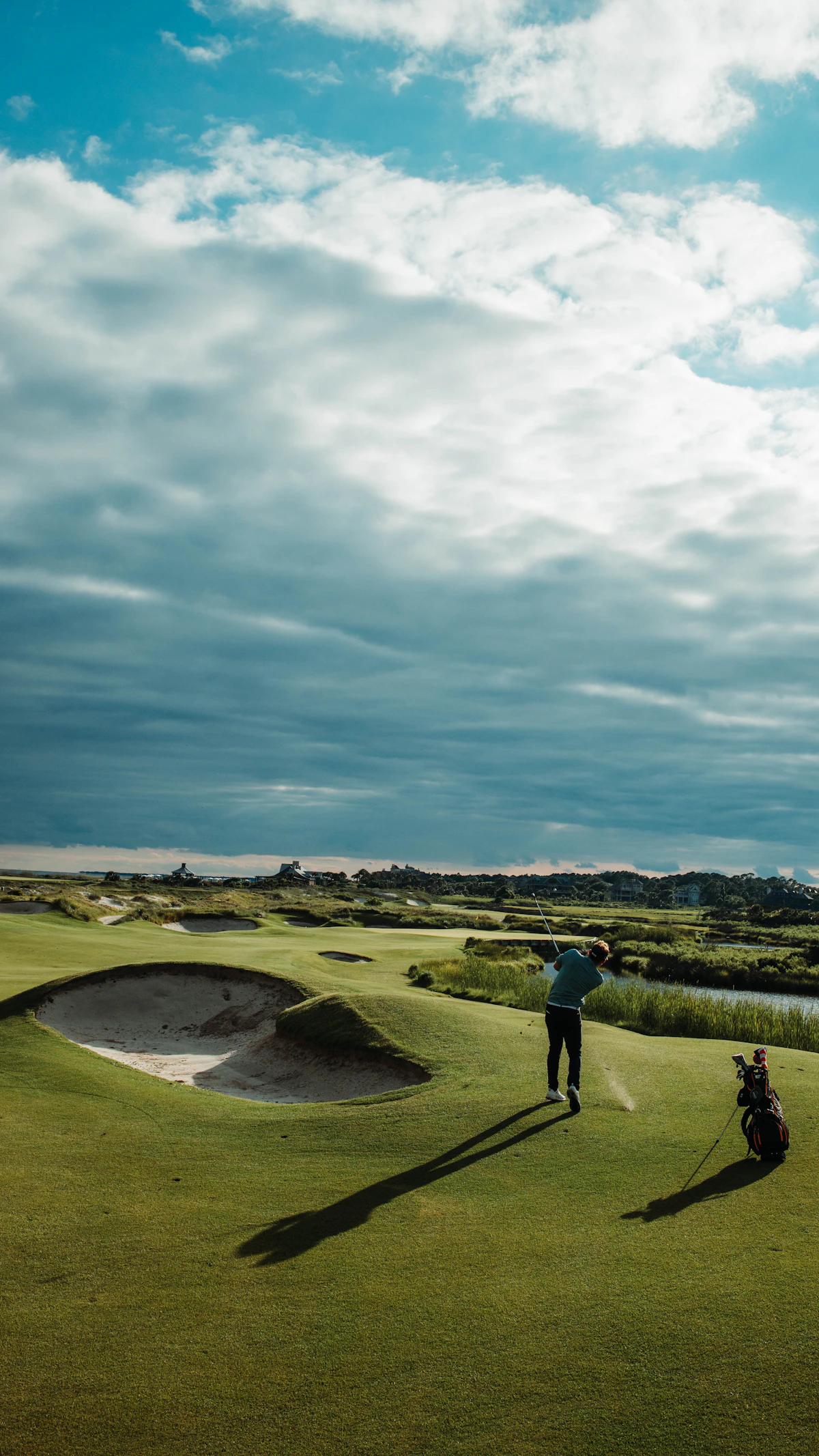
Caddie Costs by Course
Caddie fees in Ireland are set by the club, not the individual caddie. The fee covers the caddie’s labour for one round of eighteen holes; the tip is paid separately and directly to the caddie at the end of the round. Below is a snapshot of typical 2025 caddie fees at Ireland’s leading championship venues, expected tipping ranges, and an approximate total cost for a single visiting golfer. Always confirm at booking — a few clubs adjust fees seasonally and most have raised prices modestly in the last two years.
| Course | Caddie Fee | Typical Tip | Total (Approx.) |
|---|---|---|---|
| Royal County Down | €70 | €40–€60 | €110–€130 |
| Royal Portrush (Dunluce) | £60 / €70 | £35–£50 | £95–£110 |
| Ballybunion (Old Course) | €60 | €40–€50 | €100–€110 |
| Lahinch | €60 | €40–€50 | €100–€110 |
| Old Head of Kinsale | €70 | €40–€60 | €110–€130 |
| Waterville | €60 | €40–€50 | €100–€110 |
| Trump International (Doonbeg) | €75 | €40–€60 | €115–€135 |
| Tralee | €55 | €30–€50 | €85–€105 |
| Adare Manor | €80 | €40–€60 | €120–€140 |
| Carne (Belmullet) | €45 | €30–€40 | €75–€85 |
| Portmarnock | €60 | €40–€50 | €100–€110 |
| The Island | €55 | €30–€50 | €85–€105 |
| Enniscrone | €50 | €30–€40 | €80–€90 |
| County Sligo (Rosses Point) | €55 | €30–€50 | €85–€105 |
| Ballyliffin | €55 | €30–€50 | €85–€105 |
| Royal Dublin | €55 | €30–€40 | €85–€95 |
Two patterns emerge from the table. First, the caddie fee itself is remarkably consistent across the country — almost every premium links charges within a €10 band of €60. Second, the all-in cost of a caddie at the most famous courses is roughly €100–€130, which represents 15–25% of the green fee at peak rates. Compared to the cost of a wasted round caused by visitors guessing wind and lines, that math is generous.
Forecaddies (one caddie covering two or four players, walking ahead and spotting balls without carrying bags) are typically priced at roughly €40–€50 per player, with similar tipping. Trainee or junior caddies, where available at clubs with active caddie programs, sometimes carry at reduced rates of €40–€50, with tipping adjusted accordingly.
Tipping: How Much, How, and When
If you remember nothing else from this article, remember the tipping convention: in Ireland, a typical tip on top of the standard caddie fee is €30 to €50, paid in cash, directly to the caddie, at the end of the round.
That €30–€50 range is the floor and the comfortable middle. €30 acknowledges a competent round with no special circumstances. €40 is the friendly default when the caddie has done a solid job. €50 is appropriate when the caddie was excellent — saved you strokes you would not have saved, helped you out of trouble, was particularly good company, or worked through bad weather. Tips of €60 or €70 are not uncommon at the most famous courses, particularly from American visitors after a great experience, and are rarely refused.
A few practical points many visitors get wrong:
- Cash, in euros (or pounds in the North). Many caddies are independent contractors paid in cash. Bring crisp notes; ATMs in small links villages are not always reliable.
- Tip the caddie directly, not through the pro shop. The fee may be paid through the club at booking; the tip is hand-to-hand at the end of the round.
- Tip per round, per caddie. If you take the same caddie for thirty-six holes in one day, tip after each round rather than once at the end. Most caddies treat each round as its own job.
- Do not under-tip on the assumption the caddie fee covers everything. The fee is largely the caddie’s wage; the tip is a substantial part of their take-home, especially at clubs that take an administrative cut from the fee.
- Weather and difficulty matter. Tipping more in driving rain or for a caddie who walked thirty-six holes with you is well-received and remembered.
American visitors sometimes ask whether 20% of the green fee is a useful benchmark. It is not. Caddie tipping in Ireland is a flat-rate cash convention, not a percentage. Tipping €100 because you played a €500 green fee at Adare Manor is generous but not expected; tipping the standard €40–€60 is entirely correct. Conversely, tipping only €15 on a budget round at Carne would be remembered for the wrong reasons.
Where Caddies Are Essentially Required
A handful of Irish links are not so much improved by a caddie as defined by one. The reason is geography: courses where blind tee shots, hidden bunkers and disorienting dune routings make it almost impossible for a first-time visitor to know where to aim or what to play.
Royal County Down (Newcastle). Often ranked the world’s number-one course outside the United States, Royal County Down has more blind shots per round than almost any major championship venue on earth. The 4th, 9th, and 16th holes feature tee shots over dune crests with marker posts your only guide. The bunkering is so visually severe that visitors instinctively bail out, often to worse positions. A caddie here is not optional in any practical sense; the club strongly encourages caddies for visiting golfers and for many of the best mornings the caddie shed will already be busy at first light.
Ballybunion (Old Course). Tom Watson once said no golf architect could afford to design a course without first seeing Ballybunion. The cliff-edge holes from 7 through 11 demand local knowledge — distances are deceptive when the Atlantic is below you, and the wind off the cliff face plays havoc with mid-iron approaches. The caddie shed at Ballybunion is one of the great institutions of Irish golf, and the caddies are accordingly experienced and proud of their work.
Lahinch. The famous “Klondyke” 4th, where you hit blindly over an enormous dune toward a fairway you cannot see, and the “Dell” 5th, a par-3 played to a green completely hidden behind another dune with only a white stone marker showing the day’s pin location, are the textbook arguments for caddies. Even on the modern Martin Hawtree-redesigned holes, local reads on greens that slope subtly toward the sea are a strokes-saving advantage.
Carne (Belmullet). The most remote of the great Irish links and arguably the most disorienting routing in the country. Eddie Hackett’s original design and the Hackett-Ó Conchúir Kilmore extension wind through dunes so high that you can lose all sense of direction. Carne caddies are gold here; the caddie program is also a community-run initiative worth supporting.
To this short list you can reasonably add Tralee’s back nine, Doonbeg’s exposed ridges, Old Head’s clifftop par-3s, and Waterville’s wind-lashed finishing stretch. None of these courses formally require a caddie, but on a first visit, they should be treated as requiring one anyway.
Where Caddies Are Optional or Unavailable
Not every Irish course operates a full caddie program. At many parkland and inland courses, caddies are simply not part of the culture, and turning up expecting one is a recipe for an awkward conversation with a pro shop assistant who will politely point you toward an electric trolley.
Caddies are typically optional or only sometimes available at:
- Most parkland resort courses (e.g., the K Club’s parkland courses, Mount Juliet, Druids Glen) — caddies can be arranged but are not the default.
- Smaller links (Strandhill, Dingle, Connemara, Cruit Island) — caddies are sometimes available locally but not always; verify a week ahead.
- Public links and municipal courses — generally no caddie service; pull trolleys or buggies are the norm.
If a course you want to play does not offer caddies and you are determined to have one, ask the pro shop whether a freelance caddie can be arranged from a neighboring club. This sometimes works, particularly in the southwest where the caddie community is dense and mobile.
Forecaddies vs Single Caddies vs Buggies-with-Caddies
Visitors often assume a caddie is a caddie. In Ireland there are three meaningfully different arrangements, each suited to different situations.
Single caddie. One caddie, one bag, one player. The default at championship links and the only setup that delivers the full traditional experience. Best for serious players, first-time visitors to a course, and anyone who values the one-on-one interaction.
Forecaddie. One caddie for a group of two or four players. The forecaddie does not carry bags but walks ahead, spots balls, gives yardages, helps with reads, and manages the pace of play. This is a popular cost-saving option for groups who want local knowledge without the per-player price of full caddies. Many U.S. visitors find this the right balance for non-marquee rounds in a multi-course trip. Expect roughly €40–€50 per player plus tip.
Buggies with caddies. A small number of resort-style courses (notably Adare Manor, Old Head, and Doonbeg) accommodate buggies with riding caddies, where the caddie drives the buggy, navigates the course, gives reads and yardages, and handles clubs. This is rare in traditional Irish links culture — most great links do not allow buggies at all except by medical exemption — but it is a workable option where offered, particularly for golfers with mobility limitations.
For most visitors, the right answer is single caddies on the marquee rounds (the courses you have travelled specifically to play) and a forecaddie or no caddie on the secondary rounds.
Booking Caddies: How and How Far Ahead
The biggest mistake American golfers make on Irish trips is treating caddies as something to organize the night before. At the famous links during peak season, caddies are a finite resource — usually fewer caddies than tee times — and most clubs operate on a request-and-confirm system that requires advance notice.
- Royal County Down, Royal Portrush, Ballybunion, Lahinch, Old Head: Request caddies at the same time as you book your tee time. For peak summer rounds, that means as much as 6–12 months ahead. The caddie master will confirm closer to the date.
- Most other championship links: 24 to 72 hours notice is usually sufficient outside peak weeks. Email the pro shop or use the booking system’s caddie request field.
- Tour operators: If you have booked through a golf tour operator (such as Carr Golf, SWING, or PerryGolf), they will normally arrange caddies as part of the package — confirm in writing, do not assume.
- Day-of requests: Possible at quieter venues and outside July/August, but never reliable. Walk-up caddie requests at Ballybunion or RCD on a summer Saturday morning will typically be politely declined.
When you confirm, give the caddie master a few useful pieces of information: your handicap, whether you have played the course before, any physical considerations (e.g. shoulder or back issues affecting carrying or pace), and whether anyone in your group wants a junior or trainee caddie. The caddie master pairs caddies and players based on this; arriving prepared materially improves the match.

Etiquette: How to Treat a Caddie Well
Treat the caddie as a colleague for the round, not a servant. Irish caddies are working professionals, often skilled players themselves (many off single-figure handicaps; some are former tour players or aspiring tour players financing development), and they respond to being treated as the experts they are.
A few basic conventions:
- Introduce yourself by name on the first tee and ask for the caddie’s name. First names, on both sides, throughout the round. “Sir” is fine but is not required and many caddies prefer first names.
- Tell the caddie your shot pattern up front. “I tend to fade the driver about ten yards” or “my bad miss is left with mid-irons” is exactly what the caddie wants to know on the first tee. Pretending to be a better player than you are wastes everyone’s time.
- Ask for advice and then take it, or explain why you didn’t. The fastest way to lose your caddie’s engagement is to ask for a club, get the answer, and then play a different club without comment. If you disagree, say so — caddies enjoy the conversation, and they would rather discuss it than feel ignored.
- Mind the small things. Replace divots, repair pitch marks, rake bunkers — the caddie cannot do all of this for you, and the conditioning of these courses depends on visiting golfers showing care.
- Don’t blame the caddie for your bad shot. If you hit it fat after the caddie said it was a 7-iron, that’s your problem, not the club selection’s. Mature golfers acknowledge their mishits and move on.
- Buy them a drink afterward if the club allows it. Many do; a quick pint and a chat is part of the experience and the closest thing to a tradition the modern game has preserved.
Communication Norms: Irish Caddie Banter Is a Feature
American visitors occasionally arrive expecting their caddie to be silent, deferential, and entirely focused on the technical task. The traditional Irish caddie is the opposite: voluble, opinionated, often funny, and not above gentle ribbing of his player. This is a feature of the experience, not a deviation from it.
If you are paired with an old-school west of Ireland caddie, expect commentary. Expect to be told your alignment is two yards right of where it should be. Expect a story about the time someone played the wrong ball off the 14th tee in 1987 and what happened next. Expect, when you ask whether the putt breaks left or right, an answer along the lines of “it’s straight, sir, just hit it firm.” Expect, occasionally, an answer that is slightly more colorful than that.
If you find this off-putting in the first three holes, it usually means you are not yet relaxed into the round. By the back nine most visitors are laughing, asking for the caddie’s stories, and starting to enjoy the rhythm of a round that is not just shot-by-shot grinding. Caddies in turn pick up quickly on which players want quiet focus and which want company; a good caddie modulates accordingly. If you want quieter golf, simply say so on the first tee. They will adjust without complaint.
Stories: Why a Good Caddie Is Tuition Money
The strokes-saved argument is sometimes hard to feel until you have lived it. A few real-world examples — the kinds of moments that visiting golfers describe afterward:
The blind line. At Lahinch’s 4th, the visitor pulls a hybrid he has been comfortable with for years, aims directly at the marker post in the middle of the dune, and feels good about the swing. The caddie quietly stops him: “Sir, the post is a courtesy. Aim ten yards left of it. The fairway slopes from your right to your left and you’ll lose three yards of run on the way down.” The shot ends up center fairway, 130 yards from the pin. Without the caddie it would have ended up in deep rough — visible from the dune top, invisible from the tee.
The wind correction. At Royal County Down’s 9th, with its long carry over a dune to a hidden fairway, a quartering breeze means the player needs to aim well right of his instinct and hold the ball into the wind. The caddie sets the line; the player hits a controlled fade exactly where told; he later climbs the dune to find his ball thirty yards further than it would otherwise have travelled because the wind got behind it after the carry. Without the caddie’s read, that ball is in gorse left.
The green read. At Ballybunion’s 11th, the par-4 along the cliff, the player has a 25-foot putt that visually breaks toward the sea on his right. The caddie tells him it is a straight putt, that the optical illusion of the cliff edge bends the eye but the green itself runs flat. The putt is straight; he holes it; he tips an extra €20 at the end of the round.
Each of those moments is two strokes that would have otherwise gone on the card. Across an eighteen-hole round on a links you have never seen, a competent caddie produces several of them. Across the four-to-six rounds of a typical Irish trip, the cumulative impact on your scoring and on your enjoyment is enormous.
Caddie Programs and Charities Worth Knowing
Caddying in Ireland is not just a service industry; at several clubs it is a developmental and community program worth understanding and, if you can, supporting.
The Irish Caddie Federation represents caddies across the country and works on standards, training and pay norms. Its existence is part of the reason caddie quality is consistent at the top Irish clubs.
Junior caddie programs at Royal Portrush, Lahinch, Ballybunion and Carne train young local players in the craft and provide them with a route into the game. Asking for a junior caddie (where appropriate to the round) directly supports these programs.
The Carne caddie initiative at Belmullet is part of a broader community effort tying the golf course into the local Mayo economy. Carne is a non-profit links built and operated by the local community, and caddie fees and tips circulate directly back into the area.
Tipping generously, requesting a junior caddie occasionally, and acknowledging the work as skilled labour rather than service all support these programs in small but meaningful ways.
When NOT to Hire a Caddie
Caddies are not always the right answer, and pretending otherwise wastes everyone’s afternoon. Skip the caddie when:
- You are playing the course for the third or fourth time in a single trip. By the second round you have learned most of the lines and yardages; by the third you can comfortably manage with a yardage book.
- You are playing an inland parkland course with no blind shots, predictable wind, and tree-lined fairways that make navigation obvious.
- You are a low-handicap player who prefers to read your own greens and dislikes external input on club selection. Some accomplished players genuinely play worse with a caddie because the conversation interrupts their decision-making rhythm. Know yourself.
- You are playing late in the day on a quiet shoulder-season round where you would rather walk in solitude and enjoy the silence.
- Budget is genuinely tight. If choosing between two rounds with caddies and four rounds without, four rounds without caddies and the use of a good yardage book is a defensible decision.
For first visits to the marquee Irish links, however, the case for a caddie is overwhelming. Skip them on the secondary rounds, not on the headline ones.
FAQ
Do I have to hire a caddie at Royal County Down or Ballybunion?
No, neither club formally requires a caddie. In practice, however, a first-time visitor is strongly encouraged to hire one. The blind shots and dune routings make caddies effectively essential for an enjoyable first round.
Can two players share a caddie?
Yes, this is called a forecaddie arrangement. The caddie does not carry bags but walks ahead, spots balls, gives yardages and reads, and supports a group of two or four players. Cost is roughly €40–€50 per player plus tip.
Should I bring my own bag or rent one?
Bring your own if you can; a familiar bag with the right club setup is materially easier on a caddie and on you. Most clubs offer rental sets of decent quality if you cannot travel with clubs, and caddies are equally happy with rental bags.
What if I don’t get along with my caddie?
Personality mismatches are rare but do happen. Speak to the caddie master after the round, politely, and ask for a different caddie next time if you have a return round at the same club. Do not skip the tip on the original caddie unless service was genuinely poor.
Are female caddies common in Ireland?
They are increasingly present, particularly at clubs with active junior programs and at Royal Portrush and Lahinch. The traditional caddie shed culture has been historically male, but this is changing, and several clubs are actively recruiting and training women caddies.
Can a caddie give me lessons?
A caddie’s job is course management, not technique. They will offer observations on alignment and tempo, and many caddies are skilled players, but they are not your instructor for the round and will not typically work on your swing. If you want technical coaching, book a lesson with a club professional separately.
What weather requires extra tipping?
Driving rain, sustained 25+ mph winds, or any round in which the caddie is genuinely working harder than usual deserves an extra €10–€20 on the tip. Caddies remember the players who acknowledged hard weather, and so does the caddie master if you return.
Do caddies expect to play with cash or card?
Cash, always, for the tip. The caddie fee itself is often paid through the pro shop and may be on a card; the tip is hand-to-hand cash. Plan ahead at an ATM the day before your round.
Are caddies available for thirty-six holes in a day?
Yes at most clubs, with the caveat that some caddies prefer one round and the caddie master will need notice. Tip per round, not once at the end. Thirty-six holes with the same caddie often produces a particularly good experience because the caddie has a feel for your game by the second round.
Final Thoughts
For most American and continental visitors, hiring a caddie at the marquee Irish links is one of the highest-leverage decisions on the entire trip. The all-in cost — roughly €100 to €130 per round at the famous courses, less at the secondary ones — is a small fraction of what you have already paid in flights, accommodation, green fees, and the planning time it took to arrange the trip in the first place. The strokes saved, the blind shots survived, the green reads correctly called, and the local stories you carry home are not optional luxuries; they are the experience you came for.
The practical playbook is straightforward. Book caddies at the same time as your tee times for the headline rounds — Royal County Down, Royal Portrush, Ballybunion, Lahinch, Old Head, Waterville, Doonbeg, Adare. Use forecaddies for secondary rounds where local knowledge still helps. Skip caddies entirely on rounds two and three of a course you have learned, on inland parkland courses, and on quiet shoulder-season afternoons when solitude is the point. Tip €30 to €50 in cash, hand-to-hand, after each round. Treat the caddie as a colleague, ask for advice and take it, replace your divots, and accept that the gentle ribbing on the front nine is the way Irish caddies make sure you are not taking yourself too seriously.
Most visitors come back from an Irish trip with two memories that outlast the rest. One is a hole or a moment — the 17th at Ballybunion, the view from Royal County Down’s 9th tee, the green at Lahinch’s 5th. The other, almost without exception, is a caddie. The man or woman who walked the round with you, kept you out of trouble, told you a story about a ball that ended up in someone’s garden in 1979, refused to let you hit driver on the 14th, and bought you a pint afterward. That is the round you will tell people about. Hire the caddie.
Leave a Reply