Northwest Ireland Golf Itinerary: Donegal’s Links Paradise
Mention an Ireland golf trip and most travelers immediately picture the southwest swing—Ballybunion, Lahinch, Tralee—or the marquee Northern Irish duo of Royal County Down and Royal Portrush. County Donegal, perched in Ireland’s far northwest corner where the Wild Atlantic Way meets some of Europe’s most untouched coastline, often gets left off the planning whiteboard entirely. That’s a planning failure of the first order. Donegal quietly holds one of the densest concentrations of championship links in the world: Ballyliffin’s two courses, Rosapenna’s three (including a Tom Doak modern masterpiece), Portsalon, the rejuvenated Narin & Portnoo by Gil Hanse, and the cult nine-holer at Cruit Island. You can play six elite links rounds in six days, sleep in two well-located bases, and pay roughly half what the same caliber of golf costs in County Down. This itinerary lays out exactly how to do it.
Itinerary at a Glance
The trip is built around two overnight bases—Ballyliffin on the Inishowen Peninsula for the first half, then a relocation to the Downings/Rosapenna area on the Rosguill Peninsula for the second. Total drive time on golf days never exceeds 45 minutes once you’re in the region.
| Day | Course | Base Town | Drive Time |
|---|---|---|---|
| Day 1 | Arrival & travel (Belfast → Ballyliffin) | Ballyliffin | 3.5 hrs |
| Day 2 | Ballyliffin Glashedy Links | Ballyliffin | 5 min |
| Day 3 | Ballyliffin Old Links + reposition | Downings (Rosapenna area) | 1.5 hrs reposition |
| Day 4 | Rosapenna St Patrick’s Links (Tom Doak) | Downings | 5 min |
| Day 5 | Rosapenna Sandy Hills + Portsalon | Downings | 40 min between |
| Day 6 | Narin & Portnoo or Cruit Island; depart | Downings → Belfast/Donegal Airport | 3.5 hrs return |
Six rounds in six days is the maximum many golfers want; if you prefer five rounds with a built-in rest day, drop Day 6 and use that morning for sightseeing on the way back to your departure airport.
Routing Logic: Belfast or Donegal Airport, Two-Base Strategy
Donegal sits in a geographic corner that defeats first-time visitors who plan around Dublin. Two airports work far better.
Belfast International (BFS) is the most practical international gateway. It receives nonstop flights from several U.S. East Coast hubs in summer and offers strong European connections year-round. The drive from BFS to Ballyliffin runs roughly 3 to 3.5 hours via the A6/M2/A5 through Derry/Londonderry and across the border into Inishowen. Car hire at BFS is straightforward, with the major U.S. brands all represented. Crossing the border requires no formalities, but tell your rental agent in advance that you’ll be driving in the Republic of Ireland—some companies charge a small cross-border fee.
Donegal Airport (CFN) at Carrickfinn is a tiny regional field with twice-daily Aer Lingus connections from Dublin. It frequently appears on “world’s most scenic airports” lists for good reason—the runway sits between dunes and beach. CFN is a 90-minute drive from Ballyliffin and only 45 minutes from Rosapenna, making it the better arrival option for golfers willing to connect through Dublin. Rental car inventory is limited, so book months ahead.
The two-base strategy matters because Donegal’s geography is cut by long sea inlets (Lough Swilly and Lough Foyle) that force big drives between peninsulas. Trying to base everything in one town adds two hours of windshield time per day. Ballyliffin sits at the top of the Inishowen Peninsula, perfectly placed for the two Ballyliffin courses. Downings, on the Rosguill Peninsula 90 minutes west, anchors the second half within minutes of Rosapenna and a comfortable drive from Portsalon and Narin & Portnoo. Splitting the week between these two villages keeps every golf-day commute under 45 minutes.
Day 1 — Arrive Belfast, Drive to Ballyliffin (3.5 hrs)
Land at Belfast International around midday if your flight schedule allows. After clearing customs, collect your rental car—reserve an SUV or estate car for golf bags, as compact cars genuinely struggle with two full sets and luggage. Set the GPS for Ballyliffin Lodge & Spa or your chosen accommodation in Ballyliffin village.
The drive is a soft introduction to Ireland. The M2 motorway carries you north out of Belfast through Antrim toward the Glenshane Pass, then the A6 descends into Derry/Londonderry. Take the western bypass, cross the Foyle Bridge, and pick up the A2 along the south shore of Lough Foyle. Once you cross the border at Muff, you’re on Irish R-roads through the Inishowen Peninsula. The final hour is slow—single-carriageway, occasional tractors, towns like Buncrana that demand a coffee stop—but the scenery shifts from agricultural to wild as you approach the north coast. Ballyliffin village sits at the head of Pollan Bay, with the dunes of the golf club visible across the strand.
Check in, walk the beach to shake off the flight, and have an early dinner. Most golfers arrive with body clocks scrambled; resist the temptation to play that afternoon even if a tee time is available. You want fresh legs for Glashedy.

Day 2 — Ballyliffin Glashedy Links
The Glashedy Links opened in 1995 and earned its place on the world stage by hosting the 2018 Irish Open, won by Russell Knox. Pat Ruddy and Tom Craddock co-designed it on a stretch of dunes that local members had walked past for decades; its routing climbs and falls across some of the most dramatic linksland in Ireland, with Glashedy Rock—the offshore sea stack that gives the course its name—visible from a dozen tees.
Glashedy stretches to over 7,200 yards from the championship tees and was deliberately built to test elite players. From regular member tees the course softens to a more reasonable 6,300 yards but loses none of its character. The fairways are wider than most modern links, which is welcome on the windy days that come standard here, but the greens are large, multi-tiered, and ferociously contoured. Three-putting is the recurring theme of any visitor’s first round.
The signature stretch comes early. The par-3 5th, “The Tank,” plays uphill to a green tucked behind a grass-faced berm. The 7th is an elevated par-3 with panoramic views back across both Ballyliffin courses to Glashedy Rock and the Atlantic—it’s the photograph everyone takes home. The closing run is brutally honest: a par-4 17th called “Glashedy” runs along the dune ridge before a long uphill par-5 18th finishes back at the modern clubhouse.
2026 green fees: €330 standard visitor rate for Glashedy. Two-round same-day combo (both Ballyliffin courses) is €550. Permanent residents of the island of Ireland holding valid Golf Ireland membership pay a domestic rate of €100. Buggies are available but the course is eminently walkable for fit players. Lunch in the clubhouse afterward is genuinely good—the seafood chowder has earned regional fame.
Day 3 — Ballyliffin Old Links + Reposition to Rosapenna Area
The Old Links is the original Ballyliffin course, dating back in some form to 1947 but reshaped by Nick Faldo in the 2000s. Faldo himself memorably described it as “the most natural piece of linksland I have ever set eyes upon,” and that is still the right way to think about it. Where Glashedy is muscular and modern, the Old Links flows quietly through the dunes, the fairways tumbling and rumpled in a way you simply cannot manufacture.
Take a morning tee time so you can play, lunch, pack, and reposition west by mid-afternoon. The Old Links plays under 7,000 yards and feels significantly easier than Glashedy on the card—until the wind picks up. The fairway humps and bumps mean you can hit the middle of the short grass and find your ball in a hollow with a hanging lie. Strategy here is about playing the angles into the dune-protected greens rather than overpowering the course.
Standout holes include the par-4 5th, where the green sits in a natural amphitheater of dunes, and the par-3 14th, called “The Tank Brook,” with a green guarded by deep grass-faced bunkers. The closing par-5 18th doglegs back to the clubhouse and rewards a brave second shot.
2026 Old Links green fee: €230 standard. The 36-hole same-day combo (€550 for both courses) is excellent value if you have the energy to make a Day 2 double-round and free up a sightseeing day later.
After lunch, drive west. The route from Ballyliffin to Downings runs roughly 1.5 hours via Buncrana, the south end of Lough Swilly, and the spectacular descent into Letterkenny. From Letterkenny, take the R245 north toward Carrigart and Downings on the Rosguill Peninsula. The road tightens and the scenery sharpens; you’ll arrive in Downings or directly at the Rosapenna resort with enough daylight for a beach walk before dinner.
Day 4 — Rosapenna St Patrick’s Links (Tom Doak, 2021)
St Patrick’s Links is the headline reason a serious golf traveler comes to Donegal in 2026. Designed by Tom Doak and opened in 2021 on land that previously held two underwhelming courses, St Patrick’s debuted at #55 on the GOLF Magazine Top 100 in the World list and has climbed since—into the mid-#40s in the most recent rankings. It is, simply, one of the most acclaimed new links courses built anywhere this century.
Doak and his Renaissance team had 370 acres to play with and used every yard. The fairways are enormous—comfortable to find off the tee—but the greens are the largest and most contoured in Ireland, demanding precise approach lines and three-dimensional putting. The land moves dramatically: holes climb up dune ridges for ocean reveals, then drop into hidden valleys, then run alongside the strand. Echoes of Doak’s earlier work at Pacific Dunes and Cape Kidnappers are unmistakable, but the rugged Donegal scale is its own thing.
The routing is structured as two contrasting nines. The front works through inland duneland with strategic options at every turn—wide fairways inviting you to take risks for better angles. The back nine pushes toward the Atlantic, with the par-3 16th playing across a windswept ridge to a green perched above the ocean as one of the most photographed holes in modern Irish golf. The closing par-5 18th runs back toward the resort with the dunes to your right and ocean glimpses to the left.
2026 green fee: €295 standard visitor rate. Resort guests booking on a stay-and-play package receive preferential rates. Caddies are available and strongly recommended on first play—the strategy on Doak greens is not obvious from the fairway, and an experienced looper will save you four or five shots.
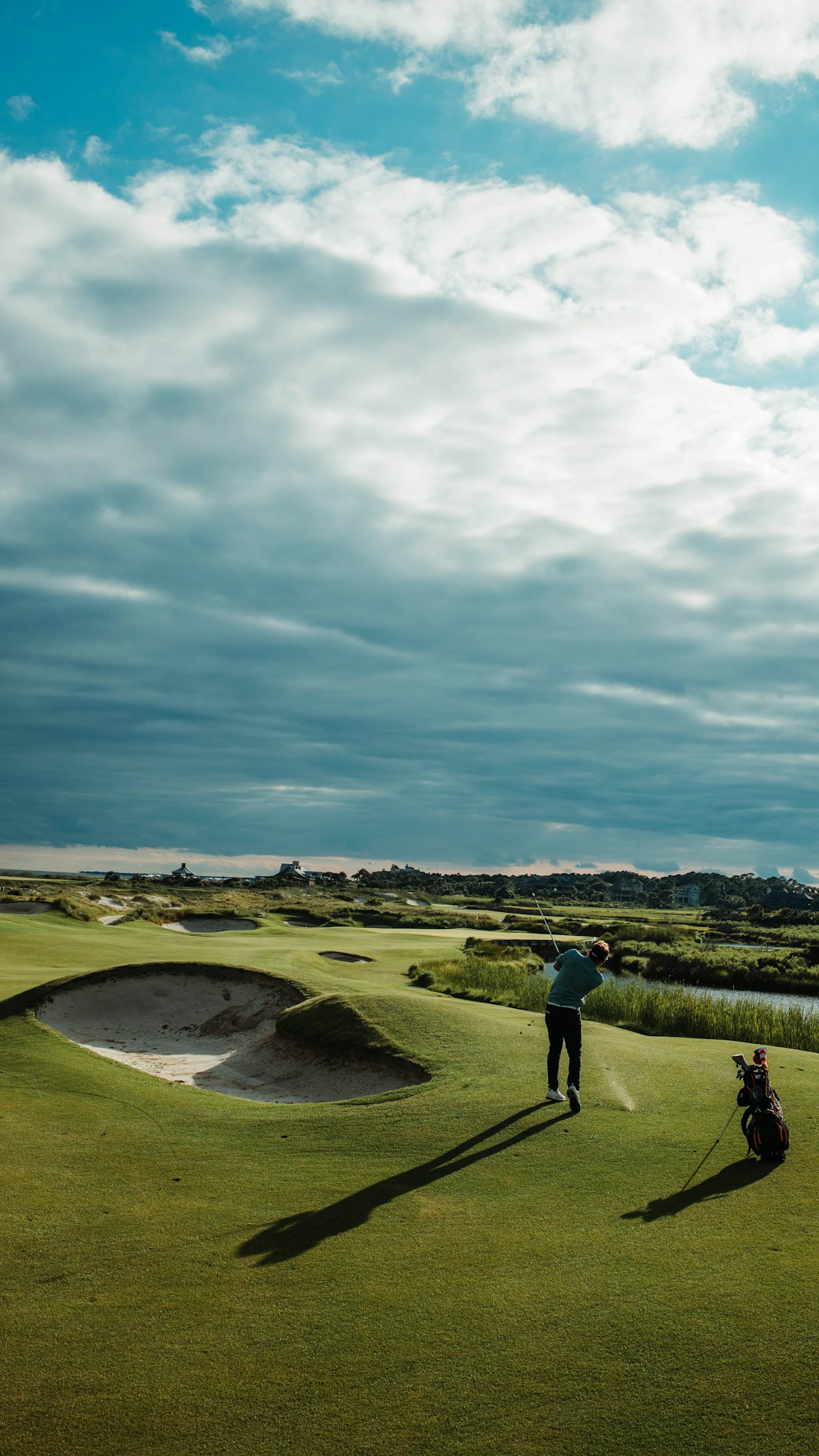
Day 5 — Rosapenna Sandy Hills + Portsalon
Today is a 36-hole day for golfers with the legs for it. Both rounds are within 40 minutes of your Downings base.
Morning: Sandy Hills Links
Sandy Hills opened in 2003 to a Pat Ruddy design and is the more dramatic of Rosapenna’s two long-standing courses. It is laid through the largest, steepest dunes on the property, with elevated tees, blind shots over crests, and greens nestled in dune valleys. The first hole sets the tone—a par-4 climbing toward a green wedged into the hillside with the Atlantic spread behind you. From there the course refuses to relent. The 8th is a strong par-4 along the cliff edge, and the 14th is a controversial par-3 that plays across a deep ravine to a green hidden behind dunes.
2026 Sandy Hills green fee: €185. Resort guests pay less. The 36-hole Rosapenna combo with St Patrick’s runs roughly €420 if booked together.
Afternoon: Portsalon Golf Club
Drive 40 minutes east via Carrigart, the head of Mulroy Bay, and across to the Fanad Peninsula. Portsalon Golf Club, founded in 1891 and a founding member of the Golfing Union of Ireland, sits along the curving white sand of Ballymastocker Bay—repeatedly voted one of the world’s most beautiful beaches. Pat Ruddy renovated the layout in 2000 and Paul McGinley has guided more recent improvements.
Portsalon is currently ranked inside the top 25 in Ireland. The opening holes run along the strand at sea level; the middle stretch climbs into more rumpled duneland; the closing holes return to the beach with views across the bay to Knockalla Mountain. Double greens, narrow fairways, and clinging rough demand straight driving. On a calm afternoon Portsalon plays as one of the most enjoyable rounds in Irish golf. In wind, it bites hard.
2026 green fee: €145 high season (May–Sep), with shoulder season rates from €110. Tee times are usually obtainable a few weeks out.
Day 6 — Narin & Portnoo or Cruit Island; Depart
The final morning offers a choice between two very different finishers, both en route back toward Belfast or Donegal Airport.
Option A — Narin & Portnoo Links
Narin & Portnoo, on the south side of Donegal Bay, has undergone a quiet renaissance. Architects Gil Hanse and Jim Wagner—of Castle Stuart, Streamsong Black, and 2016 Olympic Course fame—were commissioned to restore the course to its links roots. The first phase completed in 2019 moved several greens, added new tees, and reintroduced sand blowouts and rugged bunkering. The reaction has been overwhelmingly positive, and the course now sits at #74 in the Top 100 GB&I rankings. It is eminently walkable and substantially less expensive than the marquee venues nearby.
2026 green fee: €135 high season.
Option B — Cruit Island Golf Club
For a different kind of farewell round, drive to Cruit Island—reached by a short bridge from the mainland. Cruit (pronounced “Critch”) is a nine-hole course built on a tiny offshore island in northwest Donegal, often called one of the world’s best nine-hole courses. The 6th hole, “Lefty’s Loop,” plays across an Atlantic inlet with the green perched on a cliff. Green fees are a token €30. Play 18 in a single morning, photograph everything, and call it the best inexpensive round of your life.
After the round, drive back. Belfast International is roughly 3.5 hours via Letterkenny, Derry, and the A6. Donegal Airport at Carrickfinn is 45 minutes if departing via Dublin. Build in airport buffer time—the single-carriageway sections through Inishowen and the southern Glenshane Pass can slow with traffic.
Total Cost Breakdown
Donegal’s most underappreciated feature is its price. A six-day Donegal trip costs notably less than a comparable five-day Royal County Down / Royal Portrush itinerary, and considerably less than a southwest Ireland circuit centered on Lahinch and Ballybunion. Below is a per-golfer estimate for two players sharing a rental car, based on 2026 published rates.
| Category | Estimate (per golfer) | Notes |
|---|---|---|
| Glashedy Links | €330 | Standard visitor rate |
| Ballyliffin Old Links | €230 | Or €550 for both Ballyliffin courses same day |
| St Patrick’s Links | €295 | Resort packages may reduce this |
| Sandy Hills Links | €185 | Combo rates available with St Patrick’s |
| Portsalon | €145 | Shoulder season from €110 |
| Narin & Portnoo or Cruit Island | €135 / €30 | Cruit is unbeatable value |
| Lodging (5 nights, 4-star) | €700–€1,000 | Sharing twin/double room |
| Rental car (split 2 ways) | €250–€350 | SUV/estate, 6 days |
| Fuel + tolls | €100 | Approx 1,200 km of driving |
| Meals (6 days) | €350–€500 | Mix of pub and resort dining |
| Total per golfer | €2,720–€3,300 | Excluding international flights |
For comparison, a four-round Royal County Down / Royal Portrush itinerary at 2026 rates approaches €1,400 in green fees alone (RCD peaks above €450 and Portrush around €395). Donegal delivers more golf, more variety, and a comparable architectural quality at a substantially lower cost.
Where to Stay
Ballyliffin Lodge & Spa (Ballyliffin): A four-star hotel in the village, two minutes from the golf club. Comfortable rooms, a respected restaurant, and a small spa for post-round soaking. Best for golfers who want a relaxed village base. Rates from approximately €180 per night for a double in shoulder season.
Rosapenna Hotel & Golf Resort (Downings): The natural choice for the second half. The hotel sits on the resort property with all three Rosapenna courses on site, plus the famous Stewart-family hospitality stretching back to 1893. Stay-and-play packages bundle accommodation with multiple rounds at meaningful discounts. Rates from approximately €220 per night for a double, with package rates lower per golfer.
Carrickdale Hotel & Spa (Carrickdale): If you prefer a single base with shorter daily drives over the two-base strategy, Carrickdale near Letterkenny is a four-star option roughly equidistant from Ballyliffin and Rosapenna (each roughly an hour). Useful for groups of mixed playing abilities or those building in non-golf days. Rates from approximately €140 per night.
Self-catering rentals through Sykes Cottages or Airbnb work well for groups of four or six who want kitchen-equipped accommodation; coastal cottages in Downings, Carrigart, and Ballyliffin run €1,000–€1,800 per week in summer.
Where to Eat
Donegal’s food scene has improved markedly over the past decade, with a focus on local seafood and lamb. A few standouts:
- Nancy’s Barn (Ballyliffin): Award-winning seafood chowder—it’s won European chowder competitions—plus fresh local fish in a lively pub atmosphere. Walk-ins usually fine outside summer Saturdays.
- The Rusty Oven (Ballyliffin): Wood-fired pizza done well, ideal post-round when you don’t want a heavy meal.
- Vista Restaurant (Rosapenna): The resort’s main dining room with views over Sheephaven Bay. Modern Irish cuisine with strong wine list. Reservations essential.
- Olde Glen Bar (Carrigart): A 1768 pub serving genuinely good evening dinners—local lamb, fresh fish, hearty stews—in a low-ceilinged stone room.
- Yellow Pepper (Letterkenny): The reference point for upscale dining in the regional capital. Modern Irish menu, well-trained staff, sensible prices.
- Lemon Tree (Letterkenny): Fine-dining tasting menu under chef Chris Molloy, often regarded as the best restaurant north of Galway.
Fish to seek out locally: Inishowen oysters, Mulroy Bay mussels, wild Atlantic mackerel, Donegal Bay scallops. Beef and lamb are local; the Glenties and Ardara areas raise particularly good lamb.
Non-Golf Highlights: Slieve League, Fanad Lighthouse, Glenveagh
Even on a six-round trip, weather will eventually drive you off the course or a non-golfing partner will demand sightseeing. Donegal offers some of Ireland’s best.
Slieve League Cliffs: Among the highest sea cliffs in Europe at 601 meters—nearly three times the height of the Cliffs of Moher and dramatically less crowded. The cliffs are an hour south of Downings via Donegal Town and Killybegs. Park at Bunglass Point and walk the path; on a clear day, the view of the Atlantic spreading toward Iceland is unforgettable.
Fanad Lighthouse: One of the most photographed lighthouses in the world, perched on the cliffs at the tip of the Fanad Peninsula. From Portsalon it’s a 25-minute drive. Lighthouse tours run April through October; you can also stay overnight in the keeper’s cottages, which now operate as self-catering accommodation.
Glenveagh National Park: 16,000 hectares of mountains, lakes, and Ireland’s largest red deer herd, surrounding Glenveagh Castle on the shore of Lough Veagh. The castle gardens are some of Ireland’s finest. Walking trails range from gentle lakeshore strolls to serious mountain hikes up Errigal—Donegal’s iconic quartzite peak.
Other worthy stops include Doe Castle on Sheephaven Bay, the Inishowen 100 driving loop along the Inishowen coast, and Malin Head—Ireland’s northernmost point and a Star Wars filming location.
Booking Sequence: Much Easier Than Northern Ireland
One of Donegal’s planning advantages is that booking lead times are dramatically shorter than for Royal County Down or Royal Portrush, where peak summer tee times typically sell out 12–18 months in advance. Donegal’s elite courses generally have availability four to six months out.
Recommended booking sequence:
- 4–6 months out: Confirm flights, rental car, and book St Patrick’s Links and Glashedy Links first. These are the two most demanded tee times; everything else stacks around them.
- 3–5 months out: Book Sandy Hills, Old Links, and Portsalon. Use the Ballyliffin two-course combo to lock both in with one booking.
- 2–3 months out: Book Narin & Portnoo or Cruit Island. Reserve all hotel rooms.
- 1 month out: Confirm dinner reservations at Vista, Lemon Tree, and Yellow Pepper. Reconfirm caddie requests at St Patrick’s and Glashedy.
- 1 week out: Re-check weather forecasts and have a flex plan for the most exposed courses (St Patrick’s and Sandy Hills) in case of storm closure.
If you prefer a tour operator to handle logistics, North & West Coast Links, Sullivan Golf Travel, Hidden Links Golf, and Haversham & Baker all build custom Donegal itineraries with vehicle-and-driver options. Operator-arranged trips typically add 10–15% to total cost in exchange for handled logistics and confirmed tee times.
Variations: Add Carne or Enniscrone
If you have an extra two or three days, the easiest extension is to roll south at the end of the trip and play one or both of County Mayo’s wild links cousins.
Carne Golf Links (Belmullet, Co. Mayo): A two-and-a-half-hour drive south of Donegal Town brings you to Belmullet and Eddie Hackett’s masterpiece, often called the most natural links in Ireland. Twenty-seven holes through enormous dunes, played and operated by the local community. Green fees roughly €120 in 2026—astonishing value for a course consistently ranked in the world’s top 100.
Enniscrone Golf Club (Co. Sligo): An hour southeast of Belmullet, Enniscrone is a Hackett original later refined by Donald Steel and Tom Craddock, set against Killala Bay. €110–€130 in 2026. Many golfers consider it the best-value championship links in Ireland.
Adding Carne and Enniscrone turns this six-day trip into an eight- or nine-day deep dive into the entire northwest Atlantic coast—arguably the most varied and underrated stretch of links golf on earth.
When to Go: May–September, with Storm Caveats
Donegal’s high season runs May through September. June and July offer the longest days—you can tee off at 8 PM in midsummer—but bring the most visitors and highest rates. May and September deliver the best value-to-conditions ratio, with daylight from 6 AM to 9 PM and shoulder-season pricing on accommodation.
April and October are workable for hardy golfers but unpredictable. Atlantic storms can close exposed courses for a day or two; St Patrick’s and Sandy Hills are particularly vulnerable to gale-force conditions. Have a flex day built into your itinerary if traveling in shoulder seasons.
Winter golf (November–March) is genuinely possible but only for committed players. Many courses operate temporary greens in the worst weather, and short daylight (sunset before 5 PM) limits play. If you do travel off-season, green fees drop by 40–60% and you’ll have spectacular courses largely to yourself.
Frequently Asked Questions
Do I need a handicap certificate to play Donegal courses?
No course in Donegal strictly requires a handicap certificate, though Ballyliffin and Rosapenna ask visitors to confirm a “reasonable standard.” A maximum handicap of 28 (men) and 36 (women) is the informal benchmark. Bring your handicap card if you have one—it speeds check-in.
Can I walk or are caddies/buggies required?
All Donegal courses on this itinerary are walkable, and walking is the recommended way to play links. Buggies are available at Ballyliffin and Rosapenna but limited at smaller clubs like Portsalon and Cruit Island. Caddies are available at Glashedy, Old Links, St Patrick’s, and Sandy Hills with advance request—budget €60–€80 per caddie plus tip.
How does the border crossing work?
The Northern Ireland / Republic of Ireland border has no checkpoints; you simply drive across without stopping. Currency changes from pounds (GBP) to euros (EUR), and your phone may switch carriers. Most rental agreements at Belfast cover both jurisdictions, but verify the cross-border policy when booking.
Is six rounds in six days too much?
For most amateur golfers it’s the upper limit before fatigue compromises play. If your longest typical golf day at home is 18 holes once a week, consider dropping to four or five rounds and using the spare days for sightseeing. Walking 6,500–7,200 yards through Donegal duneland six days running is no small undertaking.
What’s the weather actually like?
Variable. Summer averages 16–19°C (61–66°F) but you should pack for 10°C and rain regardless of forecast. Wind is constant on the coast; expect 15–25 mph as a baseline with gusts higher. Quality waterproof outerwear, layers, and a knit hat make all the difference.
Should I drive myself or hire a driver?
For groups of two or three, self-drive is straightforward and cheaper. For groups of four or more, especially mixed-handicap groups planning post-round Guinness, a driver-led tour with a 7- or 8-seat van costs €350–€500 per day and removes the alcohol issue entirely. Operators like Sullivan Golf Travel package this comfortably.
Final Thoughts
Donegal is the best-kept secret in elite Irish golf, and the secret is becoming progressively less secret each year. St Patrick’s Links by Tom Doak, completed in 2021 and now ranked among the world’s top 50 courses, has become a destination unto itself, drawing American and continental European golfers who would otherwise default to County Down or Kerry. The supporting cast—Ballyliffin’s two championship layouts, Sandy Hills, Portsalon, Narin & Portnoo, Cruit Island—rounds out a portfolio of links golf as deep and as varied as anywhere in Ireland.
The trip works because the geography forces you into a specific rhythm: two bases, six rounds, drives that feel like sightseeing rather than commuting, scenery that genuinely competes with the Hebrides or the Pacific Northwest. The cost works out roughly half what an equivalent itinerary would run in the southwest of Ireland or in County Down, and tee times remain attainable on a four-to-six-month booking horizon. The food has caught up; the hotels are good; the people are spectacular.
If you’ve already played Royal County Down and Lahinch and you’re wondering what’s next on the Ireland golf bucket list, this is the answer. The drive from Belfast feels long the first time and short every time after. Donegal will be the trip you tell other golfers about for the rest of your life—right up until enough of them start going, and then it’ll just be the trip you took before everyone else.
Leave a Reply