Golf in Northern Ireland: Royal Portrush, Royal County Down & Beyond
When most golfers dream of world-class links golf, they think of St. Andrews or Turnberry. But they should be thinking of Northern Ireland. Home to two of the world’s top 5 greatest golf courses according to Golf Digest — Royal County Down (ranked #1 globally) and Royal Portrush (#4) — Northern Ireland punches far above its weight as a golf destination. The fact that over 90 golf courses exist across the province, from championship links hugging dramatic coastlines to parkland courses weaving through ancient woodlands near Belfast, makes Northern Ireland one of Europe’s most compelling golf regions. Whether you’re a serious competitive golfer seeking Open Championship venues or a casual player looking for memorable rounds in spectacular settings, Northern Ireland delivers.
The Causeway Coast: World-Class Links
The Causeway Coast of County Antrim has become synonymous with championship golf. Stretching along one of the world’s great scenic drives, this 130-mile route regularly ranks among the top road trips globally. Yet it is golf that draws serious pilgrims to this northern reaches of the island.
Royal Portrush Golf Club stands as the cornerstone of Northern Ireland’s golf identity. Situated in a triangle of giant sandhills overlooking the Irish Sea, with views extending to the hills of Donegal in the west and the Isle of Islay in the north, Royal Portrush commands one of the most dramatic settings in world golf. The clubhouse sits beneath the ruins of 13th century Dunluce Castle — a theatrical backdrop that epitomizes the marriage of natural beauty and golfing excellence that defines the region.
The club operates two championship courses: the Dunluce Links and the Valley Links. The Dunluce is the more celebrated layout — a brutal, windswept test that has hosted major championships and Open Championships. In 1951, Royal Portrush became the first course outside Great Britain to host the Open Championship, and that historic event returned in 2019 and again in 2025. Playing the Dunluce requires respect; it will humble even accomplished golfers. The par 72 course stretches to over 7,000 yards, with deep rough, elevated greens, and bunkers positioned to punish wayward shots. The greens are lightning-fast and read like topographical maps.
For visitors, green fees at Royal Portrush reflect the course’s world-class status. The Dunluce Links costs £420 per person from April through October, making it one of the more expensive rounds in the UK and Ireland. The Valley Links, while still a superb test, is more forgiving and costs £200 for the same period. Visitors must be members of recognized golf clubs and may be asked to provide handicap certificates. Bookings must be paid in full, and all fees are non-refundable upon cancellation — a strict policy that reflects demand. The club provides Powakaddy electric trolleys equipped with GPS, though both courses are walking-only (except for those with medical conditions or disabilities).
Just thirty minutes south of Royal Portrush lies Portstewart Golf Club, another multi-course complex that showcases the extraordinary density of quality golf along this coast. Founded in 1894, Portstewart operates 53 holes across three distinct 18-hole courses: the Strand Course, the Riverside Course, and the Old Course. The Strand Course is the jewel — a modern links that hosted the Irish Open in 2017. These holes run along the Portstewart Strand, a long sandy beach that provides stunning seaside scenery and challenging wind conditions. The Strand course presents a more contemporary design philosophy than Royal Portrush, with more generous landing areas and definition through bunkering and shaping rather than rough alone.
Castlerock Golf Club, founded in 1901, sits immediately west of Portstewart overlooking half of the main beach and dunes stretching from the River Bann. The club operates two courses: the Mussenden Course, the more celebrated, and the Bann Course. The Mussenden is a true links with dramatic views of the North Antrim coast and the nearby Mussenden Temple ruins. The natural topography of the area creates outstanding strategic variety, with every hole feeling different from its neighbors. Golf here rewards shot-making under pressure — the wind off the Irish Sea is nearly constant.
Ballycastle Golf Club, which opened in 1990 to a design by Des Giffin, represents a slightly different model: part links, part parkland. The opening five holes traverse parkland along the Margy and Carey Rivers and border the ruins of the 12th century Bonamargy Abbey. The course then moves to the coastline, and the final holes — known as the “top holes” — command panoramic views of Ballycastle Bay, the Mull of Kintyre, and Rathlin Island. This strategic mix of parkland and links holes makes Ballycastle particularly appealing to golfers who want variety in a single round.
County Down’s Championship Coast
Travel thirty miles south from the Causeway Coast, and you enter County Down, home to Royal County Down and a remarkable cluster of secondary links courses that would anchor many regional golf destinations but live in Royal County Down’s shadow.
Royal County Down in Newcastle is the world’s greatest links golf course according to most contemporary rankings. It is a humbling, thrilling, occasionally brutal examination of golf. The course sits at the base of the Mourne Mountains, with the mountains and the sea providing a dramatic amphitheater for the action. Every hole feels like a masterpiece — the routing uses the natural terrain with genius, the bunker strategy is diabolical, and the greens are impossibly fast and contoured. Par is a score to celebrate here. Bogey golf is respectable. Double bogeys are common even among low handicap players.
Royal County Down welcomes visitors five days each week: all day Monday, Tuesday, and Friday, as well as Thursday mornings and Sunday afternoons. Wednesday and Saturday are members-only days. Green fees in 2026 sit at approximately £425 for a single round, or £575 for two rounds in a day. However, fees vary by season — summer peak rates run higher, while November through February rates drop substantially. All groups are required to have a minimum of one caddie; if you have not pre-booked, the club will arrange a forecaddie at £100 plus gratuity (paid in cash to the caddie).
Ardglass Golf Club, located thirty miles south of Belfast and only thirty minutes from Royal County Down, has emerged as an essential complement to any Northern Ireland golf trip. Founded in 1896, Ardglass is one of Ireland’s most charming and atmospheric courses. The eighteen-hole links stretches just over 6,200 yards, but do not mistake yardage for difficulty. Eight holes feature the Irish Sea in play, and the course hugs the dramatic coastline throughout. The routing is quirky and memorable — each hole possesses character.
What makes Ardglass truly special is its clubhouse, located inside Ardglass Castle, a former 1300s fortification. The main clubhouse building dates to 1405, making it the oldest clubhouse in the world still in regular use. The 18th hole runs back to the foot of the castle, creating an iconic finishing image. Walking Ardglass connects you directly to four centuries of golfing history.
South of Ardglass, two additional links courses merit attention for visitors: Kirkistown Castle Golf Club and Warrenpoint Golf Club. Kirkistown Castle sits on the Ards Peninsula, the most easterly 18-hole golf course on the island of Ireland, and the nearest quality links course to Belfast (approximately 45 minutes by car). Designed by the legendary James Braid, Kirkistown Castle is a traditional links with fearsome par 4s — the 10th hole, at 435 yards, is considered one of the most difficult par 4s in Irish golf. Warrenpoint, further south in County Down, provides another solid links option for those exploring deeper into the region.
Belfast and Surrounds
Belfast, Northern Ireland’s capital and largest city, lacks world-ranking championship links but offers three exceptional parkland courses that rank among the finest in Ireland. These courses sit within fifteen minutes of the city center and appeal to golfers seeking quality without the crowds and green fees of the Royals.
Malone Golf Club, founded in 1895 and situated five miles south of Belfast at Ballydrain, is widely regarded as one of Ireland’s finest parkland courses. The club operates 27 holes, with all routing constructed around a magnificent 20-acre lake that defines play on numerous holes. The course meanders through 330 acres of immaculately maintained parkland along the River Lagan. The setting is pristine — tree-lined fairways, undulating terrain, and strategic bunkering create an examination that rewards precision. Malone holds equal standing with Royal Belfast and Belvoir Park among Belfast’s elite.
Belvoir Park Golf Club, founded in 1927, stretches across 163 acres of mature woodland just two miles from Belfast City Center. The course was designed by the renowned architect Harry S. Colt, whose design philosophy emphasizes strategy and beauty over length. Belvoir Park has hosted numerous prestigious championships including The Irish Open, The Irish PGA, and The Irish Close. The wooded setting creates a distinctive atmosphere — unlike the windswept links of the coast, Belvoir’s challenge comes from routing, bunkering, and green complexity. The course is easily accessible from both Belfast airports.
Shandon Park Golf Club, situated in East Belfast just three miles from the city center, is a parkland course that has won thirteen All Ireland Senior titles and claimed consecutive European Club titles in 2000 and 2001. The course combines challenging championship-level design with sculptured holes, beautiful views of Belfast and the surrounding landscape, and tour-quality greens. Shandon Park represents great value and accessibility for visiting golfers.
Royal Belfast Golf Club, while not detailed extensively in recent visitor information, remains a pillar of quality parkland golf in the Belfast market and merits research for visitors seeking additional rounds.
Fermanagh and the Lake District
Travel west from Belfast into County Fermanagh, and the terrain transforms. The low mountains give way to an extraordinary landscape of lakes, rivers, and islands. Lough Erne Resort anchors golf development in this region.
Located near the island town of Enniskillen, Lough Erne Resort sits on a 600-acre peninsula between Castle Hume Lough and Lower Lough Erne. The resort is a 5-star hotel and spa complex, the first AA and NITB Five Star Hotel in Northern Ireland, and was named Golf Resort of the Year by the Irish Golf Tour Operators Association in 2010.
The resort features two distinct courses: the Faldo Course and the Castle Hume Course. The Faldo Course was designed by six-time major champion Sir Nick Faldo and plays as a par 72 laid out across the stunning lough landscape. The Castle Hume Course sits on the edge of Castle Hume Lough and Lower Lough Erne and has established a formidable reputation as one of Ireland’s most testing layouts. The setting — water views from virtually every hole, mature trees, and dramatic weather — creates a memorable golf experience.
Beyond golf, the resort provides luxury accommodation, the award-winning Catalina Restaurant (3 AA Rosettes), a Thai-inspired spa with complimentary thermal suite and infinity pool access for hotel guests, and multiple dining venues. This makes Lough Erne an ideal headquarters for a week-long Northern Ireland golf tour, particularly for those seeking a more relaxed pace and less intense competition than the championship links courses.
The Causeway Coast Golf Trail
The Northern Ireland Tourism Board and regional tourism bodies have developed the Causeway Coast Golf Trail to encourage golfers to experience the full spectrum of courses and scenery across the region. The trail connects Royal Portrush, Portstewart, Castlerock, Ballycastle, and several secondary links courses through a scenic driving route that showcases castles, waterfalls, giant basalt columns, and coastal cliffs. Many tour operators offer multi-day golf packages that bundle accommodation, green fees, and guided tours into comprehensive experiences.
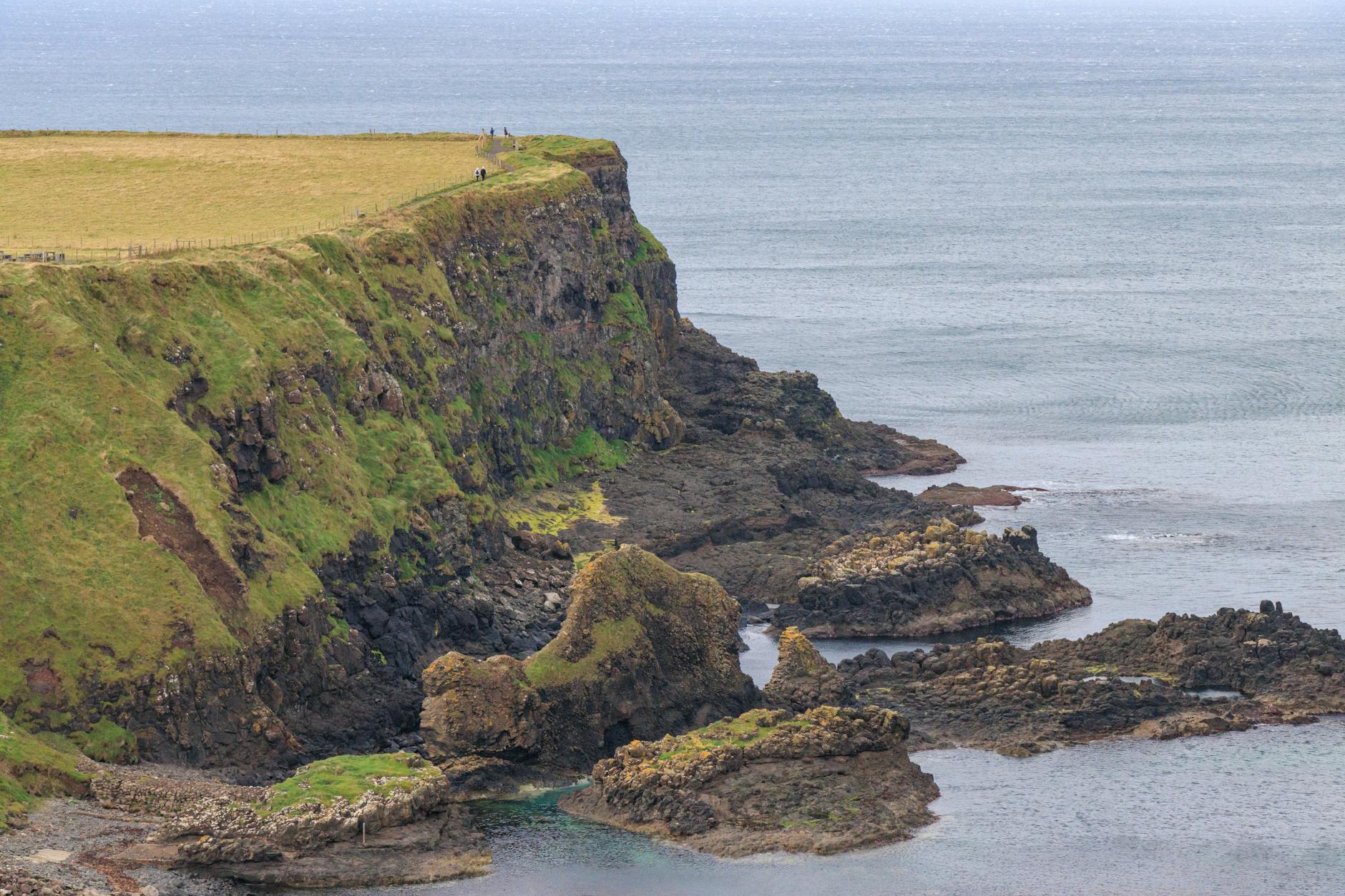
The trial concept acknowledges what serious golfers already know: a single course, however magnificent, only tells part of the story. The Causeway Coast is one of the world’s greatest scenic drives — a 130-mile ribbon connecting ancient fortifications, natural wonders, and villages that have changed little in centuries. Driving between golf courses along this route, you experience Game of Thrones filming locations, the Giant’s Causeway (a UNESCO World Heritage site), Dunluce Castle ruins, and endless views of the North Atlantic. This integration of golf with cultural tourism distinguishes Northern Ireland from more golf-focused destinations.
Currency and Practical Matters
A critical practical consideration for visitors: Northern Ireland uses British pounds (£), not euros (€). While the Republic of Ireland adopted the euro, Northern Ireland remains part of the United Kingdom and uses sterling. Check current exchange rates carefully when budgeting, and understand that many tourist services price in £. Credit cards and mobile payments are widely accepted at clubs and accommodations.
Additional practical matters: driving is on the left side of the road, matching the UK standard. If renting a car from Dublin or the Republic, you will be driving on the opposite side from your home country if you are from continental Europe or North America. Driving is not difficult for visitors accustomed to UK roads, but plan additional time for navigation.
Healthcare in Northern Ireland falls under the UK system (National Health Service), which is entirely separate from the Republic of Ireland’s healthcare system. EU citizens should carry appropriate travel insurance, as reciprocal healthcare agreements are limited post-Brexit. All visitors are advised to carry comprehensive travel insurance including medical coverage.
Getting There
Most international visitors arrive through Dublin Airport (DUB), located approximately two hours’ drive south of Belfast. From Dublin, the drive to Royal County Down takes approximately three hours; the drive to Royal Portrush takes approximately three and a half hours. Alternatively, visitors can fly directly into Belfast International Airport (BFS), located approximately twenty kilometers west of Belfast city center, or George Best Belfast City Airport (BHD), located within four kilometers of the city center. Belfast City Airport provides more convenient access for short visits.
Rental cars are essential for golf tours. The Causeway Coastal Route is best experienced by car, and individual courses scattered across the province require transportation. Public transport exists but is limited, and the flexibility of a rental vehicle substantially enhances the experience. Drive times between major courses are manageable — no more than ninety minutes between any two championship courses on the Causeway Coast.
Accommodation options range from luxury resorts like Lough Erne to country hotels, golf lodges, and charming bed-and-breakfast establishments in coastal villages. Many accommodations offer golf packages that bundle accommodation with green fee credits. Peak season (May through September) books quickly, and reservations should be made months in advance, particularly for Royal County Down and Royal Portrush.
Sample Itineraries
Three-Day Causeway Coast Intensive
Day 1: Fly into Belfast, rent a car, drive to Portrush (ninety minutes). Play Portstewart Strand Course. Evening in Portrush.
Day 2: Play Royal Portrush Dunluce Course (morning). Afternoon round at Castlerock. Evening in Portrush.
Day 3: Play Ballycastle Golf Club (morning). Return to Belfast. Depart.
Five-Day Comprehensive Northern Ireland Tour
Day 1: Arrive Belfast. Play Malone or Belvoir Park (Belfast parkland). Stay in Belfast.
Day 2: Drive to Newcastle (two hours). Play Royal County Down (morning only, as the course is demanding). Evening in Newcastle.
Day 3: Play Ardglass Golf Club (morning). Afternoon driving to Portrush (ninety minutes). Evening in Portrush.
Day 4: Play Royal Portrush Dunluce Links (morning). Afternoon at Portstewart Strand. Evening in Portrush.
Day 5: Play Castlerock (morning). Return to Belfast (two hours). Depart.
Seven-Day Full Experience
Days 1-2: Belfast — play Malone, Belvoir Park, and Shandon Park. Explore city.
Days 3-4: Newcastle — play Royal County Down (twice if possible) and Ardglass.
Days 5-6: Portrush — play Royal Portrush Dunluce, Portstewart, Castlerock, and Ballycastle.
Day 7: Lough Erne Resort for relaxation and final round (Faldo or Castle Hume course).
Ten-Day Ultimate Tour
Follow the seven-day itinerary above, then add
Days 8-9: Enniskillen and Lough Erne Resort (two rounds, spa time, fine dining).
Day 10: Drive to Dublin or Belfast for departure. Optional morning round at a secondary course (Kirkistown Castle or Warrenpoint).
Closing
Northern Ireland represents an underappreciated major golf destination. While international golfers flock to Scotland and the Republic of Ireland, Northern Ireland’s combination of two world-number-one-ranked courses, a wealth of secondary links and parkland options, dramatic coastal scenery, and relatively less crowded conditions creates a compelling alternative. The Causeway Coastal Route itself is a destination — few drives rival its blend of natural wonder and historical significance.
Plan your Northern Ireland golf experience with months of advance booking for the championship courses. Arrive with realistic expectations — these courses will humble you. Bring quality equipment, especially a reliable putter and low-lofted wedges. Pack layers and weatherproof clothing; the Irish Sea keeps the coast cool and windy even in summer. Budget for green fees that rival the finest courses globally, but understand that you are paying for championship-caliber routing and maintenance.
A week in Northern Ireland golfing will deliver memories equal to any golf destination on earth. You will play two of the world’s five greatest courses. You will see landscapes of extraordinary beauty. You will meet fellow golfers from around the globe united by passion for the game. And you will return home with stories and a golf experience that transcends the scorecard.
Sources Used In Research:
Key Information Sources:
Golf Courses and Visitor Information:
Tourism and Regional Information
Accommodation and Golf Travel:
Leave a Reply