3-Day Dublin Golf Getaway: Links Golf Without Leaving the East Coast
The myth that an Ireland golf trip requires a week, a rental car the size of a small bus, and 600 kilometres of motorway driving needs retiring. For the time-pressed golfer staring down a long weekend, a Dublin golf trip 3 days in length delivers championship links, a world capital city, and minimal repositioning, all from a single airport. Within a 60-minute drive of Dublin Airport sit five top-class links courses, including Portmarnock Golf Club (a perennial fixture in global top-50 lists), The Island Golf Club, Royal Dublin, Portmarnock Resort’s Jameson Links, and County Louth at Baltray. Add Pat Ruddy’s idiosyncratic European Club just over an hour south, and you have arguably the densest concentration of elite links golf in the British Isles.
This guide lays out a tested three-day routing, arrive Friday, play three premier courses Friday through Sunday, depart Monday morning, anchored by a single hotel base. No internal repositioning. No cross-country drives. No wasted afternoon. You will play 54 holes of authentic links golf, eat well in Dublin city, and still board your flight home with energy left in your legs.
Itinerary at a Glance
| Day | Course | Drive from Dublin Airport | Approx. Green Fee (Peak) | Evening |
|---|---|---|---|---|
| Day 1 (Fri) | The Island Golf Club | 20 minutes | €295 | Howth seafood dinner |
| Day 2 (Sat) | Portmarnock Golf Club (Old) | 15 minutes | €395 | Dublin city, Trinity, dinner in Merrion Row |
| Day 3 (Sun) | County Louth (Baltray) | 50 minutes | €205 | Drive back, depart Monday AM |
| Total | 54 holes | , | ~€895 in green fees | , |
This routing balances marquee with manageable: a gentler reintroduction to links on Friday, the headline round on Saturday with maximum daylight and energy, and a slightly farther but easier-paced Sunday before evening departure. Every course sits north of Dublin city, which means you never cross the city centre during the morning rush.
Routing Logic: Why Dublin Beats the Southwest for a Short Trip
If you have a full week, the southwest of Ireland, Lahinch, Ballybunion, Tralee, Waterville, Old Head, is the bucket-list run. But the Dingle and Kerry circuits demand a minimum of five playing days plus transit; squeezed into three, the math breaks. You spend more time staring at hedgerows from the back of a Mercedes V-Class than walking fairways. Dublin, by contrast, is engineered for the short break.
The geography is the secret. The northeast suburbs of the city, Portmarnock, Malahide, Donabate, and Sutton, sit on a peninsula shelf of pure linksland that produced championship golf decades before Pebble Beach was a sketch. Three top-tier links sit within 25 minutes of one another. Dublin Airport is in the middle of the cluster, not at the end of a motorway. You can land at noon, change at the hotel, and tee off by three.
The other underappreciated argument: Dublin is a real city. After your round you are not negotiating a hotel restaurant menu in a four-house village. You are choosing between a Michelin-starred dining room in Merrion Square, a Howth pier seafood restaurant where the catch is hours old, or a backstreet pub where the Guinness pour takes the regulation 119.5 seconds. That cultural depth turns a 72-hour golf break into a genuine getaway, not an expensive errand.
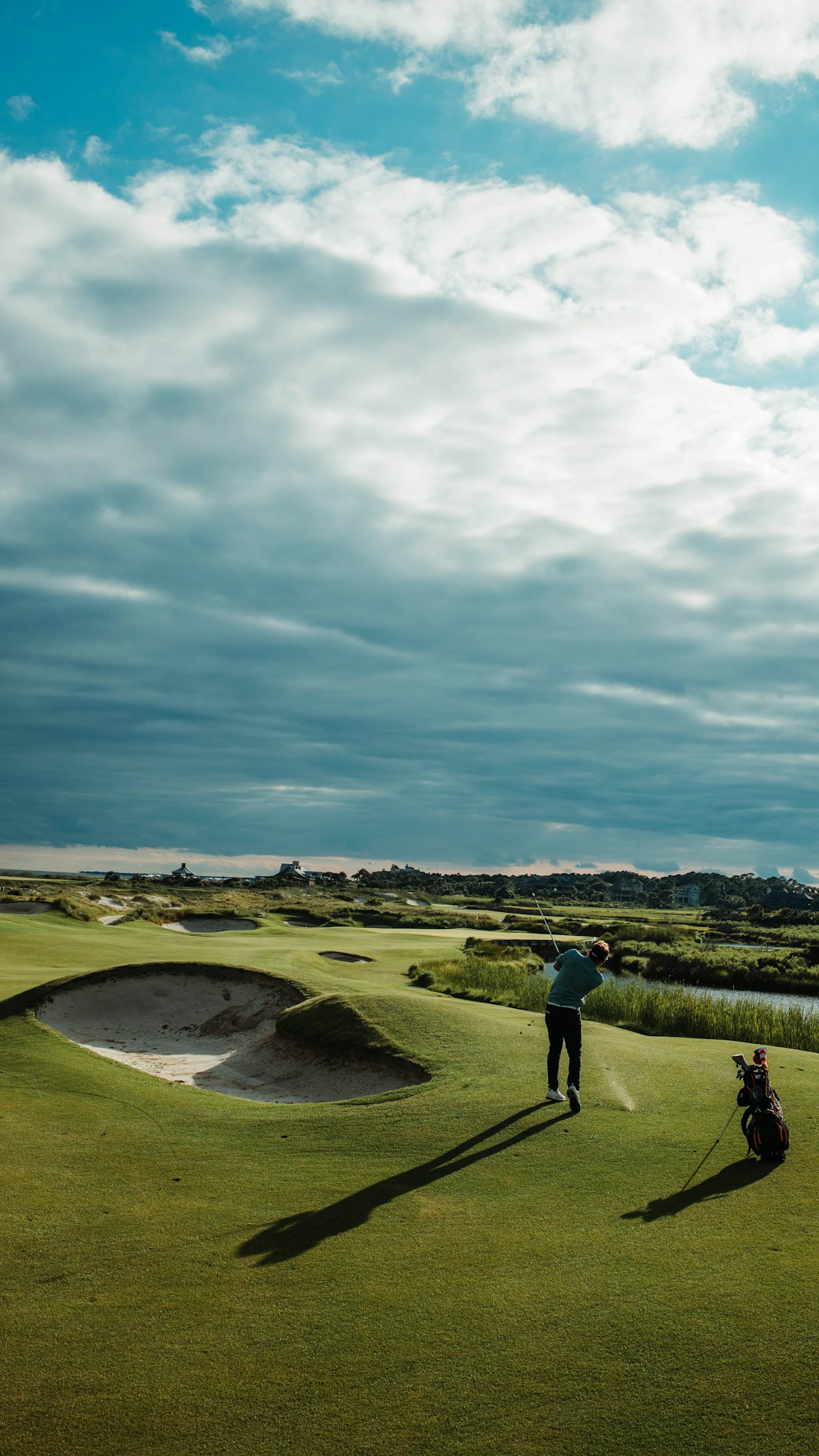
Day 1, Arrive Dublin, Play The Island Golf Club
Land at Dublin Airport (DUB) ideally before 11:00 AM. Customs and immigration in the new Terminal 2 are routinely fast for US and UK arrivals, and your rental car (or pre-booked driver) is a 10-minute walk away. From the airport, The Island Golf Club at Donabate sits 17 kilometres north, roughly 20 minutes door to clubhouse via the M1 and a short rural lane that ends at one of Ireland’s most distinctive links peninsulas.
Why The Island Works as a Day-One Course
The Island is a smart opener for three reasons. First, it is the closest premier links to the airport, which means your travel-day fatigue does not eat your tee time. Second, the routing winds through some of the largest natural sand dunes in Irish golf without becoming brutal, it rewards committed strikes and punishes only the genuinely poor ones. Third, the course’s peninsula setting (the Atlantic to one side, an estuary to the other) provides instant proof that you are in fact in Ireland and not at home, which is a psychological gift after a transatlantic flight.
Course Particulars
Founded in 1890 and reachable historically only by boat (hence the name), The Island plays par 71 at 6,889 yards from the championship tees. The course was thoughtfully redesigned by Martin Hawtree in the 2010s, opening up sightlines and reshaping greens without surrendering the original character. Jordan Spieth famously called it one of his favourite rounds in Ireland. Visitor green fees in 2026 sit at €270 Monday–Thursday and €295 Friday–Sunday, with the visitor season running April 1 through October 31.
Holes to Watch
The 13th, a par-3 played from an elevated tee straight at the Atlantic, is the postcard. The 14th, a short par-4 squeezed between two of the tallest dunes on the property, will tempt you into pulling driver, often a mistake. Pay attention to the closing par-3 17th and the demanding par-4 18th, which is genuinely one of the better closing holes in Ireland.
Day 1 Evening: Howth
After your round, drive 25 minutes south to Howth, a fishing village clinging to a rocky headland on Dublin Bay. The harbour is lined with seafood restaurants, Aqua, The Oar House, and King Sitric all pull from boats moored 50 metres away. A simple plate of grilled Dublin Bay prawns and a pint of Smithwick’s, watching the lighthouse blink across the water, is the correct way to end your travel day. Be in bed by 10 PM. Tomorrow is the headline.
Day 2, Portmarnock Golf Club (Old Course)
This is the round you flew for. Portmarnock Golf Club, the original, founded in 1894, sits on a 500-acre sandy peninsula 15 minutes south of The Island and 15 minutes from Dublin Airport. It has hosted the Irish Open 19 times, the 1991 Walker Cup, multiple British Amateur Championships, and was nominated as a host venue for The Ryder Cup. It is consistently ranked inside the world’s top 50 courses.
The Course Itself
Portmarnock plays par 72 at 7,466 yards from the championship tees, a length that sounds intimidating but plays honestly because the wind, rather than the yardage, is the defining defence. There are no blind drives. There are no gimmick holes. There is no signature waterfall green. Instead there are eighteen consistent, beautifully proportioned holes laid across pure linksland, with greens that reveal their character only when you stand over your approach. Bernhard Langer once described it as the fairest test of championship links in Europe, which is high praise from a man who hits fairways for a living.
The 14th and 15th
Most regulars will tell you the back nine at Portmarnock is the best stretch of championship golf in Ireland. The par-4 14th, running along the estuary edge, demands a tee shot that flirts with out-of-bounds left and a long-iron approach to a subtly contoured green. The par-3 15th, played across the dunes to a green guarded by deep pot bunkers, has been called by Arnold Palmer “one of the great short holes in golf.” Get through 14 and 15 with pars and you will remember it.
Booking and Fees
Visitor green fees at Portmarnock in 2026 are €395 (peak season, weekday and weekend) on the Old Course. Note: the club is generally booked solid through September 2026 and accepting bookings for the 2027 visitor season (April 1 – September 30). If you cannot secure the Old Course, the adjacent Portmarnock Resort’s Jameson Links (a separate course on the same peninsula, designed by Bernhard Langer) is a credible alternative at €320 in summer. We will return to booking sequence below.
Day 2 Evening: Dublin Proper
Drive 25 minutes south into Dublin city for the night. After a quick clubhouse beer (the President’s Bar at Portmarnock is wood-panelled and excellent), shower at your hotel and head to Merrion Row or Baggot Street. Etto, a small Italian wine bar with a hyper-seasonal menu, is a low-key favourite among Dubliners. If you want a bigger evening, Bastible in Rathmines is among the city’s most respected modern Irish kitchens. Walk back through Stephen’s Green and across Grafton Street, you will earn your sleep.
Day 3, County Louth (Baltray) or The European Club, Then Depart
Day 3 is the choose-your-own-adventure round. You have two strong options depending on your appetite for one final drive and the difficulty of your target course.
Option A: County Louth Golf Club at Baltray (Recommended)
County Louth, almost universally referred to as “Baltray” after the village it sits beside, is a 50-minute drive north of Dublin Airport. Founded in 1892 and significantly redesigned by Tom Simpson in 1938, it plays par 73 at 7,031 yards. It has hosted the Irish Open in 2004 and 2009 and is annually ranked in Ireland’s top 10 links. The greens are widely considered among the finest in the country, firm, true, and full of subtle break. Visitor green fees are €185 weekday and €205 weekend in peak season (May–September).
Why we recommend Baltray as the closer: it is comparatively easier to get a tee time than Portmarnock, the routing is gentle on tired legs, and the post-round drive back to the airport (45 minutes via the M1) is the most efficient airport return on the trip. You can finish a Sunday morning round, eat lunch in the clubhouse looking at the Mournes across the bay, and still make a 6 PM flight comfortably.
Option B: The European Club, Brittas Bay
Pat Ruddy’s lifelong masterpiece, The European Club, sits an hour south of Dublin in Brittas Bay, County Wicklow. It is a 20-hole course (yes, 20, holes 7a and 12a appear on the scorecard), routinely ranked in Ireland’s top 10, and frequently described as the toughest course in the Republic. Visitor green fees were €240 in peak season prior to the 2025 ownership change.
Important update: in 2025 the club was sold and announced an extensive renovation, with closure planned through most of 2026 and a 2027 reopening. Confirm directly before booking. If the European is not available, a credible Wicklow alternative is Druids Glen Heath, a Pat Ruddy heathland design about 50 minutes south of the airport.
Option C: Royal Dublin (City-Adjacent)
If you would rather not drive far, Royal Dublin sits on Bull Island in Dublin Bay, 10 minutes from the city centre and 20 from the airport. Founded in 1885 (Ireland’s second-oldest club), it is a Harry Colt redesign with the rare distinction of an opening tee shot you can reach by walking from the city. The visitor green fee is approximately €235 (peak), which includes lunch at Bar 19. It is shorter and less demanding than Portmarnock or Baltray, but it is genuine, history-rich links.
Total Cost Breakdown (Per Golfer, 2026 Pricing)
| Line Item | Estimated Cost (€) | Notes |
|---|---|---|
| The Island green fee (Day 1) | 295 | Weekend rate, peak season |
| Portmarnock Old green fee (Day 2) | 395 | Peak season |
| County Louth green fee (Day 3) | 205 | Weekend, peak season |
| Caddies (3 rounds, suggested) | 240 | €60 fee + €20 tip per round |
| Hotel, Dublin city, 3 nights | 540 | Average €180/night, 4-star |
| Rental car or driver (3 days) | 350 | Mid-size hatchback or shared transfer |
| Meals (3 dinners, 3 lunches) | 360 | Mix of clubhouse and city restaurants |
| Pints, taxis, sundries | 150 | Realistic, not lavish |
| Total | ~€2,535 | Excluding flights |
Two golfers sharing a twin room and rental car will reduce the per-person figure to roughly €2,150. A four-ball sharing two cars and twin rooms will land closer to €2,000 per golfer. Compared with a full Southwest Ireland week (€4,500–€6,000 per golfer), this is exceptional value for top-50 world links exposure.
Where to Stay: City-Centre vs. Course-Side
The hotel decision is the trip’s most consequential non-golf choice. There are two valid philosophies and one bad one.
Philosophy 1: City-Centre Base (Recommended)
Stay in central Dublin and drive 20–25 minutes north each morning to the courses. You sacrifice a few minutes of sleep in exchange for genuine evenings out, a shorter walk to dinner, and the cultural texture of Dublin proper. We strongly prefer this approach for a 3-day trip.
The Westbury, Grafton Street
A discreet 5-star tucked off Grafton Street with arguably the best location in Dublin. Rooms in 2026 run €380–€520. Walk to dozens of restaurants. The breakfast at the Wilde Restaurant is excellent and worth setting an alarm for.
The Merrion, Upper Merrion Street
Five Georgian townhouses joined at the hip, opposite Government Buildings. Old-school grandeur, the city’s most thoughtful art collection in any hotel, and the Cellar Bar pours an exemplary pint. Rooms €420–€620. The ride out to Portmarnock takes the same 25 minutes as anywhere else in central Dublin.
The Dean, Harcourt Street
A 4-star design hotel with a rooftop bar (Sophie’s) that is one of the city’s better Sunday-evening spots. Rooms €220–€320. Excellent value if you want central without paying 5-star prices.
Philosophy 2: Course-Side Base
Stay at Portmarnock Resort, walk to the Jameson Links, and drive 10 minutes to The Island and 15 to Portmarnock Old. The trade-off is dining, you eat at the resort or in the village.
Portmarnock Resort & Jameson Golf Links
4-star resort built around the original Jameson family country house. Direct access to a Bernhard Langer links course, a strong spa, and a beach. Rooms €260–€380 in 2026. The Snug bar is genuinely good. Best for golfers who want every minute on or near grass.
The Bad Option
Avoid the airport hotel cluster and the generic Sandymount/Ballsbridge mid-tier chains. They split the difference badly: too far from courses for convenience, too far from city for atmosphere, and the breakfast buffet is a cruel start to a links morning.
Where to Eat and Drink
Pubs Near Portmarnock
O’Dwyers Bar & Grill, in the heart of Portmarnock village, is the local pub for a quick post-round pint and a plate of fish and chips before driving back to town. The President’s Bar inside Portmarnock Golf Club is open to visitors with tee times and serves a decent club sandwich and a properly poured pint. The Snug at Portmarnock Resort is more polished, leather chairs, a wall of vintage clubs, espresso in the morning and Guinness in the evening.
Howth Seafood
The Oar House on the West Pier serves grilled hake and Dublin Bay prawns the way they should be served, simply, with brown bread and lemon. Aqua, at the end of the pier, is more ambitious and has a wine list to match. King Sitric, the village’s senior seafood institution, is a smarter dinner if you want white tablecloths and a long wine list.
Dublin City Restaurants Worth a Tee Time
Etto on Merrion Row is a small wine bar with a tight, modern Italian menu and a wine list that rewards reading. Bastible in Rathmines is the city’s best modern Irish kitchen at the value end of fine dining. Chapter One under Mickael Viljanen holds two Michelin stars and is the destination dinner if you have a four-ball with one big-night budget. For a casual Saturday lunch, The Old Spot in Bath Avenue does the platonic ideal of a Sunday roast on Sundays and a very good steak frites the rest of the week.
The Temple Bar Reality Check
Temple Bar is the area every first-time visitor walks through. Walk through it and keep walking. The original Temple Bar pub charges €10 a pint, the music is loud, and there are no actual Dubliners in the building. For an honest Dublin pub, walk five minutes north to Mulligan’s of Poolbeg Street (since 1782, James Joyce drank here), or to Kehoe’s on South Anne Street, where the upstairs lounge is a converted Victorian living room. Or, for the best pint of Guinness most regulars will name, The Long Hall on South Great George’s Street.

Non-Golf Hours: What to Do
You will not have unlimited time, but a 3-day Dublin trip should not be only golf. Two or three of the following slot easily into mornings and evenings.
- Trinity College and the Book of Kells: A 30-minute self-guided tour of the Old Library and the illuminated 9th-century Gospels. Booking ahead is essential. Even non-readers find the Long Room one of the great photographic interiors in Europe.
- Guinness Storehouse: Touristy but excellent. Seven floors, a rooftop Gravity Bar with 360-degree views, and a perfect pint included. Allow two hours.
- Howth Cliff Walk: A flat 6-kilometre coastal loop that takes 90 minutes and views the Baily Lighthouse and the south Dublin coast. Easy stretch for legs after a long round.
- Glasnevin Cemetery: Ireland’s national cemetery and the resting place of Michael Collins, Daniel O’Connell, and Charles Stewart Parnell. The 90-minute guided tour is one of the most consistently praised history experiences in Dublin.
- Kilmainham Gaol: The 1916 Rising prison, preserved as a museum. Booking essential. Sobering and excellent.
- The National Gallery of Ireland: Free to enter. The Yeats collection (Jack B., not W. B.) and the Caravaggio Taking of Christ alone justify a stop.
Booking Sequence: When to Reserve What
The booking calendar for a Dublin trip is more demanding than people expect. Portmarnock in particular is a long-lead reservation. Treat the sequence below as a hard checklist.
- 12–10 months out: Portmarnock Golf Club. The Old Course opens its visitor calendar approximately 12 months in advance. By 9 months out, summer Saturdays are typically gone. Submit your request by email ([email protected]) the moment the calendar opens. Confirm date and group size; deposit follows.
- 8–6 months out: County Louth (Baltray). Easier than Portmarnock but still books out summer weekends 6 months ahead. Sunday tee times go fastest because they are the natural closing-day choice.
- 6–4 months out: The Island Golf Club. Friday afternoon tee times for travelling parties are usually available 4 months ahead, but not the day of arrival.
- 4 months out: Hotels. Dublin city hotels do not always sell out, but rates rise sharply inside 90 days, particularly during Six Nations rugby weekends, the Dublin Marathon (October), and Lansdowne Road concert nights.
- 3 months out: Rental car or driver. Booking a chauffeur for the trip (one driver, three days, all transfers and course transit) costs €1,000–€1,400 split among a four-ball and removes the rental-car element entirely. Honest evaluation: for groups of four, a driver pays for itself in stress and pints permitted.
- 1 month out: Reconfirm everything. Email each course to reconfirm tee time, group size, and caddie request. Reconfirm hotel.
- 1 week out: Pack waterproofs, even in July. The east coast of Ireland is drier than the west, but it is not dry.
Variations: Swap Royal Dublin or Add a Fourth Day
The Royal Dublin Swap
If you cannot get a Portmarnock Old tee time, the strongest substitution is to bring Royal Dublin in as your Day 2 round and shift the marquee status to County Louth on Day 3. Royal Dublin’s Bull Island setting, 10 minutes from the city centre, with a tee box practically in Dublin Bay, is a different experience from Portmarnock or The Island. It is a Harry Colt design, par 72 at 7,269 yards, with a green fee around €235 that includes lunch. Less heroic, but historically rich and easy to access.
The Four-Day Stretch
An extra night enables a fourth round, and the obvious slot is Portmarnock Resort’s Jameson Links on the morning after your Portmarnock Old round. The two courses are 600 metres apart on the same peninsula, and Jameson Links is a Bernhard Langer design that will not embarrass itself in that company. Visitor green fees in 2026 are €320 (summer) and €150 (winter). Alternatively, use Day 4 for The European Club (when it reopens in 2027), Druids Glen Heath, or a leisurely city day with Trinity, Glasnevin, and a long Sunday lunch.
The Pre-Trip Add-On: Carton House
If you are mixing parkland with links, Carton House (a Fairmont resort 30 minutes west of Dublin) has two championship parkland courses, the Montgomerie and the O’Meara, and a 1,100-acre Palladian estate. It is a softer first night before the links assault.
When to Go
The Dublin links season effectively runs April through October, with shoulder months at the bookends.
- April–Early May: Cool, occasional rain, firm turf, best green-fee value (10–15% below peak), tee times more available. Daylight runs 6:30 AM to 8:30 PM by mid-April. Strong recommendation for a first Dublin trip.
- Mid-May to Mid-September: Peak season. Premium pricing across all courses, near-impossible to walk on at Portmarnock, but the longest daylight (sunrise 5 AM, sunset 9:30 PM in late June). Weather is the most reliable, though “reliable” in Ireland still includes rain.
- Late September–October: The connoisseur’s window. Crowds thin, tee times open up, and the autumn light on the Irish Sea is genuinely beautiful. Green fees often drop 10–20%. The Ryder Cup and the Open Championship are over and clubs settle into a relaxed rhythm.
- November–March: Off-season. The Island typically closes for visitors November to March; Portmarnock reduces visitor access; County Louth keeps a winter rate but on temporary greens during frost. Skip unless you are deeply committed to cold-weather links and willing to accept compromised conditions.
The single best week, in our view, is the second week of May, post-Easter pricing, full course conditions, long days, and a low probability of frost or storms.
Related guides
- Ireland Golf Trip Itineraries (2026) — Day-by-Day Regional Plans
- Northwest Ireland Golf Itinerary — Donegal Links Road Trip
- Wild Atlantic Way Golf Road Trip — 14-Day Coastal Itinerary
- 7-Day Southwest Ireland Golf Itinerary — Kerry & Clare Day-by-Day
- 5-Day Northern Ireland Golf Itinerary — Portrush & County Down
- 10-Day Ireland Golf Trip — Ultimate North to South Itinerary
- Budget Ireland Golf Trip — 7 Days Under $3,000 (2026 Prices)
- Luxury Ireland Golf Trip — 5-Star Itinerary for Serious Golfers
FAQ
Is a Dublin golf trip 3 days actually enough?
Yes. The geography enables three premier rounds with no internal repositioning, something the Southwest cannot offer in three days. You will play 54 holes, see Dublin city, eat well, and leave rested. Anyone telling you that you must do a full week is selling a longer package.
Do I need a handicap certificate?
Portmarnock Golf Club requests a handicap of 24 or less for men and 36 or less for women. The Island and County Louth do not enforce strict handicap limits but appreciate evidence of a recognised handicap. Bring a digital screenshot or printout of your home club handicap record.
Caddies or trolley?
Take a caddie at least at Portmarnock. The wind reads, the green grain, and the strategic instruction are worth €60 ten times over on a course you have never played. Trolleys are available at all three courses. Buggies are restricted (medical only at Portmarnock; available with conditions at The Island and County Louth).
What about the Open Championship?
Royal Portrush hosted The 153rd Open Championship in 2025; The 156th Open at Birkdale falls in 2028. Neither is in the Republic of Ireland, but if you want to pair Dublin with Northern Ireland, Royal County Down (45 minutes north of Belfast) is the obvious add. That converts a 3-day trip into a 5-day cross-border itinerary.
Can I do this trip without a rental car?
Yes. A pre-arranged driver covering all three days is the easier option for a four-ball. Public transport to the courses is poor; taxis to and from Portmarnock or The Island run €40–€55 each way. A driver at €1,200 across four golfers is roughly the same total cost and considerably more pleasant.
Are the courses walkable?
All three are walking courses by design and by tradition. Portmarnock and The Island are flat to gently rolling. County Louth has slightly more elevation change but nothing strenuous. Allow 4 hours 15 minutes per round walking with a caddie and 4 hours 45 minutes if you are pulling a trolley solo.
How early should I arrive at the course?
Forty-five minutes minimum at Portmarnock and Baltray, where the practice facilities reward warm-up time. Thirty minutes is sufficient at The Island, which has a smaller range. Bring your own balls if you are on a tight budget, range fees are not always included.
Final Thoughts
The 3-day Dublin golf trip is one of the most efficient elite-golf weekends in Europe. You step off a transatlantic flight and within four hours are walking up the 1st fairway at The Island. You sleep that night in a city of literature and Guinness. You wake on Saturday and play the round of your life on a course Bernhard Langer called the fairest test in Europe. You finish Sunday at Baltray with the Mournes across the bay and the airport 45 minutes away. You leave on Monday morning having played 54 holes of authentic Irish links without ever leaving the east coast.
The Southwest will still be there for the bucket-list week. But for the long weekend, the unexpected window of free time, the trip you can sneak in without burning a fortnight of leave, Dublin is the answer. Book Portmarnock first, build the rest of the trip around it, and trust the geography. The east coast of Ireland has been hosting golfers since 1885. It knows how to do a 3-day getaway.