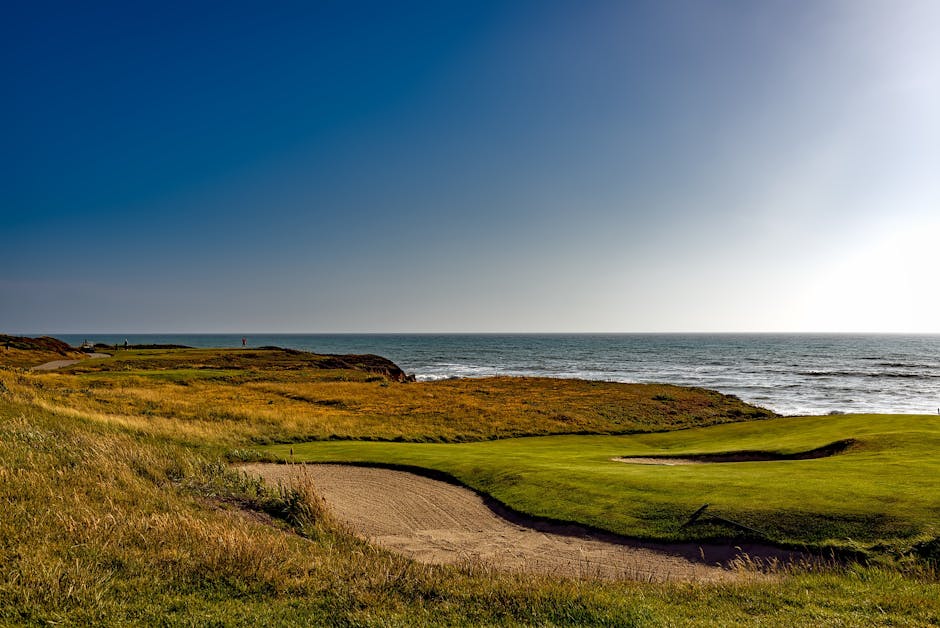
Ballybunion Old Course Review: Hole-by-Hole Guide

Standing on the cliffs of County Kerry with the Atlantic Ocean rolling below, it’s easy to understand why Tom Watson called Ballybunion his favourite golf course in the world. The Old Course at Ballybunion Golf Club is more than just a collection of eighteen holes, it’s a masterpiece of natural golf architecture where the land, sea, and sky converge to create one of Ireland’s most revered links challenges. This comprehensive hole-by-hole guide will prepare you for one of golf’s greatest experiences.
A Brief History of Ballybunion Golf Club
Ballybunion Golf Club was founded in 1893, with the inaugural meeting held on August 18 at the Castle Hotel in Ballybunion. Like many early golf ventures, the club faced financial difficulties and closed in 1898, only to be resurrected in the early twentieth century. Captain Lionel Hewson, a respected figure in Irish golf, designed a nine-hole layout in 1906, which was extended to twelve holes by 1926. Fred Smith completed the expansion to eighteen holes in 1927, routing the course through the expansive dunes that define modern Ballybunion.
The turning point in Ballybunion’s international recognition came in 1937 when the Golfing Union of Ireland brought the Irish Amateur Championship to this previously unknown coastal course. The legendary English architect Tom Simpson, working alongside fellow designer Molly Gourlay (a two-time English Ladies Amateur Champion), made subtle but crucial alterations to prepare the course for championship play. Rather than reimagining the layout, Simpson’s philosophy was clear: he “could not improve on God’s work.” He relocated just three greens and introduced some new bunkering, demonstrating restraint and respect for the natural landscape, a principle that still guides the course today.
In 2000, Ballybunion hosted the Irish Open on the European Tour, further cementing its status as one of Europe’s finest championship links. The club also hosted the Home Internationals in 2003 and the Palmer Cup in 2004, proving its ability to stage events of the highest caliber.
Why Ballybunion Captured the World’s Attention
Tom Watson’s endorsement in 1981 fundamentally changed Ballybunion’s trajectory from local secret to international destination. After being convinced to visit by his friend Sandy Tatum, then USGA President, Watson played the Old Course and was profoundly moved. His assessment was unequivocal: “It’s my favourite golf course. There is a natural beauty to it. This was the way golf is meant to be played, the epitome of links golf.” He further proclaimed: “I am now of the opinion this is one of the best and most beautiful tests of links anywhere in the world.” Watson even advised fellow golf architects: “Ballybunion is a course on which many golf architects should live and play before they build courses.”
These weren’t mere compliments, they were endorsements from one of golf’s greatest players that fundamentally elevated Ballybunion from relative obscurity to international prominence. Today, the course regularly ranks among the top ten links courses in the world, attracting pilgrims from every corner of the globe who come to test themselves against one of golf’s greatest challenges.
The Old Course: Hole-by-Hole Guide
The Old Course plays to a par of 71 from 6,598 to 6,802 yards (depending on tee selection), with women’s par at 74. Each hole tells a story, combining the natural contours of the Kerry coast with strategic bunkering and green placement that rewards accuracy, creativity, and bold decision-making. Let’s examine each hole and understand what makes this course so special.
Holes 1-6: The Opening Nine Introduction
Hole 1 – “Simpsons” (Par 4, 382 Yards)
The opening hole sets the tone for what lies ahead. Named after Tom Simpson, this par four plays from the clubhouse across undulating terrain toward a welcoming green. While not overly demanding by Ballybunion standards, Simpsons introduces you to the course’s firm turf, unpredictable wind, and the importance of solid fundamentals. The green is relatively forgiving, allowing you to settle your nerves and begin your round with confidence.
Hole 2 – “Kennells” (Par 4, 445 Yards)
The second hole immediately steps up the difficulty. This long par four demands an accurate drive to set up an approach shot into a well-bunkered green. The length combined with prevailing Atlantic winds makes Kennells a stern test, particularly from the back tees. Accuracy off the tee is paramount, miss the fairway and you’ll find yourself in one of the course’s punishing rough patches or worse, in sand.
Hole 3 (Par 5)
The third hole is Ballybunion’s longest, a par five that plays along the inland side of the course. This reachable par five rewards aggressive play, but the green complex is protected and positioned to catch the overambitious approach shot. Smart positioning off the tee is crucial, this hole should be won in the drive and layup, not in a desperate third shot to the green.
Hole 4 (Par 4)
Moving back toward the coast, this par four continues to build the challenge. The routing is such that no two holes play in exactly the same direction, meaning wind assessment remains a constant puzzle throughout the round. Successful play requires understanding your wind conditions hole by hole rather than assuming consistency.
Hole 5 (Par 5, 560 Yards)
The fifth hole brings another lengthy par five into play. At 560 yards, it’s a formidable three-shot hole from the back tees, though the fairway is relatively generous. The key to this hole is avoiding the strategic bunkering that guards the approach to the green. Patience and position are more valuable than raw power.
Hole 6 (Par 3/4)
The sixth hole marks the beginning of the introduction to the ocean side of the course. This shorter hole, whether playing as a par three or four depending on the tee used, begins the transition to the dramatic clifftop holes that define the back nine’s character. Pay attention to how the wind affects this shot, the lessons learned here will serve you well on the more exposed holes ahead.
Holes 7-11: Clifftop Drama and Signature Challenges
Hole 7 – “Castle Green” (Par 4, 432 Yards)
Now you’ve reached the true Ballybunion experience. The seventh hole’s tee perches on the cliff edge overlooking the seashore, and from this vantage point, you can see why this course has captivated golfers for generations. The par four plays across dramatic dunes with the ocean providing a stunning backdrop. The green sits on a promontory, requiring a precise approach shot into a well-protected target. The view from the tee is striking, allow yourself a moment to appreciate it, then focus on the challenge at hand.
Hole 8 (Par 4)
The eighth hole continues the clifftop adventure, demanding another accurate drive and approach shot. The dramatic terrain leaves little room for error, though Ballybunion’s design does provide strategic corridors for intelligent shot placement. This is where a caddie’s local knowledge becomes invaluable, understanding which routes provide the best opportunities for par is crucial.
Hole 9 (Par 4, 462 Yards)
The ninth hole completes the outbound nine at a strong par four of 462 yards. Playing along the clifftop, this hole combines length with the constant threat of the Atlantic Ocean. The fairway offers some width, but poor strikes, particularly drives that drift right, can find the rough or worse, put the ball in play toward the cliff edge. This is a hole that demands full concentration and a committed swing.
Hole 10 (Par 4)
The back nine begins by turning away from the ocean and heading inland. The tenth hole provides a brief respite from the clifftop drama, though strategic bunkering remains a threat. After the dramatic intensity of the front nine’s closing holes, this more conventional routing allows you to regroup and refocus for the challenges ahead.
Hole 11 – “Watsons” (Par 4, 472 Yards, The Signature Hole)
Now you’ve arrived at the 11th hole, the signature hole of not just Ballybunion but arguably of all Irish golf. Named after Tom Watson himself, this hole is conceivably the most thrilling golf hole you’ll ever play. The tee sits high on a sand dune, and from this perch, the hole tumbles down ten feet toward a green that appears impossibly distant. The terrain hugs the dune edges overlooking rocky coastal waters twenty-five feet below, creating a spectacle that simultaneously terrifies and exhilarates.
The hole plays directly south down the coastline, which means the prevailing Atlantic wind will be in your face and slightly from the right. Reaching the green in regulation is “a feat few players will accomplish,” and for most golfers, par represents an excellent result. The approach shot must thread through a bottleneck opening in the dunes to reach a green fronted by a valley and surrounded by dramatic dunescape. Miss right and you’re in the rough or worse, tumbling toward the cliffs. Miss left and long bunkers await. The entire hole is a masterpiece of natural golf design, strategic, beautiful, and utterly humbling. This is why you came to Ballybunion.
Holes 12-18: The Closing Journey
Hole 12 (Par 3)
After the intensity of the 11th, the par three 12th provides a different kind of challenge. This hole features an elevated green, and the strategic wisdom here is to take one club more than you think you need. The wind coming from the sea will affect your club selection significantly, what plays as a six iron in calm conditions might require a four iron with a strong headwind. Par threes at links courses like Ballybunion are rarely easy, and this one is no exception.
Hole 13 (Par 3)
The 13th continues as another par three, adding variety to the closing holes. Link-style courses traditionally feature multiple one-shot holes, and Ballybunion uses them to create rhythm and variety in the challenge. Each par three requires careful wind assessment and club selection, in links golf, being club-aware is half the battle.
Hole 14 (Par 4)
The 14th returns to par four golf, providing a chance to recover from the demands of the par threes. Strategic positioning off the tee sets up your approach to a green that, like all Ballybunion greens, rewards precise shot placement. The course’s routing means you’re gradually working back toward the clubhouse, but the final holes continue to demand your full attention and concentration.
Hole 15 (Par 3, 216 Yards, Spectacle by the Sea)
The 15th is Ballybunion’s most photogenic hole and another genuine signature hole. This lengthy one-shotter plays from a tee perched on a sand dune toward the Atlantic Ocean, where you’ll see waves curling in as a dramatic background. The green is two-tiered, protected by a small valley in front, bunkers on the right, a single bunker on the left, and a back bunker that doubles as a boundary between the 15th green and the coastal 16th tee.
At 216 yards, this is one of the course’s longest par threes, and in prevailing winds, it can play even longer. This hole epitomizes links golf at its best, natural beauty combined with genuine strategic complexity. The green’s two-tier design means that finding the correct tier is crucial for keeping your score intact. A ball on the wrong level can result in a three-putt despite having reached the green in regulation.
Hole 16 (Par 5, 509 Yards)
The 16th is another substantial par five, one of the course’s three par fives, and it plays along elevated terrain with ocean views never far away. While length is a factor, accuracy and course management are equally important. This hole provides an opportunity to pick up a stroke if you can navigate the strategic challenges with intelligence and sound shot selection.
Hole 17 (Par 4)
The 17th is one of the course’s final challenges before the closing hole. As closing holes approach, the pressure of knowing your score often increases, and this par four demands the same level of concentration and precision that the earlier holes required. There’s no let-up in the challenge as you approach the end of this remarkable round.
Hole 18 (Par 4, 382 Yards)
The 18th hole returns to the clubhouse, completing a loop that will forever remain in your memory. At 382 yards, it’s shorter than many of Ballybunion’s par fours, but the final hole should not be taken lightly. Playing toward the clubhouse, this hole provides closure to one of golf’s greatest experiences. Win, lose, or draw, walking off the 18th green at Ballybunion has changed golfers forever.
Playing Strategy and Wind Management
Ballybunion’s location on the Atlantic coast means wind is a constant and unpredictable variable. Unlike courses where holes run parallel and you might experience similar wind conditions on consecutive holes, Ballybunion’s creative routing means the wind direction and strength changes dramatically from hole to hole. You might have a headwind on the first hole and a crosswind from the right on the second.
This unique challenge demands that you assess wind conditions on every single shot rather than assuming consistency throughout your round. Watch how your caddie or playing partners’ shots react to the wind. Study how the wind affects the flags and surrounding vegetation. Never assume the wind is helping you on any given hole.
When selecting clubs, always err on the side of taking more club rather than less, particularly on par threes and approach shots. The wind off the Atlantic is powerful and persistent, a ball that lacks distance will quickly drift and drop short. Better to land on the green’s back edge or in the back bunker than to come up short in a position where the following approach is even more difficult.
The course rewards accuracy and shot placement over raw power. In links golf, position is everything. A drive placed in the optimal position on the fairway sets up a significantly easier approach than a longer drive placed in a poor position. Similarly, an approach shot placed on the proper level of a two-tiered green or in a position that avoids frontal bunkers is worth its weight in gold.
The Ballybunion Caddie Experience
Ballybunion insists that every group includes at least one caddie or a fore caddie, a tradition that dates back five centuries. This isn’t a marketing gimmick; it’s a fundamental part of the authentic Ballybunion experience. The club only allows its own caddies to work the course, ensuring that local knowledge and expertise are preserved and shared.
A Ballybunion caddie is worth far more than a mere bag carrier. These professionals understand the subtleties of wind assessment, the secret corridors of the fairways, the slopes and breaks of the greens, and the mental fortitude required to navigate this challenging course. A good caddie will save you strokes through better club selection, improved course management, and strategic advice about how to approach each hole. They’ll also enhance your experience immeasurably through their stories, their knowledge of the course’s history, and their infectious enthusiasm for the game.
Caddie fees for 2026 are: Senior Caddie (1 Bag) €110.00; Senior Caddie (Double Bag) €160.00; Junior Caddie (1 Bag) €70.00; Fore Caddie (1-3 Golfers) €120.00; Fore Caddie (4 Golfers) €160.00. Fees are payable on the day of play, and gratuity is at the golfer’s discretion. To request a caddie, contact the club’s office prior to arrival. While caddies cannot be guaranteed, every effort is made to satisfy all requests.
The Cashen Course: A Complementary Challenge
Ballybunion is unique in that it offers not one but two top-class links courses. While the Old Course commands the primary attention, the Cashen Course, designed by Robert Trent Jones Sr. and opened in 1984, provides an equally formidable challenge. The Cashen Course plays to par 72 from 6,290 yards and is considered by many golfers to be even more difficult than the Old Course in challenging conditions.
Set amidst towering dunes and undisturbed natural terrain, the Cashen Course features even higher dunes, steeper valleys, and more undulating greens than its sister course. The layout includes large greens, deep bunkers, and twisting fairways that demand creativity and skill. If you have the time and budget, playing both courses provides a comprehensive understanding of how different architects approach links design, the Simpson/Hewson restraint of the Old Course versus the bold, modern strategy of Robert Trent Jones Sr.
For 2026, a two-round offer (one round on the Old Course plus one round on the Cashen Course) is €575.00 per person, available during high season (4th August – 2nd October 2026). The Cashen Course is closed until August 4th due to course upgrades.
Green Fees and Booking Information
Ballybunion is not an inexpensive golf experience, but the value is exceptional for those who appreciate championship-caliber links golf. For 2026, green fees for the Old Course are as follows:
Mid Season (13th-30th April 2026): €400.00 per person
High Season (1st May – 2nd October 2026): €450.00 per person
Two-round offer (Old Course + Cashen Course): €575.00 per person (4th August – 2nd October 2026)
Morning tee times are available to golf visitors Monday to Friday from mid-April to early October (excluding Bank Holiday Mondays) on the Old Course. Afternoon tee times are available on the Cashen Course. Given the course’s popularity, advance booking is strongly recommended, don’t assume you’ll be able to secure a tee time on short notice.
To check availability and make a booking, contact the club at +353 (0) 68 27146 or email reservations@ballybuniongolfclub.ie. The club’s booking system is responsive and professional, and the staff can assist with accommodation recommendations, caddie requests, and any other logistics you might need to arrange.
Practice Facilities and Course Preparation
Ballybunion provides excellent practice facilities to help you prepare for your round. A large driving range sits across the road from the clubhouse, offering ample space to warm up your swing. A chipping green with bunkers allows you to practice your short game, while two putting greens sit beside the clubhouse, and a third putting green is located near the first tee of the Cashen Course.
Complimentary use of the club’s practice facilities is available to visiting golfers prior to their tee time. Take full advantage of this opportunity. A proper warm-up is crucial before facing Ballybunion’s challenges. Spend at least thirty minutes hitting balls on the driving range, practicing different clubs and shot types. Work on your short game, chipping and pitching will likely be the difference between a respectable score and a disappointing one. Most importantly, spend time on the putting greens getting a feel for the pace and grain of Ballybunion’s greens.
The club’s golf professional, Brian O’Callaghan, is available for lessons covering shot-making, chipping, bump and run techniques, bunker play, playing in the wind, and putting. If you have time before your round, a quick lesson focusing on the specific areas where you feel least confident can be invaluable.
Clubhouse Facilities and Dining
Ballybunion’s clubhouse matches the quality of the course itself. The Lounge, Bar & Restaurant overlooks the 1st tee and the iconic links, providing a refined yet welcoming space for pre-round meals, post-round celebrations, and evening dining. The menu highlights Irish cuisine with locally sourced ingredients, including fresh seafood and hearty classics, complemented by a selection of wines and local craft beers.
Spikes Bar sits next to the practice putting green, providing a casual gathering spot. For those wanting a quick snack during the round, the Tuck Shop is open from mid-March until October on the front nine of the Old Course, offering hot and cold snacks to sustain you through eighteen holes.
The clubhouse also features a members bar, golf shop, locker rooms with steam room, and full catering services available daily. After your round, you can change into comfortable clothes, shower, and enjoy a meal while your mind replays the most memorable shots, and the ones you’d prefer to forget.
Best Time to Play Ballybunion
Ballybunion enjoys a stable oceanic climate with no extreme weather year-round, but certain seasons offer distinct advantages for visiting golfers. June and July are considered the best months to visit, with temperatures around 16°C (61°F) and an average of over 90 hours of sunshine per month. During these months, the weather is most likely to cooperate, the course is at its most playable, and the longer daylight hours allow you to complete your round without rushing.
April and May provide excellent conditions as the course transitions from spring to early summer, with mild temperatures and manageable rainfall. September and early October can also be wonderful, with late summer warmth and typically more stable weather patterns than winter months.
Avoid November through March if possible. These months bring significantly more rainfall (November and December average over 140mm), colder temperatures (January and March average around 4°C, or 39°F), and less sunshine. While die-hard links golfers love the drama of winter conditions, fair-weather players will find late spring and summer considerably more enjoyable.
Accommodation and Getting to Ballybunion
Ballybunion is located in County Kerry on Ireland’s Wild Atlantic Way, approximately 63 miles (101 kilometers) from Shannon Airport. The drive typically takes about 1 hour and 30 minutes from Shannon, making it accessible for international visitors arriving in Ireland.
Several excellent accommodation options are available within walking distance or a short drive from the golf club. The Ballybunion Golf Hotel, located just seven minutes’ walk from the course, offers stylish rooms with free Wi-Fi, parking, four bars, and two restaurants. Cashen Course House is a luxury bed and breakfast situated directly opposite the golf course, providing the ultimate convenience for golfers. The Cliff House Hotel sits perched above Ballybunion beach and is renowned as a golfers’ hotel with the world-ranked Ballybunion Links just minutes away. Teach de Broc is a multi-award-winning boutique hotel, bar, and restaurant located alongside the golf course. For a more traditional experience, Kilcooly’s Country House Hotel has been welcoming guests since 1870.
Accommodation prices range from approximately €144 to €212 per night on average, depending on season and property selection. Booking accommodation in advance is strongly recommended, particularly during peak season.
Final Thoughts: Why Ballybunion Endures
Tom Watson’s endorsement elevated Ballybunion from local secret to international treasure, but the course’s enduring appeal goes far deeper than celebrity endorsement. Ballybunion succeeds because it represents golf in its purest form, a challenge set against natural landscape where the player’s skill, strategy, and mental fortitude determine the outcome.
The Old Course doesn’t try to be trendy or modern. It doesn’t employ gimmicks or artificial theatrics. Instead, it offers honest golf, challenging, beautiful, and utterly humbling. Every golfer who plays Ballybunion emerges with a profound appreciation for links golf and a deep understanding of why this ancient Scottish and Irish tradition remains the gold standard in golf course design.
Whether you play the Old Course, the Cashen Course, or both, whether you score 75 or 95, whether you play with a caddie or walk alone, Ballybunion will change how you think about golf. This is a pilgrimage every serious golfer should make at least once. Tom Watson was right: Ballybunion remains one of the world’s greatest golf courses, and the experience of playing here in person, feeling the Atlantic wind, and facing the authentic challenge of links golf is something no amount of research or reading can fully prepare you for. It simply must be experienced.
For more information about Ballybunion Golf Club, visit www.ballybuniongolfclub.com or call +353 (0) 68 27146. When planning your golfing trip to Southwest Ireland, explore our comprehensive guide to Kerry golf courses and consider combining Ballybunion with other championship courses in the region.
Related guides
- Read our full guide to Ireland golf course reviews
- See also: Royal Portrush golf course review
- See also: Royal County Down golf course review
- Lahinch Golf Club Review
- Waterville Golf Links Review
- Old Head Golf Links Review
- Tralee Golf Club Review
- Portmarnock Golf Club Review
- Adare Manor Golf Course Review
- Ballyliffin Glashedy Links Review
- County Sligo (Rosses Point) Review