Old Head Golf Links Review: Kinsale’s Clifftop Marvel
Old Head Golf Links stands as one of the world’s most extraordinary golf experiences. Perched on a 220-acre, diamond-shaped promontory jutting nearly two miles into the Atlantic Ocean near Kinsale in County Cork, this course represents an audacious marriage of dramatic landscape and championship design. When you walk onto the first tee at Old Head, you’re not simply beginning a round of golf, you’re stepping into a theater of natural spectacle where the game becomes secondary to the sheer visual magnificence surrounding you. Nine holes cling to cliffs towering 300 feet above the Celtic Sea, while all eighteen holes frame views of the Atlantic Ocean, a 2,000-year-old fortress, and the poignant waters where the RMS Lusitania sank in 1915. This is golf at the edge of the world.

Old Head is not for the faint of heart, either financially or psychologically. Green fees reach €450 during peak season, making it one of Ireland’s most expensive courses. The decision to play here demands serious consideration: Is the premium justified? We believe it is, though the verdict depends entirely on what you value in a golfing experience. If you chase the raw emotional intensity of playing golf in a landscape that leaves you breathless, if you seek the kind of memories that define a golfing life, then Old Head delivers beyond measure.
The Vision: A Course Built on Audacity
Old Head Golf Links opened for play in 1997, the realization of a dream conceived by Irish-American brothers John and Patrick O’Connor, who possessed the vision, and perhaps the necessary madness, to build a golf course on what was essentially an island rising from the Atlantic. The design process brought together an extraordinary collection of talent: the legendary Irish architects Eddie Hackett and Joe Carr, designer Patrick Merrigan, course architect Liam Higgins, and American Ron Kirby, who had worked alongside both Jack Nicklaus and Gary Player. Kirby took the lead role and lived on-site for two years, meticulously routing eighteen holes that would maximize the spectacular rocky cliffs encircling the peninsula while maintaining championship standards.
The creation of the course itself was an epic undertaking. The O’Connor brothers spent years transporting soil and turf to cover the barren headland, creating the foundation for a course that nature had seemingly designed for goats rather than golfers. The result is a layout where every hole is touched by the ocean, where the land speaks as loudly as the golf itself. A par-72 measuring 7,215 yards from the championship tees, Old Head features five par-5s, five par-3s, and eight par-4s, with a course rating of 74 and a slope of 142. The course offers six sets of tees, stretching from the ladies’ tees at 5,413 yards, making it accessible to golfers of varying abilities, though the challenge remains formidable regardless of which tees you select.
The Setting: 300 Feet of Majesty
No description adequately captures the raw magnificence of Old Head’s setting. The course occupies a peninsula that seems to thrust defiantly into the Atlantic, surrounded on three sides by cliffs that plunge 300 feet to the churning waters below. The visual drama never ceases: the eye is constantly drawn to the horizon where ocean meets sky, or downward to the waves crashing against ancient rocks. Ruins of a 2,000-year-old fortress stand sentinel over the course, reminders of Old Head’s long history as a strategic point of military importance. The iconic Old Head Lighthouse, visible from multiple vantage points, frames shots and provides orientation in a landscape that often feels otherworldly.
One of the most poignant elements is the Lusitania memorial. On May 7, 1915, the Cunard liner RMS Lusitania was torpedoed by a German U-boat off the coast of Old Head, killing 1,198 passengers and crew. The disaster shocked the world and contributed to American resolve to enter World War I. The course honors this maritime tragedy with a memorial, serving as a sobering reminder that these waters hold deep historical significance. As you play certain holes and gaze out at the Atlantic, you’re standing above the resting place of one of history’s great tragedies.
The weather at Old Head is relentless and unpredictable. Atlantic gales can arrive with stunning speed, transforming the course into a genuine test of nerve and skill. Fog can roll in suddenly, obscuring fairways and greens. On clear days, the visibility extends for miles, and you feel as though you’re playing at the literal edge of the known world. The wind patterns are complex, channeled by the headland’s unique geography. Learning how the wind flows around the promontory is crucial to scoring well here, and even experienced players struggle to predict ball flight in the swirling conditions.
Hole-by-Hole Highlights: The Journey Around the Cliffs
The 4th Hole: “Razor’s Edge” (Par 4, 427 yards from the tips)
The 4th hole is arguably Ireland’s most photographed hole, and the first moment you see it explains why. Named “Razor’s Edge,” this spectacular dogleg left stretches 427 yards from the championship tees, playing southeast toward the Old Head Lighthouse with the entire left side of the fairway clinging precariously to cliff edge. The Atlantic Ocean crashes against rocks 300 feet below. Hit left off the tee and you’re not retrieving a golf ball, you’re retrieving from the Celtic Sea. The hole demands absolute precision and unwavering nerve. Even the best golfers feel their heart rate spike on the tee. The lighthouse and the endless ocean provide a postcard backdrop that photographers dream of capturing. Play this hole and you understand why Old Head commands the premium it does.
The 7th Hole: Ocean-Side Par 3
The 7th is a stunning par-3 where the green sits isolated on the peninsula, surrounded by ocean and cliff. Distance varies depending on tee selection, but the overriding challenge is purely psychological: there is no bail-out area. You must commit to the shot with complete conviction, knowing that anything short or right finds ocean rocks. On days when the Atlantic wind is raging, this becomes one of the most difficult short par-3s in world golf. The dramatic visual impact is overwhelming, standing on the tee, you feel genuinely isolated, separated from the mainland by nothing but the expanse of fairway and the vast Atlantic beyond.
The 12th Hole: The Signature (Par 5, 564 yards from the tips)
The 12th hole may well be the most jaw-dropping par-5 on the planet. This monumental hole occupies almost the entirety of the narrow isthmus leading onto the headland’s most extreme peninsula. The fairway starts deceptively wide from the tee, but narrows dramatically as you approach the green. It’s as if the earth itself is funneling you toward a small island surrounded by sea and cliff. Playing this hole is an exercise in pure strategic decisions: Do you drive aggressively to press the narrowing fairway, or do you play conservatively from the wider sections? The second shot demands absolute clarity about your third shot position. The 12th rewards bold play but punishes hesitation and indecision. Three-shot par-5s here are common; sometimes four shots are needed just to escape the pressure. This is a hole that stays with you long after your round ends.
The 13th Hole: The Continuation of Spectacle
Following the intensity of the 12th, the 13th continues the theme of drama. Playing along the cliff edge, this hole offers little respite from the adrenaline and visual assault of what has come before. The wind patterns shift dramatically here, and course management becomes every bit as important as shot-making.
The 17th and 18th Holes: The Grand Finale
The 17th hole sets up the dramatic conclusion, but the 18th (434 yards, par-4 from the back tees) is the proper finale, one of the most memorable closing holes in world golf. Standing on the championship tee, you’re perched on a peninsula jutting from Old Head’s furthest southerly point, with the iconic lighthouse at your back and a forced carry over ocean and cliff to reach the fairway. Every golfer, regardless of handicap, feels the weight of this moment. The green sits on another small peninsula, seemingly floating in the Atlantic. It’s not the most difficult par-4 on the course, but it’s unquestionably the most unforgettable. The emotional and visual intensity of walking off the 18th green at Old Head, knowing you’ve played one of the world’s great golf courses, is something golfers never forget.
The Premium Experience: What Makes Old Head Special
Green Fees and Pricing
Let’s be direct: Old Head Golf Links is expensive. Peak season green fees reach €450 per round, placing it firmly in the upper echelon of European golf pricing. For context, this rivals world-famous championship courses. However, the fee structure offers some flexibility: during the opening weeks (mid-April) and closing weeks (through late October) of the season, rates drop to €225 per round, making it more accessible for budget-conscious travelers. Off-peak pricing remains premium by most standards, but it’s substantially lower than peak fees. The course operates seasonally, closing during winter months and reopening on April 22nd each year.
Is the premium justified? This question provokes passionate debate among golfers. What’s indisputable is that you’re paying for the setting and the experience, not simply for the course conditioning or technical challenge. Many championship courses offer equal or greater difficulty at lower cost. But few courses on Earth offer the emotional intensity and raw visual spectacle of Old Head. If your golf philosophy values unforgettable experiences over technical par ratings, the premium becomes defensible. If you prioritize return on investment purely through difficulty rating and conditioning, you may find better value elsewhere. We recommend Old Head for golfers seeking memories over metrics.
The Amenities and Luxury
Old Head is far more than a golf course. The property includes a top-class wellness spa, five-star à la carte restaurant, and luxury suites offering incredible views across the golf course toward the Old Head Lighthouse and Atlantic Ocean beyond. Club storage is available for golfers traveling without equipment. GPS-equipped golf carts are provided, helping you navigate the challenging coastal winds and strategic routing. The halfway house provides refreshment and respite during the round. These amenities differentiate Old Head from most Irish links courses, which typically offer simpler facilities. You’re not roughing it here, you’re being pampered while playing one of the world’s most challenging courses.
Visitor Access: Playing Old Head
Old Head Golf Links is a private members’ club, but it remains relatively welcoming to visitors, a distinction worth noting, as some exclusive Irish clubs restrict visitor access severely. To play Old Head, you must book a tee time in advance through the course website’s enquiry form. You cannot simply arrive and expect to play. The course maintains staffed gates and carefully controls access, but this is for good reason: the limited carrying capacity of the peninsula and the need to preserve the experience for all players.
Green fee booking requires planning ahead, particularly during peak season (July and August). Golfers typically arrange play through golf tour operators, hotel concierges, or by contacting Old Head directly. Walking is not permitted, all players use golf carts, which is appropriate given the terrain, weather exposure, and walking distances involved. This policy also helps protect the fragile coastal environment from excessive foot traffic.
The course opens mid-April and closes at the end of October. Spring (April-May) and autumn (September-October) offer the most favorable weather, though you should be prepared for wind, rain, and occasionally fog regardless of season. Summer provides the longest daylight but can be crowded and expensive. Shoulder seasons offer the best balance of cost, course conditions, and relative solitude.
Kinsale: Ireland’s Gourmet Capital
Old Head Golf Links sits just outside Kinsale, a historic port town of fewer than 6,000 residents that punches far above its weight as a culinary destination. Kinsale holds the distinction of being Ireland’s first gourmet circle and is widely recognized as the Gourmet Capital of Ireland. If you’re playing Old Head, you’re fortunate to be based near one of Ireland’s finest food destinations.
Kinsale offers at least two dozen restaurants, cafés, and bars worth visiting. Three restaurants have earned Michelin recognition: Max’s, which holds a star; Bastion, also with a star; and Saint Francis Provisions, recognized with a Bib Gourmand distinction. Rare 1874 offers multicourse dining created by Ireland’s 2023 Chef of the Year, Meeran Manzoor. Fishy Fishy is a must-visit for seafood lovers, while Finns’ Farmcut showcases grass-fed, pasture-reared beef and lamb from the family farm. Every October, Kinsale hosts the Gourmet Festival, now in its 39th year.
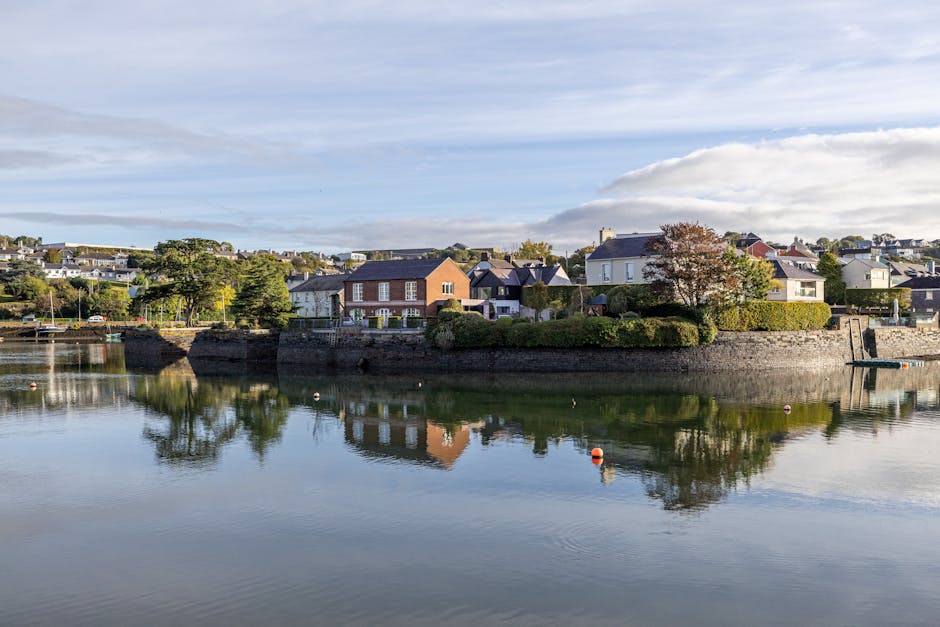
Beyond dining, Kinsale’s harbor is scenic and historic, the streets lined with colorful buildings and independent shops. The town’s maritime heritage runs deep, it was the primary Irish port for Spanish Armada survivors in 1588, and the waters off Kinsale hold profound World War I significance due to the Lusitania tragedy. Kinsale is compact and walkable, making it an ideal base for golfers. After playing Old Head, few experiences rival dinner at one of Kinsale’s excellent restaurants, discussing the day’s round while enjoying some of Ireland’s finest cuisine.
Accommodation Options
On-Site Luxury at Old Head
Old Head Golf Links itself offers top-class accommodation through its luxury suites, featuring floor-to-ceiling views across the golf course toward the lighthouse and Atlantic Ocean. These suites represent the ultimate immersion experience, you wake up looking at the course you’ll play that day, and you can watch sunset over the ocean from your private balcony. The on-site wellness spa provides pre- and post-round pampering. This is the premium option, particularly suited for special occasions and those seeking an all-inclusive experience.
Kinsale Hotels and Accommodations
The Trident Hotel is located just six miles from Old Head, offering four-star amenities and romance packages. The Kinsale Hotel & Spa, seven miles away, provides family-friendly accommodations and access to nearby water sports. Actons Hotel, also seven miles from Old Head, caters to adventure seekers with outdoor activities like kayaking and sailing. The Old Bank Town House is an award-winning Georgian townhouse in Kinsale’s center, featuring individually decorated rooms and buffet breakfasts. Budget options abound, with over 369 hotels near Old Head ranging from €141 per night upward. Kinsale’s compact size means no hotel is more than 10 minutes’ drive from the course.
Getting There: Practical Logistics
Most visitors access Old Head via Cork Airport, approximately 22 miles (35 kilometers) from the course. Driving time from the airport is 35-45 minutes, depending on traffic and exact routing. From Cork Airport, follow signs for Kinsale (R600), then drive south from the town center, following signs for Bandon and Garrettstown. At the bridge marking Kinsale’s southern edge, turn right and follow Old Head signage. The route is straightforward and scenic.
If you’re not renting a car, arrange private transfers through your hotel or contact Old Head directly. Taxis are available in Cork City, though they’re expensive for a 45-minute journey. Public transport from Cork Airport to Kinsale is possible via local buses but adds significant time and complexity. For golf travelers, renting a car provides freedom to explore Kinsale and the broader Cork region.
Playing Tips: Strategy and Tactics
Playing Old Head effectively requires understanding that this isn’t a course where traditional golf strategy applies. The visual spectacle and emotional intensity mean many golfers struggle with focus and course management. Here are essential tips:
- Embrace the wind, don’t fight it. Atlantic wind at Old Head is relentless and variable. Study how the wind flows around the headland during practice shots and on the range. The GPS carts display wind direction, use this data. Accept that your ball will move; plan for it.
- Club selection is paramount. Wind speed and direction change moment to moment. Trust your GPS readings but also trust your senses. Feel the wind on your face and neck. Don’t be afraid to club down, the wind is stronger here than it appears.
- Manage cliff-edge psychology. Holes along the cliff edge (4th, 7th, 12th, 13th, 17th, 18th) demand mental discipline. Accept that water is in play and plan accordingly. Don’t attempt heroic shots; play within yourself and live to play the next hole.
- Use the cart to recover emotionally. Between shots, the cart provides moments to breathe and refocus. The scenery is overwhelming; allow yourself to process it rather than fighting the emotional response.
- Photograph freely but briefly. Old Head is one of the world’s great photography locations. Take your photos, the memories are worth the time investment. The views from the 4th, 7th, 12th, and 18th are unforgettable.
- Be patient with the 12th. This hole breaks golfers psychologically. Expect to struggle here; it’s not a failure of technique. Even excellent golfers find the narrowing fairway intimidating. Play conservative if you’re not confident, par is a great score.
- Watch the weather. Conditions can change rapidly. Fog can roll in suddenly; wind can shift. Dress in layers and be prepared to adjust strategy based on conditions developing throughout your round.
Is Old Head Worth the Premium? The Debate
The question every prospective visitor must confront is straightforward: Does a €450 green fee represent value? This debate divides experienced golfers.
The Case For
Old Head delivers an experience that transcends golf. Few courses on Earth offer such dramatic beauty combined with championship-caliber play. The setting is genuinely top-class, playing near 300-foot cliffs overlooking the Atlantic, with all eighteen holes framing ocean views, creates an emotional intensity that distant competitors simply cannot match. The luxury amenities, five-star dining, wellness spa, and on-site accommodations make Old Head more than a golf course, it’s a complete resort experience. If you’re celebrating a significant milestone, commemorate a special moment, or simply want to experience one of the world’s truly great golf venues, Old Head delivers. The €450 fee becomes irrelevant when measured against the memory of playing the 4th, 12th, or 18th holes.
The Case Against
Irish links golf offers extraordinary value at courses like Lahinch, Tralee, or Ballybunion, which charge half what Old Head demands while delivering equivalent technical challenge. These courses also offer stunning Atlantic vistas and pure links golf without the luxury frills. If your priority is golf itself, holes, conditioning, difficulty, you’ll find better value elsewhere. The weather and wind at Old Head can neutralize your entire round, leaving you frustrated and questioning your investment. The cape architecture, while beautiful, offers less strategic variety than traditional links courses. Some golfers feel Old Head trades playability for scenery, and they rightfully note that the €450 fee is substantially higher than courses of equivalent or greater technical challenge.
Our Verdict
Old Head Golf Links represents a choice between two valid golf philosophies. Golfers who seek memorable experiences, emotional intensity, and jaw-dropping beauty should play Old Head regardless of cost, it delivers beyond measure. Golfers who prioritize technical challenge, value for money, and consistent playability may find better returns at competing venues. Neither perspective is wrong. Old Head works brilliantly for some golfers and feels like an expensive indulgence to others. Know yourself before committing to the €450 green fee. If you love the idea of playing one of the world’s most spectacular golf settings, with luxury amenities and gourmet dining in nearby Kinsale, Old Head is worth every euro. If you primarily want a great test of golf at a reasonable price, you’ll find better value at other Irish courses.
Course Conditions and What to Expect
Old Head’s conditioning is excellent, particularly considering the exposed coastal location and relentless Atlantic weather. The greens are typically firm and fast, rewarding precise approach play. Fairways are well-maintained though sometimes hard-pan, which can limit spin and unpredictably affect bounce. The rough is wispy and penal, you can lose balls in light rough due to the poor visibility, making accuracy essential. Winter weather is harsh, and spring conditions can be muddy or soft depending on rainfall. Summer (July-August) provides the firmest conditions but also the heaviest crowds. Autumn (September-October) offers excellent conditions with firmer fairways and fewer players. Spring (April-May) is unpredictable but can be spectacular.
Wind is the defining condition characteristic. Expect consistent Atlantic breezes, with gusts that rattle trees and test golf bags. On still days (rare), the course plays substantially shorter and more accessible. On windy days (common), even scratch golfers struggle. The wind’s pattern follows the headland’s geography, it funnels between fairways, swirls around cliffs, and creates dead spots where you’d expect wind exposure. Learning the wind patterns requires experience; first-time visitors should expect to be humbled by conditions.
Fog is the other wild card. On clear days, visibility extends for miles and the course plays short relative to yardages. When fog rolls in, a common occurrence in late April and May, visibility drops to fairway distance or less, completely changing the strategic calculus. The combination of wind and fog creates genuinely challenging playing conditions. Come prepared for anything.
Planning Your Old Head Golf Experience
Plan your Old Head experience well in advance. The course books solid during peak season, particularly July and August. If possible, schedule your visit during shoulder seasons (April-May or September-October) when rates are lower and availability is better. Contact Old Head’s reservations team 3-4 months ahead of your target date to secure a tee time.
Package your Old Head round with accommodation in Kinsale and dinner at one of the town’s excellent restaurants. A proper Old Head experience spans 2-3 days, allowing time to explore Kinsale’s harbor, visit local shops, and truly absorb the experience rather than rushing through. If budget allows, consider staying on-site at Old Head’s luxury suites for complete immersion. Budget approximately €600-800 per golfer for the day (green fee plus cart fee), plus €100-150 for accommodation and €50-100 for dinner in Kinsale.
For golfers already in Southeast Ireland golf region exploring multiple courses, Old Head fits naturally into an itinerary that includes Ireland golf course reviews of other Cork and Waterford venues. Pair it with best golf courses Ireland visits like Tralee or Ballybunion to the west. Use Ireland golf trip planner tools to coordinate logistics across multiple venues.
Final Verdict: The Experience of a Lifetime
Old Head Golf Links is not a course you simply play, it’s an experience you inhabit. The moment your eyes first take in the setting, the moment you step onto the 4th tee overlooking the Atlantic, the moment you stand on the 18th peninsula watching the lighthouse glow in evening light, you understand that this is golf at its most visceral and emotionally intense.
The premium green fee remains a legitimate discussion point. Old Head is expensive, and honest golfers can legitimately question the value. But if you value memories over metrics, experiences over equipment, and the raw emotional power of golf in an extraordinary setting, Old Head is worth every euro. This is a course for milestone celebrations, for commemorating special moments, for experiencing golf the way it was meant to be played, against a backdrop of natural grandeur that makes every shot feel momentous.
Combine Old Head with Kinsale’s culinary excellence, the charm of Ireland’s Cork coast, and the leisure of a proper golf holiday, and you’ve created the kind of experience that stays with you for decades. Players regularly describe Old Head in almost reverential terms, and for good reason. This is golf at the edge of the world, where the landscape dominates your consciousness and every hole feels like the most important shot of your life.
Old Head Golf Links stands as a masterwork of ambition and design, a course that rewards the brave and humble the overconfident. Play it if you can. Book early, prepare mentally and physically, and embrace the spectacle. Whether you believe the premium is justified or not, you’ll never forget playing here. That’s not a guarantee every golf course can make, but Old Head can.
Quick Reference Guide
| Course Detail | Information |
|---|---|
| Par | 72 |
| Length (Championship Tees) | 7,215 yards |
| Course Rating | 74 |
| Slope Rating | 142 |
| Number of Tees | 6 |
| Par 5s / Par 3s | 5 / 5 |
| Peak Season Green Fee | €450 |
| Shoulder Season Green Fee | €225 |
| Season | Mid-April to End October |
| Location | Kinsale, County Cork, Ireland |
| Distance from Cork Airport | 22 miles / 35 km (45 minutes) |
| Walking | Not permitted (golf carts mandatory) |
| Year Opened | 1997 |
| Course Designers | Ron Kirby, Eddie Hackett, Joe Carr, Paddy Merrigan, Liam Higgins |
| Notable Features | 300-foot cliffs, Atlantic Ocean views, Lusitania memorial, lighthouse, fortress ruins |
Related guides
- Read our full guide to Ireland golf course reviews
- See also: Portmarnock golf course review
- Ballybunion Old Course Review
- Royal Portrush Dunluce Course Review
- Royal County Down Review
- Lahinch Golf Club Review
- Waterville Golf Links Review
- Adare Manor Golf Course Review
- Ballyliffin Glashedy Links Review
- County Sligo (Rosses Point) Review
- Carne Golf Links Review