How to Plan a Golf Trip to Ireland: The Ultimate Guide
Figuring out how to plan a golf trip to Ireland is the difference between a week you will talk about for the next twenty years and a week of missed tee times, long drives, and expensive regrets. Ireland has more than 400 golf courses, seven of them ranked in the world’s top 100, and a booking ecosystem where the best tee sheets at Royal County Down and Royal Portrush open a full year in advance and vanish within hours. This pillar guide walks you through every decision in order, when to go, where to base yourself, which courses to chase, how much to budget, how to book, and how to pace your itinerary so you finish the trip exhilarated rather than exhausted. It is written for the self-directed golfer who wants to understand the moving parts, whether you end up planning the trip yourself or handing it to an operator.
Why Ireland for a Golf Trip?
Ireland packs an outsized share of the world’s elite links golf into an island smaller than the state of Indiana. Thirty of the world’s top 100 links courses sit here, and the density means a well-planned week can deliver five or six bucket-list rounds without ever spending more than two hours between clubhouses.
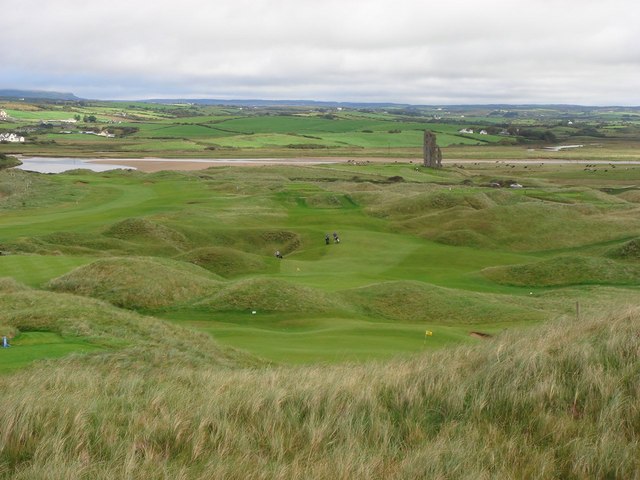
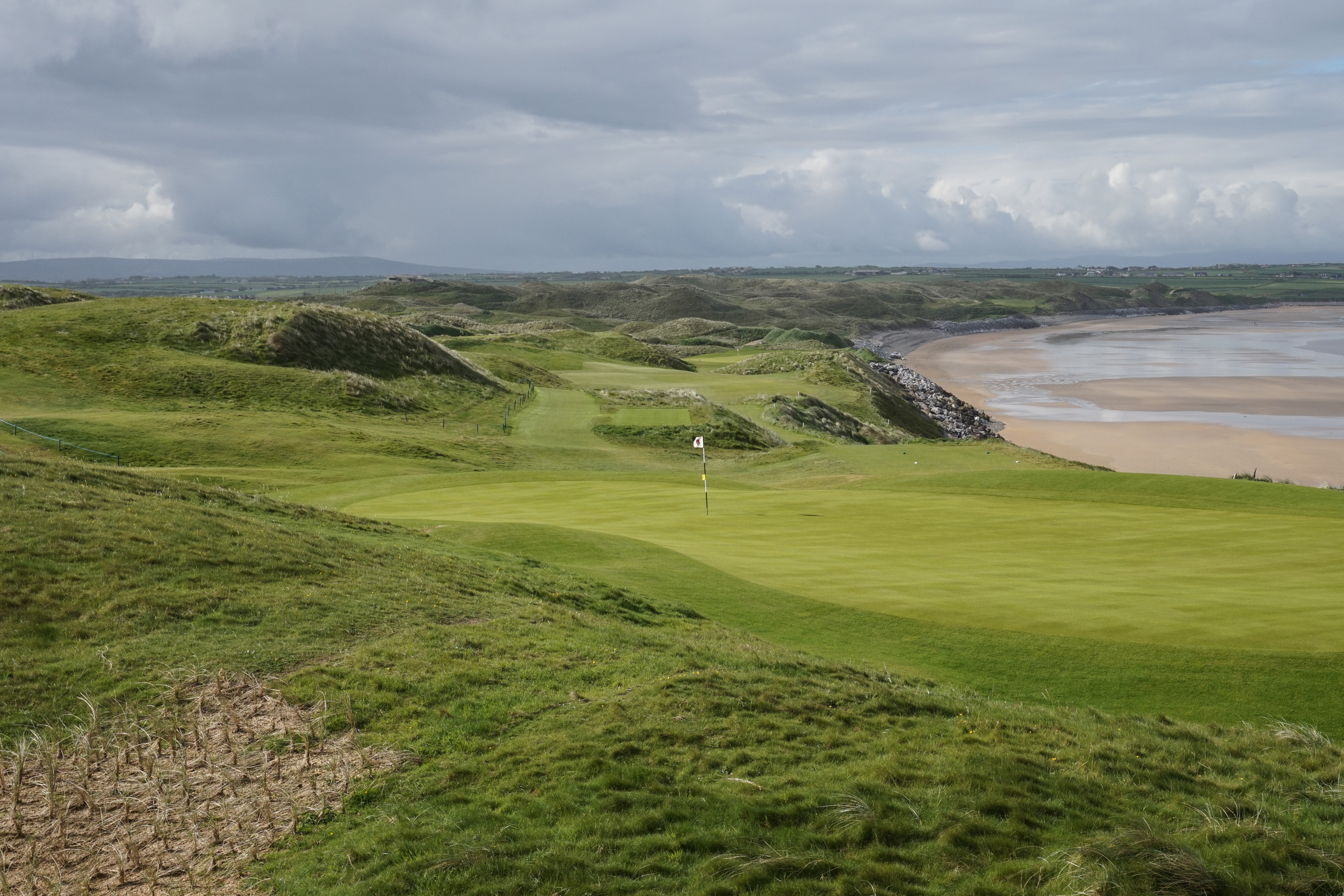
The terrain is what makes Ireland unmistakable. Giant tumbling dunes at Ballybunion, Carne, and Enniscrone; the cliff-top theatre of Old Head of Kinsale; Mackenzie’s geometric greens at Lahinch; the dark Mourne backdrop of Royal County Down. Firm, fast turf, prevailing Atlantic winds, and the absence of trees force the ground game back into your bag and reward creativity in ways that parkland courses at home rarely do. Pair that with centuries-old pubs, castle-stay hotels, fresh Atlantic seafood, and a hospitality culture built around visitors, and you understand why Ireland sits near the top of almost every golfer’s lifetime list. What follows is the operations manual, the ten sequential decisions that turn a vague ambition into a booked, paid, and confirmed itinerary.
Step 1: Decide When to Go
The Irish golf season runs April through October, with peak conditions between May and September. June is the sweet spot, daylight stretches past 10 PM thanks to British Summer Time and Ireland’s latitude, temperatures sit in a comfortable 15–20°C (59–68°F) range, and courses are at their firmest, fastest condition. July and August bring slightly warmer weather (up to 25°C / 75°F) but also peak crowds, green fees, and accommodation prices.
May and September are the value months. You trade about two hours of evening daylight for lower prices, thinner crowds, and excellent conditions. Greens are typically at their best May through September, watch for course aeration at the end of April and in mid-August. April and October are shoulder months: green fees can drop 15–25%, but you gamble with weather and shorter days. November through February are best avoided, with December and January the wettest and daylight squeezed to roughly 7.5 hours. Note: British Summer Time ends on the last Sunday of October. Book the week after and you lose a usable hour every evening.
For a full month-by-month breakdown of weather, green fees, daylight hours, and course conditions, see our deep-dive on the best time of year to play golf in Ireland.
Step 2: Choose Your Region
The single biggest mistake first-time planners make is trying to play every famous course on one trip. Ireland is compact but not American-road-trip compact, the drive from Portrush in the far north to Waterville in the far southwest is roughly 430 km (267 miles) on mostly two-lane country roads and takes the better part of seven hours without stops. A smarter framework is to anchor your trip in one or at most two regions. Four clusters dominate Irish golf.
| Region | Flagship Courses | Airport | Character | Best For |
|---|---|---|---|---|
| Southwest (Kerry/Clare) | Ballybunion, Lahinch, Tralee, Waterville, Old Head, Doonbeg, Dooks | Shannon (SNN) or Cork (ORK) | Dramatic coastal dunes, Ring of Kerry scenery, highest density of world-top-100 links | First-time visitors wanting marquee courses |
| Northern Ireland | Royal County Down, Royal Portrush, Portstewart, Castlerock, Ardglass | Belfast (BFS/BHD) or Dublin (DUB) | Two world-top-20 courses, Causeway Coast scenery, uses pound sterling (£) | Golfers chasing Royal County Down and Royal Portrush |
| Northwest (Donegal/Sligo/Mayo) | Ballyliffin, Rosapenna, St Patrick’s Links, Carne, Enniscrone, County Sligo | Knock (NOC) or Belfast (BFS) | Wild, remote, uncrowded, rugged dune land, best-value green fees on elite links | Experienced links travelers seeking adventure |
| East Coast/Dublin | Portmarnock, The Island, Royal Dublin, County Louth (Baltray), The European Club, K Club, Adare Manor | Dublin (DUB) | Mix of links and parkland, easy logistics, best for short trips | 4–5 day trips, non-golfing companions |
If you have seven days, pick one region and play it deeply. If you have ten to fourteen days, you can reasonably combine two adjacent regions, Southwest plus East Coast through Dublin, or Northern Ireland plus Northwest. The combination to avoid on a first trip is Southwest plus Northern Ireland, which forces either a cross-country drive that consumes an entire golf day or an expensive internal flight.
One practical wrinkle: if your itinerary crosses the border between the Republic and Northern Ireland, you switch currencies from euro to pound sterling. Rental car agreements typically allow cross-border travel, but always confirm in writing before you drive off the lot.
Step 3: Build Your Course List
Once you have chosen a region, build your course list in tiers. A typical seven-day trip plays five to six rounds, aggressive groups push to eight, which requires 36-hole days and leaves no slack for weather or jet lag. The rest of this section assumes you are slotting in five rounds.
Tier 1: Global Top-100 Links (Bucket-List Anchors)
These are the non-negotiable rounds, the courses that justify the cost of crossing the Atlantic. Most groups build the entire itinerary around securing tee times at one or two of these:
- Royal County Down (Newcastle, NI): Routinely ranked the world’s finest course. Green fee approximately £415 (€485) in peak season. Handicap certificate required (max 28 men / 36 women on the Championship Course).
- Royal Portrush – Dunluce (NI): Host of The Open in 2019 and 2025. Green fee approximately £425 (€495). Handicap required (max 28/36).
- Ballybunion – Old Course (Kerry): Tom Watson’s favorite course in the world. Green fee approximately €420–€450.
- Lahinch – Old Course (Clare): Mackenzie masterpiece with the famous Dell and Klondyke holes. Green fee approximately €350–€400.
- Portmarnock (Old, Dublin): The most championship-pedigreed course near Dublin. Green fee approximately €440–€475.
- Waterville (Kerry): Payne Stewart’s beloved Ring of Kerry links. Green fee approximately €300–€350.
Tier 2: World-Class Supporting Cast
Plug these around your anchors. They deliver elite golf at somewhat friendlier prices and with more accessible tee sheets:
- Tralee (Kerry) €220–€270: Arnold Palmer’s first European design, with a dramatic cliff-top back nine.
- Old Head of Kinsale (Cork) €450–€475: The famous clifftop spectacle, polarizing among purists, unforgettable regardless.
- Doonbeg / Trump Ireland (Clare) €275–€325: Greg Norman dune routing next to Lahinch.
- County Sligo (Rosses Point) €175–€195: Harry Colt design under Ben Bulben.
- Ballyliffin – Glashedy (Donegal) €175–€225: Northernmost links in Ireland, 36-hole facility.
- Rosapenna – St Patrick’s Links (Donegal) €200–€250: Tom Doak 2021 design, ranked in world top 50.
- The European Club (Wicklow) €275–€325: Pat Ruddy’s idiosyncratic 20-hole masterpiece.
- County Louth (Baltray) €200–€250: Tom Simpson design, hour north of Dublin.
- Portstewart – Strand (NI) £215 (€250): The opening tee shot rivals anything on the island.
Tier 3: Hidden Gems and Value Plays
Use these to fill the middle rounds of your itinerary. They deliver the authentic Irish links experience at half the price and often with caddies, characters, and views that rival their glamorous neighbors:
- Enniscrone (Sligo) €90–€120: Dune routing rivaling Carne.
- Carne (Belmullet, Mayo) €125–€200: Ireland’s westernmost course, raw and remote.
- Dooks (Kerry) €90–€110: Charming Ring of Kerry value option.
- Strandhill (Sligo) €60–€80: Affordable partner to County Sligo.
- Ardglass (NI) £125 (€145): Cliff-edge links with 15th-century clubhouse.
- The Island (Dublin) €240–€285: Wild dunes 20 minutes from Dublin Airport.
A well-built list looks like: one Tier 1 anchor, two Tier 2 courses, two Tier 3 rounds to round out the week. That pacing keeps green fee totals in the €1,200–€1,600 range per golfer (Republic of Ireland) rather than ballooning to €2,500+ if you try to play five Tier 1 courses back to back.
Step 4: Set Your Budget
Every Ireland golf trip decomposes into six cost buckets: flights, green fees, accommodation, rental car or driver, caddies and tips, and food and incidentals. Total cost per golfer for a seven-night trip varies enormously depending on how you tune each bucket. Realistic ranges look like this:
| Cost Tier | Per Golfer, 7 Nights | Accommodation | Green Fee Mix | Transport |
|---|---|---|---|---|
| Value (self-drive, Tier 2/3 courses) | €2,500–€3,500 | 3-star hotels, B&Bs, guesthouses | 2 Tier 1 + 3 Tier 2/3 | Shared rental car |
| Mid-range (self-drive, mixed tiers) | €3,500–€5,500 | 4-star hotels | 3 Tier 1 + 2 Tier 2 | Shared rental car |
| Premium (driver, top courses) | €5,500–€8,500 | 4/5-star hotels, castle stays | 5 Tier 1 courses | Chauffeur minibus |
| Luxury (Adare/Ashford, concierge) | €10,000+ | Adare Manor, Ashford Castle | 5-6 Tier 1, private times | Private driver |
Flights from the US East Coast to Dublin or Shannon typically run $700–$1,400 in economy and $2,500–$4,500 in premium or business, depending on season and how far in advance you book. Rental cars run €40–€90 per day in peak season and require a left-side-of-the-road mindset; automatics cost 30–50% more than manuals and need to be reserved months ahead. A chauffeur minibus runs roughly €1,200–€1,500 per golfer for the week when split four ways. Caddies at the marquee courses cost €70–€100 plus a €30–€50 tip per bag.
Hidden costs to budget for: travel insurance (€50–€150), the chauffeur’s own gratuity on premium trips (€80–€120 per day for the group), rain gear you may need to buy on-site if yours is inadequate, and the inevitable pro-shop logo purchases. We break the full cost structure down in our Ireland golf trip cost guide.
Step 5: Book Tee Times
Tee times drive everything else. The sequence is: secure the tee times first, then book flights, then accommodation, then car. Reverse that order and you will end up at the wrong hotel on the wrong day with no way to reach the course you flew across the ocean to play.
How far in advance should you book?
The answer depends entirely on which courses you want. A rough ladder:
| Course Tier | Booking Window | Notes |
|---|---|---|
| Royal County Down, Royal Portrush | 12–18 months ahead | Timesheets open on set dates; peak-season slots often gone within hours |
| Ballybunion, Lahinch, Portmarnock, Old Head | 8–12 months ahead | Peak-season weekends and mid-morning times first to go |
| Waterville, Tralee, Doonbeg, County Sligo, Ballyliffin | 4–8 months ahead | Generally obtainable with reasonable flexibility on date/time |
| Tier 3 / hidden gems | 1–3 months ahead | Last-minute usually workable outside July and August |
Royal County Down’s timesheets for the 2026 season opened at the end of March 2025 via phone only, with no online reservations accepted, the system favors patient dialers who get through on the first morning. Royal Portrush publishes visitor tee time availability roughly 18 months out. For every other course in Ireland, online booking is the norm, either through the club’s website or via aggregators like golfscape, GolfNow Ireland, or the individual club’s BRS Golf portal.
Handicap requirements
Many top Irish clubs require a current handicap certificate. Typical limits: 24 men / 36 women at Royal County Down’s Championship Course, 28/36 at Royal Portrush Dunluce, 28/36 at Portmarnock Old, and varying limits at other elite venues. Bring a printed copy of your WHS handicap certificate or the USGA GHIN equivalent, the clubs rarely check, but when they do, not having one will end your round before it starts. Clubs with no handicap requirement include most Tier 3 courses and many resort-style venues.
Deposits, cancellations, and weather
Most clubs take a deposit of 25–35% at the time of booking, with the balance due 30–90 days before play. Cancellation windows vary widely, some clubs refund if canceled 60+ days out, others hold the full deposit. Weather cancellations are at the course’s discretion; if the club closes the course, you get a refund or reschedule. If the course stays open and you decide the rain is too heavy to play, you pay. Travel insurance with a weather clause protects the difference.
Step 6: Arrange Accommodation
Ireland offers four broad accommodation categories that trade off price, charm, and distance from the first tee. The right choice depends on how much road time you want between bed and course, and on how much the non-golf atmosphere matters to you.
| Style | Typical Price (per room, per night) | Pros | Cons |
|---|---|---|---|
| B&B / Guesthouse | €100–€180 | Authentic, owner-hosted, full Irish breakfast included, conversation | Usually no restaurant, limited amenities, single rooms may be small |
| 3-Star Hotel | €150–€280 | Reliable comfort, breakfast often included, central locations | Generic finishes, smaller rooms, basic gyms |
| 4-Star Hotel / Resort | €250–€500 | Full amenities, spas, restaurants, often attached to a course | Can feel corporate; book early in summer |
| Castle / 5-Star Resort | €500–€2,000+ | Adare Manor, Ashford Castle, Dromoland, iconic experiences | Cost, sometimes remote, formal dress codes |
A practical middle-ground strategy for most first-time visitors: book a 4-star hotel in a regional hub for the first three nights (Killarney for the Southwest, Newcastle or Portrush for Northern Ireland, Dublin for the East Coast), then switch to a B&B or a boutique country hotel near one of the more remote courses for the back half of the trip. You get the polish of the 4-star for landing-day recovery and the authenticity of a B&B when you are deep in links country.
Castle stays are worth the splurge for at least one night if the budget allows. Ashford Castle in Mayo (home of the Rory McIlroy-endorsed Red Carnation group), Dromoland Castle in Clare, and Adare Manor in Limerick are the three most celebrated, and each has its own golf course or a top-tier course within 20 minutes. Factor in formal dinner dress codes, a blazer for men is the safe standard.
Step 7: Plan Transportation
Two transportation models dominate Irish golf trips: self-drive in a rental car, or a chauffeured minibus with a professional driver-host. The trade-off is primarily cost, convenience, and the pint-count math.
Self-drive rental
Self-drive is the default for budget and mid-range trips. A seven-day mid-size rental in peak season runs €350–€600; automatics cost 40–50% more than manuals. Irish rental agencies require proof of primary coverage or will charge €18–€30 per day for CDW. Most US credit cards exclude Ireland, verify yours before relying on it.
The bigger issues are driving on the left, narrow country lanes, and roundabouts. Give yourself 25% more drive time than Google Maps estimates, especially on the Ring of Kerry, Causeway Coastal Route, and any R-designated road. Parking at courses is free. And the pint problem: if anyone wants a Guinness with dinner, someone has to stay sober to drive back.
Chauffeur minibus / driver-host
For groups of 4–8, a dedicated driver-host is an upgrade that pays off in convenience and local knowledge. Expect roughly €1,200–€1,600 per golfer for the full week when split among four players, or €900–€1,100 per golfer among eight. The driver doubles as concierge, they know which petrol station has the best coffee, which pubs locals actually drink at, which road to take when R-road traffic backs up. Tour operators bundle the driver into the overall package and coordinate directly with courses and hotels. For groups with non-golfing partners who want day excursions while the golfers play, a second driver-host (or a single one with a flexible schedule) can split the party cleanly.
A simple decision rule: self-drive for groups of 2–4 on a tight budget, chauffeur for groups of 6+ or anyone who values evening pints above evening savings.
Step 8: Pack Smart
Irish weather is famously changeable, you can genuinely experience all four seasons inside a single eighteen holes. Pack for 50°F rain and 70°F sunshine in the same round and you will be right roughly 80% of the time. The non-negotiables are: a high-quality waterproof rain suit (jacket and trousers, not just a shell), at least two pairs of waterproof golf shoes so you always have a dry pair, a windproof sweater or pullover, thermal base layers for shoulder seasons, a waterproof golf bag cover, and at least three golf gloves in rotation (wet gloves take 24 hours to dry).
On the off-course side: smart-casual is the dress standard for hotel restaurants and pubs, jeans are fine at most pubs, collared shirts required at many hotel dining rooms, blazers expected at castle properties. A power adapter (Ireland uses the Type G three-pin plug, same as the UK), a refillable water bottle, and a UK/Ireland SIM card or an eSIM plan are all worth sorting before you leave.
For the full packing list including golf-specific apparel, electronics, documents, and a weight-optimized checked bag strategy, see our Ireland golf trip packing list.
Step 9: Build Your Itinerary
Pacing is where most first-time golfers get this wrong. The temptation is to book a round every day and then cram 36-hole days on top of that. The reality: transatlantic flights arrive in the morning after a red-eye, meaning your first day is less “play golf” and more “try not to fall asleep in your soup.” Build your itinerary around a few structural rules.
Rules of thumb
- Arrival day: don’t play golf. Walk, eat, nap, and get a normal night’s sleep. Your jet-lagged first round will be bad and will bias your opinion of a course that deserves better.
- Don’t play your marquee round on day 2 either. Save Royal County Down or Ballybunion for day 4 or 5 when you are adjusted and playing your normal game.
- Target 5 rounds across 7 days, not 7 rounds across 7 days. Build in at least one rest day or a light sightseeing day, especially mid-trip.
- Avoid 36-hole days before the second half of the week. Links golf walked in wind is meaningfully more tiring than the cart-riding golf most Americans are used to.
- Keep drive times under 90 minutes between hotel and course. A two-hour predawn drive to a 7:30 tee time is miserable. Reposition your accommodation mid-trip instead.
- Build in pub nights. The post-round pint with the group is half of why you came. Schedule dinners early enough that you are not eating at 10 PM every night.
Rounds per day math
A single 18-hole walking round at a links course, with a caddie, takes about 4.5 hours plus warm-up. Add 45 minutes at each end for arrival, check-in, and post-round refreshment and you are looking at a six-hour block. That leaves room for a light lunch and perhaps one afternoon activity, but not much more. 36-hole days compress everything, tee off at 7:30 AM, finish the first round around noon, grab a sandwich, tee off again at 1:15 PM, finish at 6:00 PM, and go straight to dinner. Worth doing once or twice in a week. Not worth doing four days in a row.
Step 10: Navigate Arrival and Logistics
Transatlantic flights into Ireland typically land in the early morning local time. Dublin (DUB) is the largest international gateway with direct flights from 15+ US cities; Shannon (SNN) is the best for Southwest trips with direct flights from Boston, New York, and seasonal Chicago service; Belfast (BFS) handles most Northern Ireland traffic via connections through London or Dublin. Flight times from the US East Coast are roughly 6.5–7 hours; from the West Coast, 10–11 hours with a connection in most cases.
US and Canadian citizens do not need a visa for stays under 90 days in the Republic of Ireland or under 180 days in Northern Ireland. Ireland is not part of the Schengen area and does not require an ETIAS travel authorization. Northern Ireland is part of the UK, so if you cross the border you technically enter a second country, though in practice, there are no border controls and you will barely notice the change apart from speed-limit signs switching from km/h to mph.
A few logistics to handle on arrival: pick up local currency or confirm your card has no foreign-transaction fees (Ireland is heavily card-based but pubs in rural areas are sometimes cash-only), activate your eSIM or pick up a local SIM at the airport, and check that your phone is set to convert km to miles if you are crossing into Northern Ireland. Tipping is less aggressive than in the US, 10–12% in restaurants is standard, €2–€5 per bag for hotel porters, and no tip expected in pubs except for table service.
Shipping clubs vs. flying with them: most airlines allow one golf bag as a checked piece for a regular bag fee ($50–$100 one-way) or as an oversize item ($150–$200). Shipping via Ship Sticks or Luggage Forward runs roughly $150–$250 one-way but eliminates the airport hassle and the risk of a lost bag on day one. For groups flying into regional airports with tight connections, shipping is usually worth it.
Sample 7-Day Itinerary: Southwest Ireland
Here is how these ten steps crystallize into an actual itinerary. This example anchors in the Southwest, the region with the highest density of marquee courses and the most first-time-visitor logistics.
| Day | Morning | Afternoon/Evening | Lodging |
|---|---|---|---|
| 1 (Sat) | Land at Shannon 7:30 AM; collect rental car; drive to Killarney (90 min) | Check in, walk Killarney National Park, pub dinner at The Laurels | Killarney Plaza or equivalent 4-star |
| 2 (Sun) | Dooks Golf Club (€95), gentle reintroduction to links golf, Ring of Kerry views | Drive the Ring of Kerry loop; dinner in Dingle | Killarney |
| 3 (Mon) | Waterville Golf Links (€325), Payne Stewart’s favorite | Drive to Tralee (90 min); pub dinner | Ballygarry Estate, Tralee |
| 4 (Tue) | Tralee Golf Club (€245), Palmer’s first European design | Afternoon at leisure; Dingle Peninsula drive | Ballygarry Estate |
| 5 (Wed) | Ballybunion – Old Course (€420), the bucket-list anchor | Reposition to Lahinch (90 min); dinner at Vaughan’s Anchor Inn | Armada Hotel, Spanish Point |
| 6 (Thu) | Lahinch – Old Course (€375), the Dell, the Klondyke, the goats | Cliffs of Moher visit (20 min north); dinner in Doolin | Armada Hotel |
| 7 (Fri) | Doonbeg (€300) OR rest day with Cliffs of Moher / Bunratty Castle | Drive to Shannon Airport (45 min); return car | Depart overnight flight |
Total rounds: 5 or 6 depending on day 7 choice. Total green fees: €1,360 (for five rounds) to €1,660 (for six). This pacing leaves a genuine rest window on day 4 afternoon and gives you the option to downshift on day 7 if the week has worn you out. Shift the anchor day to Wednesday to avoid the weekend premium that Ballybunion charges on Saturdays.
Common Mistakes First-Time Visitors Make
Twenty years of watching American golfers cross the Atlantic surfaces the same half-dozen mistakes over and over. You can avoid them all for free.
1. Booking too late and paying the availability tax
Waiting until six months out means Royal County Down, Royal Portrush, Ballybunion peak times, and the best Lahinch slots are gone. You either settle for dawn tee times, shift to shoulder-season dates you didn’t really want, or pay a premium to a broker who has locked up inventory. Start 12 months ahead for any marquee course.
2. Trying to play the entire country in one trip
Royal County Down Monday, Ballybunion Wednesday, Royal Portrush Friday is a fantasy itinerary that collides with seven-hour drives and ferry time-tables. Pick one region, play it deeply, and come back for the other regions on trip number two.
3. Playing a marquee course on arrival day
Your first round after a red-eye flight will be the worst round of your week. Don’t burn your Ballybunion tee time on it. Ease in with a Tier 3 round or take the full day off.
4. Underestimating the wind
Irish coastal winds routinely hit 25–35 mph in summer and higher in shoulder seasons. Your 150-yard 8-iron from home is now a punch 5-iron into a headwind. Take one or two practice swings before the first round to calibrate, and bring extra balls.
5. Skimping on rain gear
A €40 plastic poncho is not rain gear. Invest in a proper Galvin Green, Sunderland, or Proquip suit before you travel, or plan to buy one at the first pro shop when you arrive. The courses will not cancel because of rain, you will play in it, and you will be wet for hours if your gear is inadequate.
6. Skipping caddies
At Ballybunion, Lahinch, Royal County Down, and most marquee links, the caddie is worth every euro. They know which pot bunker to miss long vs. short, how much the 14th green slopes toward the ocean, and which club to pull in a crosswind. Budget €100–€150 per round including tip and consider it tuition.
7. Forgetting the non-golf half of Ireland
Build in at least one afternoon for the Cliffs of Moher, a distillery tour, a trad music session in a Dingle pub, or a walk through the Ring of Kerry. The memories that will stay with you are equally about the pubs and the scenery as the golf. A trip that is 100% golf is one you will remember as blurry.
Related guides
- Best Time to Play Golf in Ireland — Month-by-Month Weather Guide
- Ireland Golf Trip Packing List — 30+ Essentials You’ll Need
- How Far in Advance to Book an Ireland Golf Trip (2026 Guide)
- Ireland Golf Trip Itinerary — How Many Rounds Per Day?
- Golf Club Hire in Ireland — Rent, Ship, or Bring Your Own?
- Self-Guided vs Guided Golf Tours in Ireland — Pros & Cons
- Ireland Golf Trip for Non-Golfers — Activities for Spouses & Partners
- Ireland Golf Vacation Packages (2026) — Compare & Book the Best Trips
Frequently Asked Questions
How long should an Ireland golf trip be?
Seven to eight days (six nights plus travel) is the sweet spot for first-time visitors. It allows five rounds across one region with appropriate rest and sightseeing. Anything shorter leaves the trip feeling rushed once you account for jet lag and travel days. Ten to fourteen days opens up a second region or a deeper exploration of one, and justifies the transatlantic flight cost more fully.
Do I need to be a good golfer to play Irish links?
No, but you will play better links golf if you bring a bump-and-run, a reliable low punch shot, and a willingness to putt from 30 yards off the green. The average handicap requirement at the top courses is 24–28 for men and 36 for women, about a bogey-and-a-half golfer. Below that level, most Tier 2 and Tier 3 courses welcome golfers of any ability and are genuinely more fun than the championship venues when you are just starting out.
Should I use a tour operator or book it myself?
The rough break-even is at three to four golfers. Solo travelers and couples can almost always book it themselves for less than an operator would charge. Groups of four to six benefit from operator expertise in sequencing courses, negotiating tee times, and providing a driver-host, expect a 15–25% markup over DIY pricing for that service. Groups of eight or more almost always benefit from an operator because the logistics of coordinating eight calendars, flights, and hotel rooms are a second job. The classic operator play is securing marquee tee times that individuals struggle to reach.
Can I bring a non-golfing partner?
Absolutely, and Ireland is one of the better destinations for it. Dublin, Killarney, and Belfast all have rich non-golf options, Trinity College, Guinness Storehouse, Titanic Belfast, the Ring of Kerry, Killarney National Park, distillery tours, and shopping. Time your golf rounds so that you and your partner are free to have dinner together, and plan at least two shared activities during the week. Many operators can arrange a second driver or day excursion for the non-golfer while the golfers play.
Is it cheaper to play in Northern Ireland or the Republic?
Neither is clearly cheaper overall. Northern Ireland’s marquee courses (Royal Portrush, Royal County Down) are among the most expensive in the British Isles at £415–£425 per round. But Northern Ireland’s Tier 3 courses (Castlerock, Ardglass, Portstewart Old) are often 15–25% cheaper than equivalents in the Republic. The currency swing matters too, if the pound is strong against the euro, Northern Ireland gets pricier. Check the exchange rate in the month you book.
What if it rains every day?
It probably will, at least partially. Ireland’s average annual rainfall is 1,000–1,400 mm depending on region, with the west coast notably wetter than the east. In practice, most summer days include a 20-minute shower rather than eight hours of downpour. Courses almost never close, links drain exceptionally well, and locals simply play in waterproofs. The one exception is true lightning, which will halt play but rarely lasts long. Build a “rain round” into your expectations and you will not be disappointed when it arrives.
Do I need cash?
Less than you think. Credit and debit cards are accepted almost everywhere, pro shops, restaurants, hotels, petrol stations, and even most pubs. Carry €100–€200 (or £100–£200 in Northern Ireland) for rural pubs, small cafés, church donations, and tips. ATMs are plentiful; use them rather than airport currency exchanges, which charge 8–12% spreads.
Final Thoughts
Planning a golf trip to Ireland is one of those undertakings where early, organized effort is repaid many times over. The most valuable thing you can do today, if you are eyeing a 2027 trip, is to decide your region, pick your anchor course, and get on that club’s booking portal or call list the day the timesheets open. Every other decision flows from that tee time.
The second most valuable thing is to resist over-scheduling. Links golf in the wind is more demanding than most American golfers expect, the drives are longer than Google Maps suggests, and the hidden joy of an Irish trip is the hour spent in a pub talking with the caddie about the fourth-hole pin placement. Five rounds with stories is a better week than seven rounds without them. Book early, pack correctly, and safe travels, may your first drive at Royal County Down find the short grass.