Playing Royal County Down: Visitor Guide to the World’s #1 Course
Royal County Down sits, almost without challenge, at the top of every serious world golf ranking published this decade. Golf Digest has named it the world’s #1 course outside the United States more often than any other links, and the panels at Top 100 Golf Courses, Golf Magazine, and National Club Golfer return the same verdict year after year. The reasons are straightforward enough on paper, an Old Tom Morris design dating to 1889, narrow fairways threading through towering dunes, the Mourne Mountains rising 850 metres directly behind the closing holes, and the Irish Sea framing the front nine, but no description quite prepares you for the moment you stand on the elevated 3rd tee and look across Dundrum Bay toward Slieve Donard. This visitor guide walks you through everything you need to know to play Royal County Down in 2026: the painfully narrow access window, the phone-only booking process, the £450 green fee, the handicap certificate you must present, and the practical logistics of a pilgrimage to Newcastle, County Down.

Why RCD Is the World’s #1
Royal County Down’s claim to the world’s top ranking rests on three pillars that no other course combines so completely. The first is design pedigree. Old Tom Morris laid out the original course for a fee of four guineas in 1889, walking the dunes with members of the newly formed club and routing holes that have, in their essential character, never changed. Subsequent refinements by Harry Vardon in 1908, by Harry Colt, and by the contemporary architect Donald Steel have polished but not redrawn Morris’s lines. The course you play in 2026 follows essentially the same path that Open champions of the early 20th century walked.
The second pillar is scenery. Murlough Nature Reserve forms the north boundary, the Irish Sea defines the eastern shore, and the Mourne Mountains, particularly Slieve Donard, the highest peak in Northern Ireland at 850 metres, dominate the southern horizon. The opening tee shot points directly at the mountains; the closing holes return you toward them. Few golf courses on earth offer a setting so theatrically composed.
The third pillar is course architecture. Narrow ribbons of fairway thread through dune corridors, defended by the most photographed bunkers in golf, the famous “bearded” hazards with overhanging marram-grass lips that look as if they have grown wild for a century. Purple heather, gorse, and fescue rough punish any miss. The greens are firm, true, and subtly contoured. There is no easy hole on the front nine, no easy approach on the back. Tom Watson, who has played the course many times in his Open Championship preparation, called the outward half “as fine a nine holes as I have ever played.” Tiger Woods, who visited before the 2007 Open at Carnoustie, is reported to have shot 67 in difficult conditions and pronounced it among his favourite links anywhere.
A Brief History
The Royal County Down Golf Club was founded on 23 January 1889 at a meeting in the Belfast Chamber of Commerce. The Belfast and County Down Railway Company had identified Newcastle as a tourist destination it wished to develop, and a championship golf course alongside its grand new hotel, the Slieve Donard, which opened in 1898, was central to that vision. Old Tom Morris, by then in his late 60s and the most famous figure in the sport, was invited from St Andrews to lay out the course. He completed the routing in two days for the celebrated fee of four guineas, expenses included.
King Edward VII granted the “Royal” prefix in 1908, the same year Harry Vardon was commissioned to make refinements. Vardon’s adjustments, particularly to bunker positions and several greens, gave the course much of the strategic character it retains today. Harry Colt, the prolific English architect responsible for Sunningdale, Wentworth, and Pine Valley, made further changes in the 1920s, including remodelling several greens and softening the most extreme blind shots. Donald Steel, the leading British links architect of the late 20th century, undertook sympathetic modernisation work in the 1990s and early 2000s, lengthening tees to keep pace with modern equipment without compromising Morris’s original strategic intent.
Royal County Down has hosted the Walker Cup (twice, 2007 and a second occasion still occasionally referenced), the Curtis Cup, the Senior British Open, the Irish Open (most recently in 2015 with Soren Kjeldsen winning a memorable rain-soaked event), and the Amateur Championship multiple times. It has not yet hosted The Open, primarily because of infrastructure and logistical limitations at Newcastle, though the R&A has visited and the conversation continues.
Course Specifications
| Specification | Details |
|---|---|
| Par | 71 |
| Length (Championship Tees) | 7,186 yards |
| Designer | Old Tom Morris (1889), with refinements by Harry Vardon (1908), Harry Colt (1920s), Donald Steel (1990s–2000s) |
| Founded | 1889 |
| World Ranking | #1 Outside United States, Golf Digest (multiple years); Top 100 Golf Courses World #1 |
| Course Record | 62 (multiple holders) |
| Signature Hole | 9th, Par 4, 486 yards, blind tee shot, downhill approach to raised green framed by Mourne Mountains |
| Green Fee 2026 (Championship) | £450 (approximately €525) |
| Annesley Links Fee 2026 | £120 (approximately €140) |
| Buggies | Not permitted on Championship Links |
| Visitor Window | 20 April – 16 October 2026 |
| Website | royalcountydown.org |
Visitor Access: The Tightest Window in Irish Golf
Securing a tee time at Royal County Down is, by some margin, the most difficult booking in Irish golf. The club operates a member-first policy that limits visitor access to five days per week within a six-month season. In 2026 the visitor calendar runs from 20 April to 16 October, with the Championship Links closed entirely from mid-October through to mid-April for winter rest and renovation. Visitor play is permitted on Mondays, Tuesdays, Fridays (full days), Thursday mornings only, and Sunday afternoons only. Wednesdays and Saturdays are reserved exclusively for members and their guests; visitor enquiries for those days are politely declined regardless of who is asking.
Within those open days, the timesheet itself is small. The club operates traditional 10-minute tee intervals and the front nine sees relatively limited play before the morning member competitions clear. In practice this means that across an entire visitor season, perhaps 12,000 to 14,000 visitor rounds are available, and demand from international golf tour operators alone exceeds that figure several times over. The result is that booking opens once a year, fills within days, and closes for another twelve months.
Booking Process: Phone Calls and Patience
Royal County Down does not accept advance enquiries, waitlists, or expressions of interest before the timesheet opens. The club explicitly states that there is no online booking portal for visitors and no possibility of reserving a time more than nine months in advance. The timesheet for the following calendar year traditionally opens in late March or the first week of April. For the 2026 season, bookings opened on 1 April 2025, with all popular dates filled within the first 10–14 days. By June 2025, the only remaining 2026 availability tended to be Sundays in May and Thursdays in early October.
The booking method is phone or email through the Secretary’s Office. The number is +44 (0)28 4372 3314, and the email is [email protected]. Phone is faster on opening day; email is reasonable in the weeks that follow. You should have multiple alternative dates ready, your handicap index, your group’s full names and home clubs, and a credit card prepared to take payment in full at the moment of booking. Royal County Down requires the full green fee, £450 per player on the Championship Links, paid at the time of reservation. Cancellation refunds are limited and discretionary.
If you cannot secure a time directly through the club, the secondary route is via accredited tour operators and golf travel agencies. Marine & Lawn (which owns the Slieve Donard), Sweetspot Travel, PerryGolf, and Haversham & Baker each hold small allocations of tee times bundled into multi-course or stay-and-play packages. These packages cost more than the green fee alone, but they substantially improve your chances of access during peak summer weeks.
Handicap Requirement
Royal County Down requires every visitor to the Championship Links to present a current, verifiable handicap certificate at check-in. The maximum permitted handicap index is 24 for men and 36 for women. Players above these limits will not be permitted to play the Championship Links, though they may play the shorter Annesley Links without restriction. The club enforces the policy strictly: tour operators are required to confirm handicap details at booking, and the starter’s hut at the first tee will request a handicap card or printout on the morning of play.
The reason for the limit is practical rather than snobbish. The Championship Links is an exacting test, and groups playing slowly will hold up the entire timesheet. A single 28-handicap player on the 9th hole, a 486-yard par 4 with a blind drive over a 50-foot mound, can add 30 minutes to the round time of every group behind. The handicap rule keeps the field moving and protects the experience for everyone on the course.
If you do not hold a formal handicap with a national golf body, Golf Ireland, England Golf, the USGA, or equivalent, secure one before booking. A WHS index from your home club, printed within the last 60 days, is acceptable. Online apps without official affiliation are not.
Green Fees 2026
| Course / Time | 2026 Rate (GBP) | Approximate EUR | Notes |
|---|---|---|---|
| Championship Links, All visitor times | £450 | €525 | 20 April – 16 October only; Mon, Tue, Thu AM, Fri, Sun PM |
| Annesley Links, All visitor times | £120 | €140 | April – October; Mon, Thu, Fri, Sun |
| Twilight (after 4pm, season-dependent) | £325 (approx) | €380 | Limited availability; phone enquiry only |
| GUI / Golf Ireland Member rate (early April / late October) | £260 | €305 | Reciprocal rate, proof of Golf Ireland membership required |
| Senior Caddie | £75 | €88 | Cash to caddie at end of round; gratuity recommended |
| Fore-caddie (one per group minimum) | £110 | €128 | Mandatory minimum; one fore-caddie per four-ball |
| Pull cart (push trolley) | £8 | €9 | Per round |
| Electric trolley | £40 | €47 | GPS-equipped models £30 in some sources |
| Club hire (Titleist sets) | £70 | €82 | Available at the Slieve Donard or pro shop |
The Championship Links fee rose to £450 for 2026, an increase of approximately 6% on the £425 charged in 2025 and roughly 18% on the 2024 rate of £360. The trajectory mirrors comparable rises at St Andrews Old Course (now £350 in summer), Pebble Beach ($725), and Augusta-adjacent rates at top US private clubs. By international standards Royal County Down sits in the upper tier of green fees but remains substantially below American resort pricing while delivering, by consensus, a better golf course.
Buggies are not permitted on the Championship Links, the dune topography is simply too severe, so every player walks. A push trolley is the standard arrangement, and a fore-caddie joins the group to spot tee shots and read greens. Single caddies (one per bag) are available in limited numbers and command a £75 fee plus gratuity in cash; tipping at 20% is customary and appreciated.
The Annesley Links: The “Other” RCD Course
Royal County Down’s second course, the Annesley Links, is one of the most under-appreciated assets in Northern Ireland golf. Named after the Earl of Annesley, who granted the original land lease in 1889, the Annesley occupies a parcel of dune just to the north of the Championship Links, sharing the same Mourne Mountains backdrop and the same firm fescue turf. It plays as an 18-hole par 66 over approximately 4,548 yards, with no par 5s, only one par 4 longer than 350 yards, and six par 3s.
This is not a full championship test, but neither is it an executive course. Several of the par 3s are genuinely demanding, and a number of the par 4s ask awkward strategic questions on tight, undulating fairways. At £120 (approximately €140) it costs a quarter of the Championship rate while offering the same scenery and the same links characteristics. Visiting groups who cannot secure Championship times, or who do secure one and want a second round, frequently play the Annesley as a complement. It is also a fine option for higher-handicap members of a travelling group, since no formal handicap limit applies.
Booking the Annesley is materially easier than the Championship. The course operates Monday, Thursday, Friday, and Sunday during the same April-October window, and tee times can usually be secured a few weeks in advance rather than a year out.

Signature Holes
The 3rd: Par 4, 477 Yards, “Trassey’s Burn”
The 3rd is the hole that will tell you what kind of round you are about to have. From an elevated tee you stare across a vast plain of dune toward Dundrum Bay, with the Mourne Mountains rising directly to the right and the sea glinting beyond a corridor of bunkers. The drive must split a narrow gap between two dune ridges to find the fairway. The approach, played to a green tucked tight against gorse and out-of-bounds long, demands a 4-iron or hybrid even for tour-level players. Most visitors play it as a long par 5. Standing on the tee box and surveying the panorama, you understand instantly why panellists put this course at #1.
The 4th: Par 3, 229 Yards, Rory McIlroy’s Favourite
Rory McIlroy, who grew up at Holywood Golf Club just an hour north of Newcastle, has identified the 4th at Royal County Down as his favourite par 3 in the world. The hole drops nearly 20 feet from an elevated tee toward a long, narrow green carved into the dunes. The green slopes from front to back and falls away dramatically on both sides and at the rear, so an approach that lands long is essentially gone. Bunkers gather any tentative miss short. The view from the tee, sea right, mountains left, gorse-framed green ahead, is one of the great vistas in world golf, and the shot itself is among the purest one-shotters anywhere.
The 9th: Par 4, 486 Yards, The Most Photographed Hole in Golf
The 9th is the signature hole of Royal County Down and arguably the most photographed hole in world golf. From a high tee you face a blind drive over a 50-foot dune ridge, with the line indicated by a small marker on the ridge crest. A successful tee shot finds a fairway some 60 feet below the tee and 260 yards out. From there, the second shot plays uphill over two bunkers to a raised green silhouetted against Slieve Donard, the spires of Newcastle’s churches, and, on a clear day, the entire Mourne range. The photograph from behind the green looking back to the tee, with mountains framing the entire composition, has appeared on the cover of more golf magazines than any other view in the British Isles. Par here is a triumph; bogey is honourable; double-bogey is common.
The 13th: Par 4, 444 Yards, The Back-Nine Statement
The 13th is the most celebrated hole on the inward half and a perfect example of how Mother Nature is golf’s finest architect. The fairway funnels through a valley of gorse, turning gently right, asking you to commit to a blind second shot over a ridge to a green that throws everything left. Run-offs left of the green disappear into deep hollows from which any recovery is awkward. The strategic question is the line off the tee: aggressive players take on the right-hand corner to shorten the approach; conservative players play left and accept a longer second to a partially hidden target. Either way, the hole rewards trust and punishes hesitation.
Caddies and Pace of Play
Royal County Down requires, at a minimum, one fore-caddie per four-ball at a fee of £110 in cash. The fore-caddie walks ahead of the group, spots tee shots, vital on the several blind drives, and reads greens. Single caddies (one per bag) at £75 each are strongly recommended for first-time visitors. The course has at least seven blind or semi-blind shots, and without local knowledge you will lose balls, misjudge wind direction in the dune corridors, and putt to the wrong tier on greens whose contours are easy to misread.
Pace of play is policed seriously. Four-balls are expected to complete 18 holes in 4 hours 15 minutes; the starter will inform you of this expectation on the first tee. Slow play attracts polite but firm intervention from rangers patrolling the course. The 24/36 handicap limit and the mandatory caddie policy combine to keep play moving, and the average four-ball finishes in 4 hours 10 minutes, quick by Irish-links standards.
Groups of fewer than four players should expect to be paired with other golfers to make a full four-ball. The club is firm on this point during peak season; if you want to play as a two-ball or three-ball without joining strangers, request the arrangement at booking and accept the possibility of refusal.
Dress Code & Etiquette
Royal County Down maintains a traditional dress code for both course and clubhouse. On the course, men wear collared shirts (golf polos or long-sleeved equivalents), tailored shorts to mid-thigh or longer, or golf trousers. Denim, cargo shorts, athletic shorts, and t-shirts are not permitted. Tracksuit bottoms and football shirts are also disallowed. Women may wear collared or recognisably golf-design tops, golf skirts, golf trousers, or smart shorts. Spikes must be soft.
In the clubhouse, smart-casual is the standard, shirts must remain tucked, hats removed indoors, and golf shoes left in the locker room or changing area. Children under 12 are welcome in the clubhouse only when accompanied. The bar requires the same standard.
Mobile phones are permitted on course but must be set to silent. Calls should be made discreetly and away from other players; using a phone on the tee or while another player is in their pre-shot routine is considered a serious breach of etiquette. Photography is permitted, but only between holes, not while play is in progress and not on the greens. Drones are explicitly prohibited.
Practical Logistics
The Royal County Down clubhouse, originally built in the late Victorian era and substantially refurbished in recent decades, occupies a low stone building immediately behind the first tee and the 18th green. Inside you’ll find the locker rooms, a drying room (essential after wet rounds, Mourne weather changes by the hour), a small but well-stocked pro shop, and the members’ bar and dining room. Visitors are welcome in the visitor lounge, which serves food and drinks throughout the day, and access to the men’s locker room is provided on the day of play.
The pro shop sells a curated selection of clothing, equipment, and the iconic logoed merchandise that visiting golfers covet, quarter-zips, caps, headcovers, ball markers, and bag tags. Prices reflect the prestige; budget at least £100–£150 if you intend to bring home tangible souvenirs of the round.
Practice facilities include a small range, a chipping and pitching area, and an excellent putting green directly outside the clubhouse. Arrive at least 90 minutes before your tee time to allow for check-in, locker assignment, warm-up on the range, and a few putts on the practice green. The starter calls groups to the first tee promptly; late arrivals risk losing their place in the timesheet entirely.
The club has no facility to receive pre-shipped clubs. If you are travelling internationally and prefer not to fly with your own clubs, club hire (Titleist) is available at £70 per round, with limited inventory; book hire at the same time as your tee time to ensure availability.
Where to Stay
Slieve Donard Resort & Spa
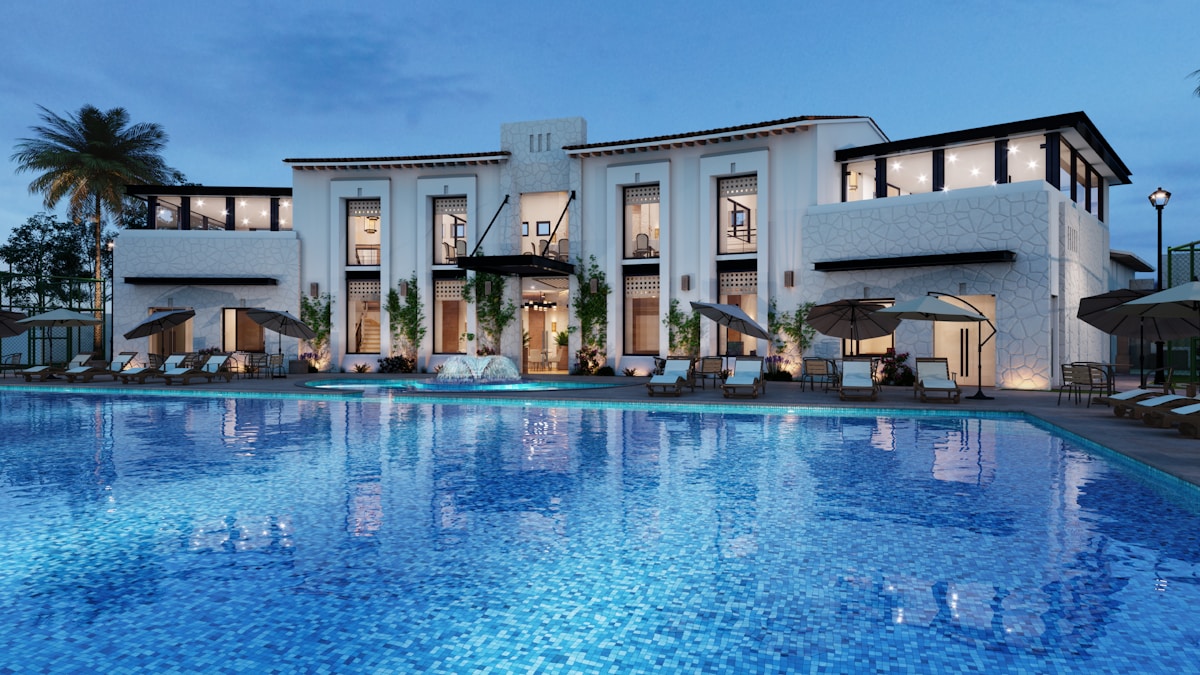
The Slieve Donard, opened in 1898 by the Belfast and County Down Railway and now operated by the Marine & Lawn boutique-resort group, sits literally at the boundary of the golf course. The hotel’s front lawn runs to within a few hundred yards of the first tee, and a private path connects the gardens to the clubhouse. Rooms in the renovated Victorian wing evoke the era of the original Belfast railway clientele, while the modern wing offers contemporary fittings with sea views. Facilities include a 50-foot indoor pool, a full spa, four dining outlets including JJ Farrall’s restaurant, and complimentary golf storage and putting practice on the lawn. Rates run from approximately £280 (€330) per room in shoulder season to £550+ (€640+) in peak July and August. The hotel is the default choice for visiting golfers and books up alongside Royal County Down’s timesheet, reserve at the same time you secure your tee time.
Burrendale Hotel & Country Club
A short drive west of Newcastle on the road toward the Mourne foothills, the Burrendale offers a more affordable four-star alternative at approximately £140–£200 (€165–€235) per night. Facilities include an indoor pool, spa, and well-regarded restaurant. Rooms are comfortable and modernised; the setting is rural and quiet. The Burrendale is a sensible choice for groups that want to spend their money on green fees and dinner rather than on accommodation.
Newcastle B&Bs and Guesthouses
Newcastle’s promenade and side streets host a number of well-regarded bed-and-breakfast properties at £80–£140 (€95–€165) per double room. Briers Country House, Beach House Newcastle, and Glassdrumman Lodge (a short drive south) are perennial recommendations. For a four-night golf trip, B&B accommodation can save £600 or more per couple compared with the Slieve Donard while leaving you within a 5-minute drive of the first tee.
Where to Eat
Newcastle’s dining scene punches above the weight of a town this size, primarily because of its function as a golf and walking destination. Several restaurants are worth a deliberate visit:
- Mourne Seafood Bar, Family-run for over three decades, offering steamed mussels, oysters, fresh whole fish, and excellent fish and chips. Casual, lively, busy. Reservations recommended in summer. Mains £18–£32 (€21–€38).
- JJ Farrall’s at Slieve Donard, The hotel’s signature restaurant, serving locally sourced beef, seafood, and game in a 19th-century dining room. The wine list is among the strongest in Northern Ireland. Mains £24–£42 (€28–€49); tasting menu approximately £85 (€100).
- The Percy French, Named for the Irish songwriter who memorialised the Mournes, this restaurant in the Slieve Donard grounds offers stunning beach views and a more casual menu including battered fish and Sunday roasts. Mains £16–£28 (€19–€33).
- Villa Vinci, Italian cooking with a strong reputation locally; pizzas and pastas at fair prices. Mains £14–£24 (€16–€28).
- Brunel’s Restaurant, A short drive into the town centre; fine-dining tasting menus showcasing Northern Ireland’s larder. Mains £26–£38 (€31–€44).
- Maud’s Ice Cream Parlour, Newcastle’s beloved post-round dessert stop on Main Street; the Pooh Bear flavour is the local favourite.
Mourne Mountains: Sightseeing & Hiking
The Mourne Mountains rise directly behind Newcastle, offering some of the best hill-walking in the British Isles for any non-golfing day in your itinerary or for a partner not joining the round. Slieve Donard itself, at 850 metres, can be summited via a well-marked path that begins at Donard Park in Newcastle. The full ascent and return takes 4–5 hours and rewards walkers with panoramic views from the Isle of Man to the Wicklow Mountains south of Dublin. Less ambitious walkers should consider the Tollymore Forest Park trails (where the BBC’s Game of Thrones filmed several Stark family scenes) or the gentler ascent of Slieve Bearnagh and Slieve Meelmore on the Trassey Track.
Newcastle’s promenade itself is worth an evening stroll. The town runs along Dundrum Bay with the Mournes rising behind, and the views at sunset, particularly on the rare evenings when the cloud lifts and the full mountain range is visible, explain why Percy French wrote the line about “the Mountains of Mourne sweep down to the sea.”
Getting There
Royal County Down sits at the southern end of County Down, approximately 30 miles south of Belfast and 90 miles north of Dublin. The journey from Belfast, whether from the city centre, Belfast International Airport (BFS), or George Best Belfast City Airport (BHD), takes approximately one hour by car along the A24 and A2. From Dublin Airport (DUB), the drive is approximately 1 hour 30 minutes via the M1 northbound and the A1 across the border at Newry. There are no border controls between the Republic and Northern Ireland.
Public transport is limited. Translink Ulsterbus 20 runs from Belfast to Newcastle several times daily and takes about 90 minutes; from there a 10-minute taxi reaches the clubhouse. Most visiting golfers hire a car at the airport, which is essential if you plan to combine Royal County Down with other northern courses or to explore the Mournes.
If you are driving from the south of Ireland, currency on the trip changes from Euro to Pound Sterling at the border. Most Newcastle businesses accept both, but at unfavourable exchange rates; ATM withdrawal in Newcastle in GBP is the cheaper approach.
Combining RCD with Other Courses
Most visitors to Royal County Down build a longer Northern Ireland or all-Ireland golf trip around the round. The natural pairings are:
- Royal Portrush (1 hour 45 minutes north), The other Northern Irish links of world ranking, host of the 2019 Open and again in 2025. Dunluce Links is the championship course; Valley Links the second. Plan two nights minimum on the Causeway Coast to play both courses. Green fee approximately £350 (€410) in 2026.
- Ardglass Golf Club (30 minutes north along the coast), A spectacular cliff-top links with unique medieval clubhouse. Green fee £100–£140 (€118–€165). A perfect afternoon round to bookend a Royal County Down trip.
- Castlerock Golf Club (2 hours north), Mussenden Course, often paired with Royal Portrush.
- The Island Golf Club (1 hour 45 minutes south near Dublin), Top-class links useful as a first-day or last-day round bookending a flight through Dublin Airport.
A classic six-day Northern Ireland itinerary plays Royal County Down (twice, the Championship and the Annesley), Ardglass, Royal Portrush (Dunluce and Valley), and Castlerock, with Tollymore Forest, the Giant’s Causeway, and Belfast’s Titanic Quarter as rest-day attractions. Such a trip in 2026 prices at approximately £4,800–£6,500 (€5,600–€7,600) per golfer including hotels, green fees, caddies, car hire, and meals, comparable to a Bandon Dunes or Pinehurst week, with arguably superior course quality.
Best Time to Play
The visitor season at Royal County Down is roughly mid-April to mid-October. Within that window, the best playing conditions are typically late May, June, and early September. May offers long daylight, gorse in full purple-yellow bloom, and the lowest probability of summer storms; June extends the daylight to its 17-hour peak and adds drier turf; September delivers firm, fast fairways and the best combination of weather and uncrowded conditions before the autumn close.
July and August bring peak demand, peak prices on hotels (though the green fee remains £450 throughout), and the highest rainfall risk. The Atlantic weather systems that produce the dramatic light over the Mournes also produce sudden squalls; always pack full waterproofs regardless of the forecast.
October play is genuinely uncertain, the course is in superb condition, but daylight has shortened to 10 hours and the wind picks up. Hardy travelling golfers value the fewer crowds and lower hotel rates; risk-averse golfers should book May, June, or September.
Common Mistakes Visitors Make
After thousands of visitor rounds and hundreds of post-round debriefs at the Slieve Donard bar, certain errors recur. Avoid these:
- Booking too late. If you call in January for a round in July, you will be told the timesheet is full. Bookings open the previous April. For 2027 rounds, prepare to ring on or about 1 April 2026.
- Skipping the caddie. The Championship Links has too many blind shots and too much subtle green contour for a first-time visitor to navigate without local help. The £75 caddie plus £15–£20 gratuity returns ten-fold in saved strokes and lost balls.
- Underestimating the wind. Mourne winds are unpredictable and amplified by the dune corridors. A calm forecast at sea level may not reflect what’s happening on the 9th tee.
- Failing to bring a handicap certificate. The starter will check. Without it, you will not play. Print it and put it in your golf bag the night before.
- Trying to play a buggy. Buggies are not permitted on the Championship Links. If you cannot walk 7,000 yards on hilly terrain, plan to play the Annesley instead, where pull trolleys cope easily.
- Eating before the round at a leisurely Slieve Donard breakfast. Allow 90 minutes for warm-up; rushing the warm-up and arriving at the first tee under-stretched on a cold morning leads to terrible opening holes.
- Skimping on waterproofs. Northern Ireland’s coastal weather can change in 20 minutes. Even on a forecast-blue summer day, pack a full top and trouser set.
- Booking only one round. If you have travelled this far, play the Annesley as a second round either the day before or the day after. Most visitors who skip it later regret the decision.
Related guides
- Iconic Golf Courses in Ireland — Complete Playing & Booking Guides
- Playing Lahinch Golf Club — Visitor Guide to Clare’s Famous Links
- Playing Waterville Golf Links — Kerry Visitor Guide
- Playing Ballybunion Golf Club — Complete Visitor Guide (2026)
- Playing Old Head Golf Links — Is It Worth €350+?
- Playing Adare Manor — 2027 Ryder Cup Venue Golf Experience
FAQ
How much does it cost to play Royal County Down in 2026? The Championship Links green fee is £450 (approximately €525). The Annesley Links is £120 (approximately €140). Caddies start at £75 and a fore-caddie at £110 is the minimum group requirement.
What handicap do I need to play Royal County Down? A maximum index of 24 for men and 36 for women is required to play the Championship Links. The Annesley Links has no formal handicap requirement.
Can I book online? No. Royal County Down does not accept online visitor bookings for the Championship Links. All reservations are made by phone (+44 28 4372 3314) or email ([email protected]) through the Secretary’s Office.
When does booking open for the following year? The timesheet traditionally opens in late March or the first week of April for the calendar year that follows. For 2027 rounds, expect the phone lines to open around 1 April 2026, with peak dates filling in 10–14 days.
Are buggies available? No. Buggies are not permitted on the Championship Links because of the steepness of the dune topography. Push trolleys and electric trolleys are available; all play is on foot.
Do I need a caddie? A minimum of one fore-caddie per four-ball is mandatory at £110. Single caddies (one per bag) are strongly recommended at £75 each.
How do I get to Royal County Down? The course is in Newcastle, County Down, approximately 1 hour from Belfast and 1 hour 30 minutes from Dublin by car. Dublin Airport and Belfast International are the practical international gateways.
Where do most visitors stay? The Slieve Donard Resort, immediately adjacent to the course, is the default. The Burrendale Hotel and Newcastle B&Bs are more affordable alternatives within 5 minutes’ drive.
Has Royal County Down hosted The Open? No. Logistical and infrastructural limitations at Newcastle have so far prevented The Open from coming to RCD, although the conversation continues. The course has hosted the Walker Cup, Curtis Cup, Senior British Open, Irish Open, and Amateur Championship.
Is Royal County Down really better than Royal Portrush? The two courses split rankings panels almost evenly. RCD typically wins on landscape and architectural drama; Portrush typically wins on competitive pedigree and recent Open Championship hosting. Most visitors who play both rate them equally and refuse to choose.
Final Thoughts
Playing Royal County Down is the closest thing in modern golf to a pilgrimage. The course is, by nearly every panel that ranks such things, the best in the world; the setting is among the most beautiful; the architecture stretches in unbroken line back to Old Tom Morris and the founding generation of the modern game. The £450 green fee is real, the booking process is genuinely difficult, the handicap requirement is enforced, and the weather may humble you regardless of how well you play. None of that diminishes the experience, it intensifies it. You are walking ground that Vardon, Hagen, Hogan, Watson, and Woods have walked, looking at the same Mourne skyline that has framed the 9th green since the 19th century.
If you are planning a 2026 round, ring the Secretary’s Office at +44 28 4372 3314 as soon as the timesheet opens in late March or early April 2025. If you are planning 2027, mark 1 April 2026 in your diary now. Book the Slieve Donard at the same time. Engage a caddie. Bring your handicap certificate. Pack waterproofs. And then, on the elevated 3rd tee, let yourself look up from your driver toward the bay and the mountains beyond, and understand why every panel in the world keeps voting this course #1.
Royal County Down does not need to advertise. The course speaks for itself, the rankings settle the argument, and the visitors who walk the dunes carry the rest of the story home with them. After your round, sit in the visitor lounge with a Bushmills and a bowl of soup, watch the late light move across Slieve Donard, and admit what every golfer who has played here eventually admits: the world #1 ranking is not a marketing claim. It is a description.