Waterville Golf Links Review 2025: Kerry’s Hidden Gem Guide
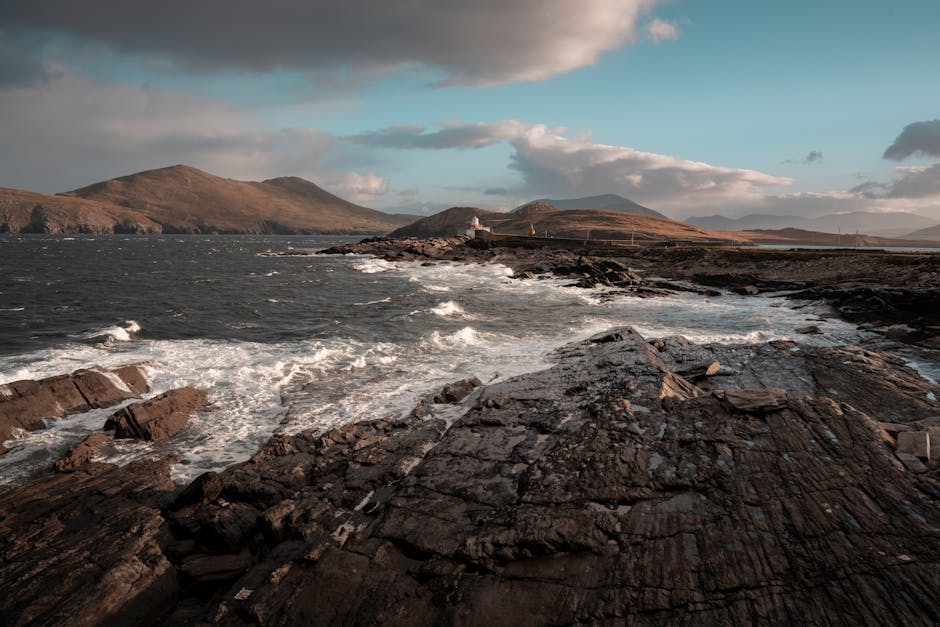
Perched on the edge of Ballinskelligs Bay in County Kerry, Waterville Golf Links stands as one of the world’s most remote and spectacular championship golf courses. This masterpiece of Irish links golf combines the rugged beauty of the Wild Atlantic coast with extraordinary hole design, making it an essential destination for golfers seeking an authentic links experience. With its dramatic elevation changes, Atlantic winds, and views of MacGillycuddy’s Reeks mountains, Waterville represents everything that makes Irish golf legendary.

This comprehensive review covers everything you need to know about Waterville Golf Links, from its fascinating history and championship pedigree to practical information for planning your visit. Whether you’re a seasoned links player or experiencing Irish golf for the first time, Waterville offers an unforgettable challenge in one of Europe’s most beautiful settings.
Course History: From Eddie Hackett’s Vision to World Renown
Waterville Golf Links has a rich and storied history that spans more than a century. The original nine holes were built on the linksland in the 1880s, establishing Waterville’s foundation as a golf destination. However, it was the vision of John A. Mulcahy, a visionary Irish entrepreneur, that transformed Waterville into the top-class championship course we know today.
In 1968, Mulcahy identified this spectacular isthmus of natural dune-land bordered by the Atlantic Ocean to the west, the Inny River and Estuary to the north, and native bogland to the south. He enlisted the expertise of Ireland’s most celebrated golf architect, Eddie Hackett, to create a modern masterpiece. Working alongside Hackett were Claude Harmon, a former Masters champion and head professional at Winged Foot Golf Club, and Mulcahy himself, who brought passion and meticulous attention to detail.
After exhaustive planning and construction, the course opened in 1973 at 7,116 yards, a championship test that immediately garnered international acclaim. The design brilliantly blended the original, more rugged back nine with the newer, more strategic front nine, creating continuity while maintaining the natural drama of the landscape.
In 2002, renowned designer Tom Fazio undertook significant enhancements to the course. Fazio injected ripples, dunes, and classic links bunkers to provide visual and strategic consistency between the two nines. He relocated the 2nd, 15th, and 16th greens; recontoured several flatter putting surfaces; and created two entirely original holes, swapping out the old par-four 6th and par-three 7th for a new par-three 6th and par-four 7th. These renovations further elevated Waterville’s status while preserving the Hackett-Harmon-Mulcahy DNA that makes it unique.
The Payne Stewart Legacy: A Champion’s Favorite
Few golfers embodied Waterville’s spirit as fully as the late Payne Stewart. The American champion fell in love with Waterville during a pivotal moment in his career, and his connection to the course remains one of golf’s most touching stories. In 1998, Stewart visited alongside his friends Mark O’Meara and Tiger Woods, a trip that cemented their affection for this remote Irish links.
Stewart became so enamored with Waterville that later that year, during a ceremony at the 1998 Ryder Cup in Brookline, Massachusetts, he accepted the captaincy of Waterville Golf Links, the last golf honor he would receive before his tragic death in a plane crash on October 25, 1999. The golf world lost an extraordinary talent and a true gentleman.
Today, Waterville honors Stewart’s memory with a bronze statue positioned near the 18th hole. Inside the clubhouse, the halfway house displays photographs and mementos of Stewart, including a piano on which he famously played late into the night during his visits, entertaining members between pints. Each year, the course hosts signature tournaments that celebrate Stewart’s legacy and continue to bring international golfers to this Kerry gem.
- Father & Son Tournament, a fixture since 1981, attracting golfers globally
- Father & Daughter Tournament, celebrating family bonds on the links
- Payne Stewart memorial events throughout the year
Tiger Woods and Championship Preparation
Long before major championships were decided, top-class golfers began making pilgrimages to Waterville for pre-tournament preparation. Tiger Woods is perhaps the most famous example. In 1998 and 1999, as he was preparing for Open Championship events, Woods came to Waterville to hone his links skills.
His first visit was particularly memorable: Woods spent his opening day fishing at the famous salmon pool at Waterville House before taking to the links for what would become a life-changing experience. He returned the following year with Mark O’Meara, and together they practiced extensively on the course’s exacting fairways and lightning-fast greens. Today, Woods maintains membership at Waterville, underscoring his deep respect for the course and its role in his championship preparation.
This tradition continues: professionals preparing for major championships regularly visit Waterville to experience authentic links golf in its purest form. The course has become a proving ground for champions, a place where technique is tested against nature’s most demanding conditions.
Hole-by-Hole Highlights: A Journey Through Dunes and Drama
Waterville’s 18 holes represent a masterclass in links golf design. Playing to a par of 72 across five sets of tees ranging from 5,370 to 7,116 yards, the course presents different challenges based on tee selection and wind conditions. The course rating of 77.9 from the back tees and slope of 131 underscores just how demanding Waterville can be for elite competitors.
The Front Nine: Strategic Beauty
The opening holes introduce golfers to Waterville’s strategic philosophy. While somewhat less dramatic than the back nine initially, the front nine demands precise club selection and course management. Tom Fazio’s modern design philosophy shines here, with carefully sculpted bunkers and refined green complexes that reward accuracy and penalize careless play.
The course features four par threes, ten par fours, and four par fives distributed strategically across both nines. The opening loop meanders through established dunes and offers glimpses of water hazards, setting the stage for the championship golf to come. Proper position off the tee is essential here, miss the fairway and recovery becomes exponentially more difficult.
The 11th Hole: Tranquility in the Dunes
The back nine begins with one of golf’s most beautiful holes. The 11th is a heavenly short par five at 506 yards, playing through rippling fairways protected on both flanks by towering dunes. Gary Player, one of golf’s greatest champions, called this hole “the most beautiful and satisfying par five of them all.” Named “Tranquility,” the 11th slithers between massive dune ridges that tower above fairway level, creating an almost cathedral-like atmosphere.
The heroic shot here involves attacking the green directly, but prudent players may elect to lay up short of the hazards and rely on a wedge to a relatively receptive green complex. Either way, this hole exemplifies why Waterville ranks among the world’s premier courses, it offers beauty, drama, and genuine scoring opportunities wrapped into one unforgettable experience.
The 12th Hole: The Mass Hole
Perhaps no hole at Waterville carries more historical weight than the 12th, a 200-yard par three called “The Mass Hole.” This name originates from Irish Catholic history. When the penal laws punished Irish Catholics for celebrating mass, locals used this hidden, dune-surrounded location to worship in secret. Irish workers constructing the course refused to build here initially because of its sacred significance, until course designers found a way to honor that legacy.
Today, the Mass Hole stands as a remarkable par three requiring a full mid-iron or hybrid to find greens protected by deep bunkers. The elevation of the green, combined with Atlantic winds and the historical resonance of the location, makes this one of golf’s most memorable short holes. Playing it well requires respect for both the course and the Irish heritage it represents.
The 17th Hole: Mulcahy’s Peak
Named after the course’s visionary founder, John A. Mulcahy, the 17th hole “Mulcahy’s Peak” is widely regarded as the most impressive hole at Waterville. This 194-yard par three plays from the highest dune on the entire property, positioned on an elevated back tee that commands striking vistas. From here, golfers can see the ocean rolling behind the green, the MacGillycuddy’s Reeks mountains in the distance, and the vast expanse of Ballinskelligs Bay.
The green sits isolated by dense vegetation, with the Atlantic Ocean providing a dramatic backdrop. Club selection here is everything, get the distance wrong and the ball either finds water or the dunes beyond. The wind, which can be substantial at this elevated position, adds another variable to an already challenging shot.
The hole carries profound personal significance: in 1994, at John A. Mulcahy’s request, his ashes were scattered across this green, a final resting place befitting a man who devoted his life to creating something beautiful and lasting. Playing Mulcahy’s Peak means playing on hallowed ground.
The Back Nine: A Crescendo of Drama
From the 10th through the 18th, Waterville delivers championship drama with relentless intensity. The closing three holes, played alongside Ballinskelligs Bay as it opens to the North Atlantic, showcase the course at its most visually stunning and strategically demanding. Here, freshening winds, dramatic elevation changes, and precise green complexes combine to test every aspect of a golfer’s skill.
The final stretch demands bravery and precision in equal measure. Par here feels like birdie on most courses; bogey is always lurking. This is championship golf at its best.
The Setting: Ring of Kerry and Ballinskelligs Bay
Waterville Golf Links occupies a truly exceptional location on Ireland’s most famous scenic route, the Ring of Kerry. The course sits on an isthmus of natural dune-land bordered on the western flank by the Wild Atlantic Ocean, on the northern boundary by the Inny River, on the eastern verge by the Inny Estuary, and on the southern margin by native bogland. This unique geography creates a world unto itself.
Ballinskelligs Bay stretches below the course, opening out onto the North Atlantic with panoramic views that seem to extend to the edge of the earth. The closing holes are played directly alongside this stunning seascape, with freshening winds whipping across O’Grady’s Beach. To the northeast, the MacGillycuddy’s Reeks mountain range provides a dramatic backdrop, at 1,038 meters, Ireland’s highest mountains create a landscape of genuine grandeur.
The two nine-hole loops deliver relentless scenic beauty. The turf is firm and running, typical of links courses exposed constantly to Atlantic weather. Native grasses, hardy coastal vegetation, and the ever-present wind remind golfers that they are playing golf in one of Ireland’s most remote and beautiful locations.
Course Conditions and Playing Characteristics
Waterville Golf Links ranks among Ireland’s best-maintained championship courses. The greens are consistently lightning-fast, running firm and true in authentic links fashion. Course management is meticulous, with attention paid to every aspect of presentation and playability.
The Wind: A Living Challenge
Wind is perhaps Waterville’s defining characteristic. Merciless coastal winds howling from the Atlantic test every golfer’s ability to work the ball and make intelligent club selections. The course can play 300+ yards longer or shorter than scorecard yardage depending on wind direction and velocity.
Golfers should expect winds to freshen as the round progresses, particularly on the back nine where ocean exposure increases. Keeping the ball low is advisable in strong wind; higher trajectories will be punished. The best players manage to work the ball both directions and demonstrate flexibility in their approach.
Elevation Changes and Strategic Routing
Waterville’s elevation changes are significant. Holes climb to elevated tees, descend into protected valleys, and play around dramatic dune formations. These elevation changes affect both club selection and visualization. A hole that looks straightforward from the fairway might require a completely different approach when you’re standing at an elevated tee.
Controlling trajectory and playing to the correct side of the fairway are critical scoring skills. The bunker placement rewards strategic tee shots and punishes those who drift from intended lines. Playing Waterville successfully means studying each hole’s geometry and respecting its strategic design.
Firm, Running Turf
The turf is characteristically firm and running, typical of coastal links that experience heavy Atlantic winds. This firmness means golfers must adjust their expectations. Shots won’t stop as quickly as on inland courses; trajectories that work on lush grass may not work here. Running approaches, chip-and-run shots, and precise distance control become essential skills.
The firm conditions also mean that golfers have options not available on softer courses. Chasing the ball up on the ground, using the natural contours of the dunes, and landing short of greens to release the ball forward becomes viable strategy. This is real links golf.
Green Fees and Booking Information for 2025
Waterville maintains strict championship standards, and green fees reflect the course’s elite status. As of 2025, weekend rates are approximately €375 per round, with weekday rates typically lower. These rates may fluctuate seasonally, with peak season (June-September) commanding higher fees than shoulder seasons.
Booking Requirements
- Full payment required at time of booking
- Credit cards accepted by phone
- Payment is non-refundable
- Advance booking strongly recommended, especially during peak season
- Booking window typically extends 12+ months in advance
How to Book
- Direct booking with Waterville Golf Links by phone: +353 (0)66 9474102
- Online booking through partner platforms including Chronogolf
- Golf travel specialists offering Southwest Ireland golf packages
- Premier Golf and other Wild Atlantic Way golf travel operators
Best Times to Visit
Waterville is accessible year-round, but seasonal considerations affect the experience. May through September offers the most stable weather and longest daylight hours, making these months ideal for visitors. June and July are peak season, so booking well in advance is essential. April-May and September-October offer excellent conditions with fewer crowds and lower fees. Winter (November-March) can be spectacular for experienced links golfers willing to embrace Atlantic storms, though weather can be unpredictable.
Visitor Experience and Course Amenities
The clubhouse at Waterville reflects the course’s championship status. Visitors receive a warm welcome from experienced staff who understand links golf. The facility includes a well-stocked pro shop, practice range, and chipping area for pre-round preparation.
The clubhouse restaurant and pub offer traditional Irish hospitality with stunning views over the course and Ballinskelligs Bay. This is an ideal spot to reflect on your round, share stories with fellow golfers, and soak in the atmosphere that has drawn champions for decades.
Waterville maintains professional caddie programs and offers rental clubs and shoes for visitors. The halfway house provides refreshments and shelter during your round. All amenities reflect the course’s commitment to providing a top-class experience from arrival to departure.
The Butler Arms Hotel: Waterville’s Historic Centerpiece
For golfers visiting Waterville, the Butler Arms Hotel represents the pinnacle of hospitality. This 4-star luxury hotel opened in 1884 and remains the heart of Waterville’s tourism experience. The hotel’s story is intertwined with Waterville’s own development.
In 1916, Martin and Mary Huggard purchased the Butler Arms, and under Mary’s visionary leadership, it became an internationally recognized luxury destination. The hotel’s most famous guests arrived in 1959: Charlie Chaplin and his family. Chaplin fell in love with Waterville and the surrounding Ring of Kerry, returning each year for more than a decade. In the 1960s, when demand nearly overwhelmed the small hotel, the owner graciously offered Chaplin his private suite, an act of generosity that became legendary.
Today, the Butler Arms honors this heritage with elegant accommodations, exceptional cuisine, and uncompromising attention to guest comfort. The hotel sits directly overlooking Ballinskelligs Bay, providing the same stunning vistas that captivated Chaplin decades ago. Charlie’s Restaurant at the hotel serves contemporary Irish cuisine featuring local seafood and produce.
- 4-star accommodation with bay views
- Fine dining and casual pub options
- Direct booking with Waterville Golf Links available
- Historic luxury hotel with century of hospitality experience
- Prime location for exploring Ring of Kerry attractions
Waterville Village: Gateway to Kerry’s Heritage
The charming village of Waterville serves as your home base when visiting the course. This small but vibrant community offers excellent restaurants, traditional pubs, and warm Irish hospitality. The village’s rich cultural heritage extends far beyond golf.
The Charlie Chaplin Connection
Waterville celebrates its unexpected cultural connection to Charlie Chaplin with a bronze statue in the village center. The statue commemorates Chaplin’s extended stays in the 1960s and the profound affection he developed for this remote Kerry location. Each year, the village hosts the Charlie Chaplin Comedy Film Festival, drawing film enthusiasts from around the world.
Dining and Entertainment
- Butler Arms Hotel restaurants and bars
- Traditional Irish pubs with live music
- Fresh seafood from Atlantic catches
- Local farm produce and regional specialties
- Walking trails and scenic drives from village center
Skellig Michael: UNESCO World Heritage Site on Your Doorstep
One of Europe’s greatest archaeological treasures lies just off the coast from Waterville. Skellig Michael, designated a UNESCO World Heritage Site in 1996, rises dramatically from the Atlantic Ocean approximately 12 kilometers west of the Iveragh Peninsula. This rocky island was home to a thriving monastic community between the 6th and 8th centuries, one of Europe’s most remarkable early medieval settlements.
Historical Significance
Irish monks built extraordinary “beehive” huts (clocháin) on Skellig Michael entirely without mortar, creating structures that have survived over 1,400 years of Atlantic storms. The remains of their monastery, including a church, graveyard, and oratories, rank among the best-preserved early medieval monastic sites in all of Europe. UNESCO recognized Skellig Michael as “iconic and the best example of Early Medieval island monastic sites.”
Visiting Skellig Michael
Access to Skellig Michael is strictly controlled to preserve the archaeological site. Only 180 visitors can land per day, and boats operate only during favorable weather conditions, roughly 65% of scheduled sailings actually land. The village of Portmagee, just across from Skellig Michael, serves as the departure point for boat trips, typically available from late spring through early autumn.
Those landing on the island face a steep climb of over 600 ancient stone steps to reach the monastery. The physical challenge is rewarded with views that stretch across the Atlantic and an overwhelming sense of standing on the very edge of the medieval world.
The Ring of Kerry: Scenic Grandeur and Cultural Heritage
Waterville sits at the heart of the Ring of Kerry, Ireland’s most famous scenic driving route. This 179-kilometer loop circumnavigates the Iveragh Peninsula, delivering some of Europe’s most dramatic coastal and mountain scenery. Golfers visiting Waterville should plan extra time to explore this cultural and natural treasure.
Ring of Kerry Highlights
- Skellig Michael: UNESCO World Heritage monastic site (detailed above)
- Macgillycuddy’s Reeks: Ireland’s highest mountain range with dramatic hiking
- Ballaghbeama Gap: Spectacular mountain pass with panoramic views
- Muckross House and Gardens: Victorian mansion with formal gardens
- Lakes of Killarney: Scenic lake district with boating and walking trails
- Kells Beach: Pristine strand with excellent walking
- Dunloe Gap: Historic mountain pass between Purple Mountain and MacGillycuddy’s Reeks
The Ring of Kerry connects naturally to the Wild Atlantic Way golf trail, allowing golfers to combine Waterville with other championship courses in the region. Many visitors spend 5-7 days exploring the Ring of Kerry while playing multiple golf courses.
How to Get There: Travel Information for 2025
International Airport Options
- Shannon Airport: Ireland’s third-largest airport, approximately 3 hours from Waterville by car
- Kerry Airport: Smaller regional airport closer to Waterville
- Cork Airport: Approximately 2.5 hours from Waterville
- Dublin Airport: Ireland’s largest airport, approximately 3.5-4 hours from Waterville
Driving from Killarney
Killarney, the main tourist hub for the region, sits approximately 55 kilometers from Waterville. The recommended route follows the N72 from Killarney toward Killorglin, then the N70 (Ring of Kerry route) via Cahersiveen to Waterville. This scenic drive takes approximately 1 hour 20 minutes via Cahersiveen.
Alternative routing through Glenbeigh adds additional scenic beauty but extends driving time. All routes deliver stunning views of mountains, lakes, and the Atlantic coast.
Detailed Directions to Course
Course address: Murreagh, Waterville, Co. Kerry, Ireland. GPS coordinates can be entered directly into modern navigation systems. From Killarney, follow the N72 toward Killorglin and continue on the N70 Ring of Kerry. As you approach Waterville village, follow directional signage to the golf course. The course sits on the western edge of Waterville village, directly above Ballinskelligs Bay.
Phone: +353 (0)66 9474102 for specific directions or to arrange ground transportation if desired.
Playing Tips and Strategic Guidance
Understanding Wind and Elevation
Wind and elevation are the two elements that separate good Waterville rounds from great ones. Before you tee off, spend time on the range observing wind direction and intensity. The same club that works for one hole may be wrong for the next, depending on wind direction relative to fairway orientation.
Elevation changes significantly affect how the course plays. An elevated tee may require 1-2 clubs less; a downhill approach may demand additional club. Take time to observe each hole’s elevation profile before committing to club selection.
Course Management Principles
- Avoid the left: Heavy rough lines the left side of many holes; the ocean lurks on the right. Play conservatively toward the center-right of fairways
- Position for approach shots: Par is a great score at Waterville. Play for position rather than attacking every hole aggressively
- Keep it low: In strong wind, keep trajectory as low as possible. Higher shots will be pushed or pulled offline
- The firm fairway is your friend: Use running approaches and let the ground work for you. Firm turf releases the ball differently than soft inland grass
- Study green contours: Fast greens at Waterville require conservative speed control. Lag putting is more important than making putts
- Respect the back nine: The finishing holes are significantly tougher. Be patient and accept pars on difficult holes
Club Selection Strategy
Club selection at Waterville demands flexibility. The same 150-yard shot to a par four might require anything from a 4-iron in calm conditions to a 6-iron in strong wind. Bring a full set of 14 clubs and be prepared to use all of them. Hybrids and long irons are particularly valuable in links golf where distance control matters more than raw distance.
Consider trajectory when selecting clubs. Lower-trajectory clubs work better in wind; higher-trajectory clubs may work in calm conditions. Many skilled links players deliberately hit lower than their normal trajectory to maintain control in coastal conditions.
Pre-Round Preparation
- Arrive early to play range shots and observe wind patterns
- Use the practice putting green extensively, Waterville greens move differently than most courses
- Review the scorecard carefully, noting hazard locations and green complexes
- Ask the pro shop for local course knowledge and recent wind patterns
- Consider hiring a caddie, professional caddies provide invaluable local expertise
- Dress in layers, weather can change rapidly on the Atlantic coast
Complementary Courses in the Region
Golfers visiting Waterville should consider playing additional championship courses within the Southwest Ireland golf region. The area features several top-class courses within easy driving distance:
- Dooks Golf Club: Links course with mountain backdrop, 45 minutes from Waterville
- Tralee Golf Club: Championship design by Arnold Palmer, 1.5 hours away
- Ballybunion Old Course: Legendary links course, 1.5 hours away
- Killarney Golf Club: Parkland beauty near Killarney, 1 hour away
Visit our comprehensive guides to Ireland golf course reviews and best golf courses in Ireland for detailed information on these courses and others.
The Waterville Experience: Why This Course Matters
Waterville Golf Links transcends typical resort golf. This is not merely a destination for collecting courses; it is a pilgrimage site for golfers who understand what links golf means. The remote location, the dramatic setting, the championship routing, and the storied history combine to create an experience that endures long after the final putt drops.
Payne Stewart understood this. Tiger Woods understood this. Gary Player understood this. Champions recognize in Waterville something pure and essential about golf, a test that demands everything, played in a landscape of genuine grandeur, against an opponent (the course and the wind) that offers no mercy but also no excuses.
Waterville rewards preparation, strategic thinking, and emotional resilience. It punishes poor course management and passive play. It demands that golfers truly compete rather than simply play. And it delivers, in return, an experience of golf in its truest form, golf played against the elements on terrain shaped by nature itself.
For golfers seeking authentic links golf, top-class championship design, and the profound beauty of Ireland’s Atlantic coast, Waterville Golf Links stands unmatched. Book your round, prepare your game, and prepare to understand why champions keep returning to this remote gem on Ballinskelligs Bay.
Quick Reference: Key Course Information
| Category | Details |
|---|---|
| Course Name | Waterville Golf Links |
| Location | Murreagh, Waterville, County Kerry, Ireland |
| Architect | Eddie Hackett / John A. Mulcahy (1973); Tom Fazio renovations (2002) |
| Par | 72 |
| Championship Yardage | 7,116 yards |
| Course Rating | 77.9 (from back tees) |
| Slope Rating | 131 |
| Green Fee (2025) | €375 (weekend); weekday rates lower |
| Contact Phone | +353 (0)66 9474102 |
| Website | watervillegolflinks.ie |
| Booking | Direct phone, online platforms (Chronogolf), golf travel operators |
| Tee Times | Advance booking required; full payment non-refundable |
| Distance from Killarney | 55 km (1 hour 20 minutes via N72/N70) |
| Accommodation | Butler Arms Hotel (on-site luxury option) |
| Best Season | May-September; June-July peak season |
| Signature Holes | 11th (Tranquility), 12th (Mass Hole), 17th (Mulcahy’s Peak) |
Waterville Golf Links stands as a masterpiece of course design and one of the world’s truly great golf experiences. This comprehensive review provides everything golfers need to plan their visit, understand the course’s history and challenges, and appreciate why champions return to this remote Irish links. Whether you’re a seasoned traveler or experiencing Irish golf for the first time, Waterville deserves a place on your bucket list.
Related guides
- Read our full guide to Ireland golf course reviews
- See also: Old Head golf links review
- See also: Tralee golf course review
- Ballybunion Old Course Review
- Royal Portrush Dunluce Course Review
- Royal County Down Review
- Lahinch Golf Club Review
- Portmarnock Golf Club Review
- Adare Manor Golf Course Review
- Ballyliffin Glashedy Links Review
- County Sligo (Rosses Point) Review
- Carne Golf Links Review