Best 19th Hole Pubs in Ireland: Where Golfers Drink After the Round
The round isn’t over when you sink your final putt on the 18th green. In Ireland, the round ends at the right pub, a low-ceilinged room with smoke-darkened beams, a perfectly settled pint of Guinness on the bar, and a fiddle player tuning up in the corner. The 19th hole is where the real golf trip happens. It’s where you replay the shot you should have hit on the par-3, where you meet the local who tells you which of the next day’s tee times is most likely to escape the wind, and where, for a few hours, the line between visiting golfer and welcomed regular dissolves over pints and shared stories. This guide covers the best pubs near Ireland’s most celebrated courses, the proper 19th holes that complete a round and a trip.
What Makes a Great 19th-Hole Pub
The 19th-hole pub is a specific institution distinct from the resort clubhouse bar. The clubhouse bar is comfortable, predictable, and populated almost exclusively by golfers paying clubhouse prices. The 19th-hole pub is the village local that golfers and locals share, where the room remembers a hundred years of post-round storytelling and where the pour comes at honest prices. Five attributes separate the great Irish 19th-hole pubs from merely adequate watering holes.
- Proximity: The pub should be close enough that you can walk from the clubhouse or the team van without organizing a major expedition. Five to fifteen minutes is ideal. Anything longer and the gravitational pull of the hotel bar wins.
- Atmosphere: Low ceilings, dark wood, turf or peat fires in winter, brass fittings worn smooth by generations of elbows. The room should feel older than your grandfather. Open-plan modern interiors with abundant chrome do not qualify.
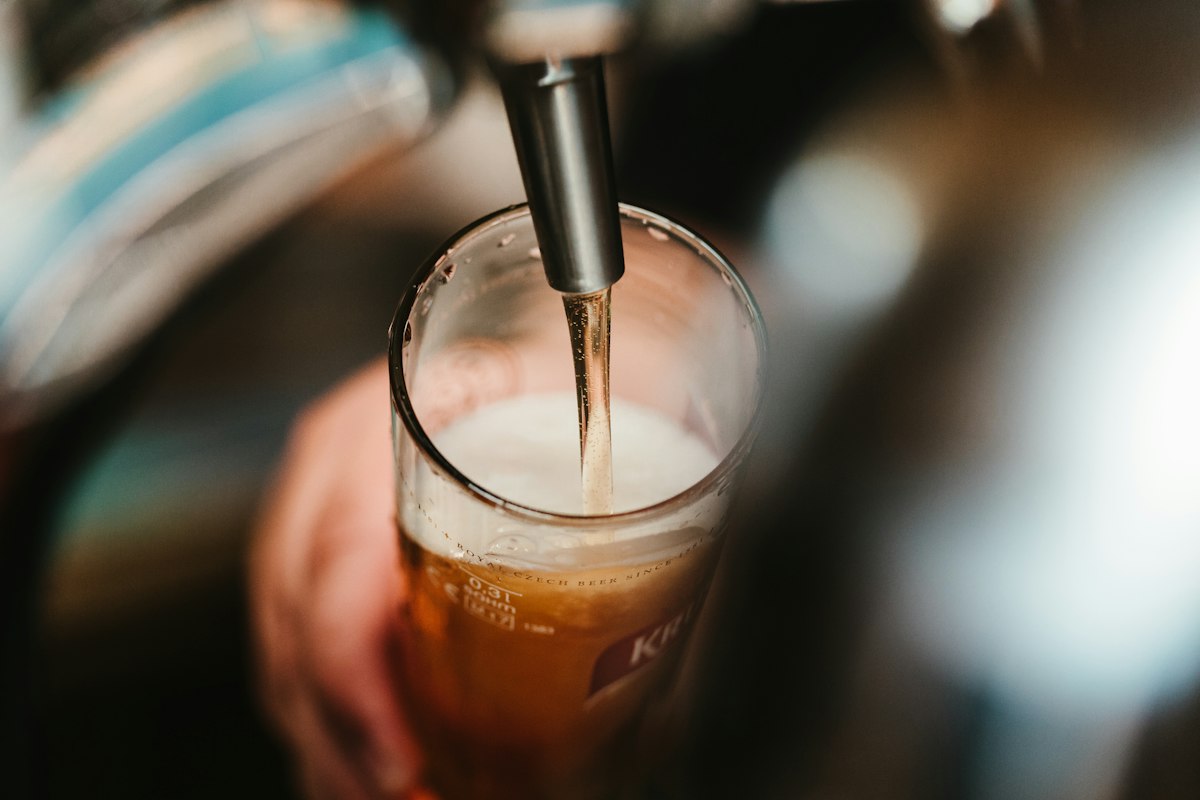
- The Pour: A properly poured pint of Guinness is a two-stage process taking just under two minutes. If your pint arrives in thirty seconds, the bartender has cheated you and the stout. Real 19th-hole pubs treat the pour as a craft.
- The Food: Not fine dining, but honest. Beef and Guinness stew, fish and chips, brown bread, soup of the day, lamb shank when it’s in season. Food that absorbs pints rather than competing with them.
- The Locals: The single most important quality. A great 19th-hole pub has regulars at the bar who’ll engage with visitors without performing for them. Authenticity isn’t manufacturable. You either find it or you don’t.
Pubs Near Ballybunion
Ballybunion is a small Kerry seaside village dominated, in golfing months, by the Old Course at Ballybunion Golf Club. The town is compact, you can walk between every pub mentioned below in under ten minutes, and the entire main street has been welcoming post-round golfers for the better part of a century. The Atlantic is rarely more than a few hundred metres from your pint glass.
McMunn’s of Ballybunion
Main Street, Ballybunion, County Kerry. McMunn’s is the gastro-pub locals point visiting golfers toward and the place where most groups end up at least once during a Kerry trip. The kitchen takes its food seriously without becoming pretentious about it, seafood from the boats at nearby ports, Kerry lamb, local beef, all turned out at fair prices. The bar is well stocked with Irish whiskeys for the after-dinner ritual and the staff are happy to arrange tee times for guests staying upstairs in the rooms above the pub. McMunn’s catches the breeze off the Atlantic from a good vantage on Main Street and the windows take in the cliffs Ballybunion is justly famous for.
Mikey Joe’s
Mikey Joe’s sits comfortably in the inner ring of locals’ favorites in Ballybunion, the kind of place where the bar staff recognize the stalwarts by their walk through the door rather than by face. It’s not polished and it doesn’t try to be. The pints are well looked after, the conversation moves easily between Kerry GAA, the previous day’s wind direction at the Cashen Course, and the latest news from town. If you want to feel like you’ve stumbled into a working Kerry pub rather than a tourist installation, Mikey Joe’s is your door.
Daly’s of the Square
Daly’s, on the square in central Ballybunion, occupies a building that has been a public house under various names for generations. It pulls a steady mix of golfers and locals and lives up to the role of the proper village pub: dim lighting, a peat fire when the weather earns one, no music piped over the speakers because the conversation is the music. Daly’s is a particularly good choice for a quiet pint after dinner when you don’t want a session, just one or two more before the walk back to your accommodation.
Pubs Near Lahinch
Lahinch, on the Clare coast a few minutes from the Cliffs of Moher, sits in arguably the richest pub-hopping country in Ireland. Within a fifteen-mile radius you have classic seaside pubs, market-town stalwarts, and the trad-music capital of the country in Doolin. The four pubs below cover the spectrum from a quick walk in town to a pilgrimage worth the drive.
Vaughan’s Anchor Inn (Liscannor, 5 min from Lahinch)
Main Street, Liscannor, County Clare. Vaughan’s Anchor Inn is the rare 19th-hole pub that has earned a place in the Michelin Guide on its food alone, while remaining a genuine, unaffected village bar. Opened in 1979 by John and Annette Vaughan in the fishing village of Liscannor, two miles from the Cliffs of Moher and five minutes’ drive from Lahinch, the inn has been serving Irish food for more than four decades and is now run by the third generation of the family. The seafood comes in off the boats at Liscannor harbour, often the same morning. Order the seafood chowder, the catch of the day, or whatever the bar staff are quietly recommending. The bar itself is small, low-ceilinged, and feels exactly like a working Clare village pub should feel.
Cornerstone Bar (Lahinch town)
Lahinch town has a number of bars, but the Cornerstone is the most reliable for an after-round pint that doesn’t require a car. It’s a working pub, neither overly polished nor neglected, with proper Guinness, good local company, and the kind of low-key atmosphere that suits a tired golfer with sand still in his shoes. On weekend nights it picks up considerably and a session can break out without warning. On a Tuesday in October, it’s the spot for a contemplative pint while you replay the round in your head.
Pot Duggans (Ennistymon, 10 min)
Ennistymon, ten minutes inland from Lahinch, is the sort of small Clare town that feels untouched by the holiday-home boom. Pot Duggans is its centerpiece, a bar and restaurant that consistently turns up on locals’ lists of County Clare’s finest. The pub is laid out in the long, narrow Irish style, with a back room that opens up into restaurant tables. Order a pint and stay for food: Irish stew done properly, fresh fish, meat pies that wouldn’t disgrace a much grander kitchen. The clientele is more Clare farmer than visiting golfer, which is precisely why you should come.
Gus O’Connor’s (Doolin, 20 min, trad music)
Fisher Street, Doolin, County Clare. If you’re in west Clare and you skip Doolin, you’ve made a mistake. Doolin is the recognized capital of Irish traditional music and Gus O’Connor’s is the most famous of its three legendary pubs. Established in 1832 and taken over by Gus and Doll O’Connor in 1956, the pub runs music sessions seven evenings a week from February through November and at weekends year-round. The Sunday afternoon session, which starts in the early afternoon, is the longest-running session in Doolin. Twenty minutes north of Lahinch by car, it’s easily worth the drive on any night you don’t have a tee time the next morning. Pair it with McGann’s Pub a short walk down Fisher Street, a smaller, more intimate venue with the same depth of musical pedigree.
Pubs Near Royal County Down (Newcastle)
The Slieve Donard Hotel sits beside Royal County Down, and most golfers default to drinking in its bars. They’re missing the Newcastle pubs proper, which are a short walk down the seafront and offer a different experience entirely. The Mournes loom over the town and the Irish Sea catches the evening light from every west-facing window. After a round at Royal County Down, still ranked among the world’s two or three best courses by most serious lists, a pint at one of the pubs below is the appropriate decompression.
Brunel’s
Downs Road, Newcastle, County Down. Brunel’s is more restaurant than pub, but the bar is comfortable for a drink before or after dinner, and the kitchen turns out genuinely accomplished modern European cooking with a strong commitment to local produce. It opened in 2014 above the Anchor Bar and moved to its current premises on the Downs Road in 2017. A short walk from both the Slieve Donard Resort and the entrance to Royal County Down, it’s an easy choice for a celebratory round-end meal that elevates the day without ending it in a tasting menu marathon.
Maud’s at Slieve Donard
Main Street, Newcastle. Mauds is a Newcastle institution on the high street, part café, part ice-cream parlour, part informal pub stop. It’s not where you’ll spend the entire evening, but it’s an excellent waypoint between the course and the proper pubs, especially if you’ve finished a round in early afternoon and want a coffee, a bite, and a view of the Mournes before dinner. The high street setting puts you in the middle of Newcastle’s working life, which is itself a worthwhile change of scene from the resort.
The Anchor Bar
The Anchor sits below Brunel’s and is the more traditional pub of the two, lower ceilings, more drinkers and fewer diners, the right atmosphere for a settled evening. It’s a working Newcastle pub serving a mixed clientele of locals, fishermen, and the occasional gentleman in a Royal County Down quarter-zip. The Guinness pours well and the room has the unforced character that the resort bars cannot replicate.
Pubs Near Royal Portrush
Royal Portrush hosted The Open in 2019 and again in 2025, returning the championship to Northern Ireland and putting the Causeway Coast firmly on the global golf map. The town of Portrush itself is a seaside resort with a proper pub culture, and a short drive down the coast takes you to Bushmills, home to the world’s oldest licensed distillery and an inn to match. This is one of Ireland’s most rewarding stretches of post-round drinking.
Harbour Bar Portrush
The Harbour Road, Portrush. The Harbour Bar is one of the oldest pubs in Portrush and the textbook definition of a 19th-hole institution. The traditional Front Bar is famed for its Guinness and the warm welcome from host Willie Gregg, while the standalone Gin Bar next door offers an enormous selection of premium gins and spirits, wood-fired snacks, and live entertainment most evenings. After a round on the Dunluce Links you can be at the bar in under ten minutes, watching the harbour lights come on while the Guinness settles. There are very few better post-round pints in Ireland.
The Bushmills Inn
9 Dunluce Road, Bushmills, County Antrim. The Bushmills Inn is the rare hotel pub that absolutely qualifies as a destination 19th hole. The old building has been preserved with great care, peat fires, gas lamps, private snugs, low ceilings, and the unmistakable smell of turf smoke. A pint of Guinness here, ideally accompanied by a Bushmills 16-Year-Old from the distillery five minutes’ walk away, is one of the great drinking experiences in Ireland. It’s about ten minutes from Royal Portrush and easily incorporated into a Causeway Coast itinerary that also takes in the distillery itself, the Giant’s Causeway, and Dunluce Castle.
Ramore Wine Bar
The Harbour, Portrush. Ramore is a Portrush institution: a cluster of restaurants on the harbour run by the same family, of which the Wine Bar is the most informal and the most reliable for a casual post-round meal. Expect lively atmosphere, a wide-ranging menu strong on steaks and seafood, and the trademark Ramore commitment to value, portions are generous, prices are honest, and the room hums on weekend nights. You don’t book; you turn up early or wait. After a round at Royal Portrush, it’s the loudest, busiest, most life-affirming option on this list.
Pubs Near Adare Manor / Limerick
Adare Manor will host the 2027 Ryder Cup, which has elevated this corner of Limerick into one of the most-discussed golf destinations in Europe. The village of Adare itself has thatched cottages and a handful of bars catering largely to visitors, but the more interesting pub scene is twenty minutes north in Limerick city, where the River Shannon runs past two of the country’s better pubs.
The Curragower (Limerick city)
Clancy Strand, Limerick. The Curragower sits on the banks of the Shannon in Limerick’s Medieval Quarter, with views across the river to King John’s Castle and the Curragower Falls. It’s believed to be one of the oldest bars in the city, some historians put its origins in the late 1700s, and it’s now widely regarded as one of Limerick’s best pubs for both pints and food. The seafood is the pull: oysters, chowder, and whatever the day’s catch offers. After a round at Adare, it’s a twenty-minute drive worth taking.
The Locke
3 George’s Quay, Limerick. The Locke is another Shannon-side institution and one of the most consistently named pubs on any Limerick city list. The bar is dark, the layout sprawls into a series of rooms, and live trad music makes regular appearances. The food is reliable pub fare done well. If you’re staying in the city or driving back from Adare with no fixed plans, the Locke is an easy and rewarding stop.
Pubs Near Waterville
Waterville Golf Links sits at the far end of the Ring of Kerry, on the Iveragh Peninsula, where the Atlantic empties into Ballinskelligs Bay. The village is small. The pubs are excellent. After a round at one of the most spectacular and most demanding links courses in Ireland, the wind goes down with the sun and the pints go up.
The Smugglers Inn
Cliff Road, Waterville, County Kerry. The Smugglers Inn is a restored farmhouse with 180 years of history, sitting adjacent to Waterville Golf Links and overlooking Ballinskelligs Bay. It’s been operated as a family-run beachfront establishment since 1980 and the bar is fully licensed alongside an award-winning restaurant. Seafood is the headline act, the kitchen has a tank of live lobsters and the seafood comes from local boats, and the bar is the obvious setting for a pint immediately after the round, before you head into the dining room or back into the village. The setting, with the bay glinting through the windows and the sun setting over the Skelligs, is one of the great sundowner experiences in Irish golf.
The Lobster Bar
Main Street, Waterville. The Lobster Bar is a favorite of Waterville locals, a working village pub with a fire in the back bar for cold days and frequent music. The lobster and mussels are properly handled and the room has the lived-in feel of a pub that has welcomed several generations of Iveragh fishermen, farmers, and visiting golfers. It’s the sort of place where conversation finds you whether you’re looking for it or not.
Pubs Near Tralee
Tralee Golf Club, designed by Arnold Palmer at Barrow on the Dingle Peninsula, is one of the great cliff-top links courses in the country. The town of Tralee, twenty minutes inland, is the capital of Kerry and has a busy pub culture catering to a young, working population. After a round at Tralee, the town is the obvious destination for the evening.
Sean Og’s Traditional Irish Bar, in the centre of town, runs live music seven nights a week including traditional sessions and is a reliable choice for a music night. The Brogue Inn, formerly Kirby’s Brogue, is a Tralee landmark with a long history and consistently good trad nights, particularly Friday and Saturday. The Pikeman Bar at the Grand Hotel offers a more polished setting if you’d rather stay close to a bed. For a proper local feel, ask any Tralee taxi driver where the pints are best and follow their advice, it will rarely lead you astray.
Pubs Near Old Head / Kinsale
Old Head Golf Links sits on a dramatic peninsula five miles from Kinsale, with cliffs falling 300 feet into the Atlantic on three sides. The course is unlike anything else in Ireland and the town of Kinsale, Cork’s celebrated foodie harbour town, is one of the country’s most pleasant after-round destinations. The pubs below cover three distinct moods within a town small enough to walk between them all in twenty minutes.
The Bulman
Summercove, Kinsale, County Cork. The Bulman is uniquely situated on the outskirts of Kinsale, looking across the harbour to the town and standing within sight of Charles Fort. The bar is no more than ten metres from the Atlantic. Downstairs is a warm rustic pub with a fire and locals on the high stools; upstairs is Toddies, a Bridgestone-awarded restaurant. After a round at Old Head, a pint at the Bulman with the harbour spread out below is the right way to mark the day. The drive in from Old Head, fifteen minutes through Cork’s southern coast, is itself part of the experience.
The Spaniard
Scilly, Kinsale. The Spaniard is the trad music option of the three Kinsale pubs, a former winner of the Traditional Irish Music Pub of the Year, with sawdust-sprinkled floors and nautical memorabilia covering the walls. Live music is a weekly fixture and the bar has the appropriate level of cluttered character. It sits up the hill from the harbour, slightly removed from the main Kinsale tourist drag, which keeps its clientele closer to local than visiting.
The Black Pig (wine bar)
66 Lower O’Connell Street, Kinsale. The Black Pig is the wild card on this list, not a pub at all but an award-winning, organically focused wine bar in an 18th-century coach house in the centre of Kinsale. It pours 250 wines by the bottle and over 100 by the glass, paired with a tight menu of locally sourced artisan food. After a round at Old Head, if pints aren’t your post-round ritual or you simply want a change of pace, the Black Pig is one of the best wine bars in Ireland and a quietly civilized way to close out the day.
Pubs Near Portmarnock / Howth
Portmarnock Golf Club and the Jameson Links at Portmarnock Resort sit on the north Dublin coast, where the city’s commuter villages give way to fishing harbours. Howth, ten minutes south, is one of the country’s celebrated seafood villages and offers the most rewarding pub scene in the area. The Bloody Stream, immediately beside the Howth DART station and inside the railway arches, is a long-running favorite for chowder and Guinness. The Abbey Tavern, up the hill toward the village, runs traditional Irish music nights in a room that has been a public house in some form since the late 18th century. Closer to the courses themselves, An Sibín, the small pub inside the Portmarnock Resort, is a surprisingly authentic snug-style room rather than a generic hotel bar, though for true atmosphere a five-mile drive south to Howth is the move.
Pubs Near County Sligo (Rosses Point)
County Sligo Golf Club at Rosses Point is the spiritual home of the West of Ireland Amateur Championship and one of Harry Colt’s favourite designs. The course sits five miles from Sligo town, with Strandhill, home to a different Sligo links and a busy surf beach, a few minutes further west. Two pubs anchor the post-round drinking in this corner of the country.
Hargadons (Sligo town)
4/5 O’Connell Street, Sligo. Hargadons is the best gastro-pub in Sligo and Sligo’s only entry in the Michelin Eating Out in Pubs guide. The building dates to 1864 and was acquired by Patrick and Thomas Hargadon in 1909, giving the pub its name. After a sympathetic 2006 restoration, it has become the genuine article, original architecture preserved, the menu rooted in honest Irish cooking, and an atmosphere that quietly reminds you Sligo has been a working market town for several hundred years. The Sligo oysters and the brown bread are mandatory.
The Strand Bar Strandhill
Shore Road, Strandhill, County Sligo. The Strand Bar, established in 1913, is set between Knocknarea mountain and the Strandhill surf beach. It’s a long-established family-run pub serving a hearty lunch and dinner menu (plus pizza until 10pm) and is a favorite social spot for both surfers and golfers. The room has the relaxed Atlantic feel of a coastal village pub that doesn’t take itself too seriously.
Pub Etiquette for Golfers
Visiting golfers occasionally arrive at Irish pubs with the wrong reflexes. A few small adjustments will make every interaction smoother and more rewarding.
- Wait for your pint. A proper Guinness pour takes nearly two minutes, filled to about three-quarters, allowed to settle until the surge separates, then topped off. Do not hover impatiently. Do not ask for it faster. Watching the settle is part of the ritual.
- Don’t tip the bartender on every round. Tipping at the Irish pub bar is not customary in the way it is at an American bar. A round of “and one for yourself” offered to the bartender at the end of the night is appreciated; tipping per pint is unnecessary and slightly weird.
- Pay at the bar, not the table. Most pubs run on bar service. You order at the bar, you pay at the bar, you carry the pints back yourself. Table service is the exception, not the rule.
- Don’t talk over the music. When a trad session starts, the room hushes between tunes. Talking through a slow air or a sean-nós song is rude. Save the conversation for the gaps.
- Engage, don’t dominate. Locals will happily welcome golfers into the conversation if approached with humility. Coming in loud and lecturing the room about your day’s golf is the fastest way to lose the room. Ask questions, listen, contribute when you have something to add.
Trad Music Sessions: Where and When
Live traditional Irish music, jigs, reels, hornpipes, slow airs, the occasional sean-nós song, is the soundtrack of the great 19th-hole pub. Sessions follow a fairly consistent rhythm across the country, though regional variations apply. In broad terms, sessions begin between 9pm and 9.30pm on weekend nights and run until late, often without a defined end time. Some pubs run sessions during weekday evenings as well, and a handful, Doolin pubs in summer, for example, run music seven nights a week.
The serious sessions cluster in a few specific areas. Doolin in County Clare is the recognized capital of trad music, with Gus O’Connor’s, McGann’s, and McDermott’s all running nightly sessions in summer. West Kerry, especially the Dingle Peninsula, has another rich vein of pubs running unmissable sessions, Dick Mack’s and An Droichead Beag in Dingle town being the headliners. In the cities, Dublin’s Cobblestone in Smithfield and Galway’s Tig Cóilí off Eyre Square are the standard-bearers. Closer to the major courses, Murphy’s of Killarney runs traditional music on Friday and Saturday nights starting at 9.30pm, and the Spaniard in Kinsale and the Brogue in Tralee both have weekly sessions worth planning around.
One useful piece of advice: if a session starts and the room is small, sit somewhere other than directly between the musicians. The musicians need to see and hear each other, and the spaces immediately around them are functional, not decorative. Find a corner, settle in, and listen.
Buying Your Round
The round system is the social currency of Irish pub drinking and it does not take long for a visiting golfer to be folded into it, willingly or otherwise. The principle is simple: in a group of drinkers, each person buys a complete round of drinks for the entire group, in turn, until everyone has bought one. Then the cycle continues. You do not opt out, you do not buy yourself a single drink while others are mid-cycle, and you do not pay for your own only.
This has implications for the visiting golfer. If you join a group of locals at the bar and they buy you a pint, you are now in the round. Don’t take the drink and slip out. Stay for at least one round of your own, even if it means revising your dinner plans. The reciprocity is the point. Buying a round is also the most efficient way to be welcomed into a session of conversation with locals: it signals that you understand the rules and are willing to participate.
For groups of four golfers, plan accordingly. If everyone buys a round and the group sticks to pints, you’ll each consume four drinks before the cycle ends. That’s a serious evening. Some groups manage this by including non-alcoholic options in rounds, by sharing rounds at certain stages of the trip, or simply by accepting that some evenings will end later than originally planned. The round system is older than any of us and will outlast all of us. Lean into it.
Food in Pubs
Irish pub food has been transformed over the past two decades. Where the historic standard was a heated meat pie or a triangle sandwich, the contemporary 19th-hole pub turns out kitchen-made cooking that often rivals dedicated restaurants at lower prices. Five dishes recur across the country and form the canonical pub menu.
- Beef and Guinness Stew: Slow-braised Irish beef in a stout-based gravy, with carrots, onions, and floury potatoes. The gold standard of post-round comfort food. The best versions taste of the long cooking and not of overpowering seasoning.
- Fish and Chips: Fresh local cod or haddock in a beer batter, served with chunky chips, mushy peas or tartar sauce, and a wedge of lemon. Coastal pubs do this best, particularly in Kerry, Clare, and the north Dublin fishing villages.
- Lamb Shank: Slow-braised in red wine and rosemary, falling off the bone, served on mash with a deep gravy. A common winter special and one of the most satisfying meals available in Ireland.
- Brown Bread and Seafood Chowder: Soft, slightly sweet Irish brown soda bread served alongside a creamy chowder packed with smoked haddock, mussels, and salmon. The Howth Seafood Chowder at coastal pubs is a particularly canonical version.
- Steak and Onion Sandwich: A slab of seared sirloin, caramelized onions, and a horseradish or mustard kick on a toasted bap. The pub equivalent of a perfect club sandwich, and a great mid-afternoon meal between rounds.
One footnote: brown bread is itself a food group in Ireland. Most decent pubs make their own. If you’re served a square of dense, almost cake-like brown bread alongside soup or chowder, take it seriously. The good ones are remarkable.
Related guides
- Read our full guide to Ireland golf trip food pubs experiences
- Sightseeing Stops to Add to Your Ireland Golf Trip
FAQ
What time do Irish pubs close?
Standard closing times in the Republic of Ireland are 11.30pm Sunday to Thursday and 12.30am Friday and Saturday, with up to 30 minutes of drinking-up time after that. Northern Ireland’s licensing has more variation but generally runs to 1am at the latest. Many pubs continue to serve later when sessions are running and the bar staff feel the room is settled. The hard close is increasingly fluid in country pubs, particularly in the west.
Do I need to dress up for an Irish pub after golf?
Almost never. Golf attire is acceptable in nearly every village pub in Ireland, you can walk in directly from the course in a quarter-zip and chinos with no issue. The exceptions are higher-end gastro-pubs and hotel restaurant bars, where business-casual dress is more appropriate. When in doubt, change at the hotel and present yourself as a clean, dry golfer rather than one who has just left the 18th green. It costs nothing.
Can I bring golf clubs into the pub?
Most pubs will let you stash a bag in the corner if the room isn’t too busy and you ask politely. The better solution is to drop the clubs at your accommodation first. Asking the staff to mind a bag of expensive sticks while you spend three hours at the bar is a stretch on goodwill.
Are children allowed in Irish pubs?
Yes, until 9pm in most cases (10pm during summer in some pubs), provided they are accompanied by an adult and the pub serves food. After the cut-off, children must leave. The 9pm rule is enforced more strictly in cities than in country pubs, but the legal limit applies everywhere.
Should I drink Guinness or local craft beer?
Both. Guinness in Ireland is genuinely better than the version exported abroad, and a properly poured pint is the canonical Irish drinking experience. But Ireland’s craft beer scene has matured enormously in the past decade, Galway Bay Brewery, Kinnegar, and O’Hara’s all turn out interesting beers, and most decent pubs now stock at least one local craft option on tap. Drink the Guinness first; explore the rest from there.
How much should I budget for a pub evening?
A pint of Guinness costs roughly €5.80–€6.80 in the Republic and £5.00–£6.00 in Northern Ireland, depending on location. A pub dinner runs €18–€28 for a main course in most village pubs and €25–€40 in higher-end gastro-pubs. A reasonable evening of three or four pints with food can be done for under €60 per person; a longer night with a session and several rounds will run €80–€120 per person depending on pace.
Final Thoughts
Golf trips to Ireland are remembered for the courses, but they’re remembered just as much for the rooms in which the rounds are replayed. The Old Course at Ballybunion is unforgettable, but so is the Guinness at McMunn’s at the end of a windy October afternoon. The 17th at County Sligo lingers in memory, but so does the conversation at Hargadons that night. The closing stretch at Royal Portrush is a championship test, but the harbour pints at the Harbour Bar afterward are what bring you back to the Causeway Coast on the next trip.
The pubs in this guide are not theme-park versions of Irish drinking. They are working pubs in working towns, where locals outnumber visitors most nights of the year, and where the welcome extended to the visiting golfer is genuine because it’s extended to everyone who walks in respecting the room. Choose two or three for any trip, and let the others wait for the next one, because for any serious golfer, there will always be a next trip to Ireland. The 19th hole is too good to leave behind. Slainte.