Flying to Ireland for Golf: Best Airports, Airlines & Routes
Your airport choice determines your golf region. Land in Dublin and you’re well-positioned for the east coast and Northern Ireland’s Causeway Coast; touch down at Shannon and you’re already inside the orbit of Lahinch, Ballybunion, and Doonbeg; arrive at Belfast and Royal County Down sits an hour south. The right inbound airport saves a half-day of driving on a five-day trip and trims the friction of golf-bag logistics. The wrong one adds four-hour transfers, an extra hotel night, or a connecting flight you didn’t budget for. This guide compares Ireland’s four primary international airports, lays out the 2026 transatlantic route map, walks through airline-by-airline golf-bag policies, and explains why Aer Lingus, Shannon’s pre-clearance facility, and open-jaw itineraries change the math for serious golf travelers.
Ireland’s Four Main Airports
Ireland and Northern Ireland share four airports capable of handling golf-trip volume from international travelers. Each maps onto a distinct golf region, and matching your inbound airport to your itinerary is the single biggest decision in trip logistics.
| Airport | Code | Runway Length | US Direct Routes | Golf Region Served |
|---|---|---|---|---|
| Dublin | DUB | 3,110 m (10,203 ft) | 20+ in summer 2026 | East coast, Causeway Coast (3hr), Midlands |
| Shannon | SNN | 3,199 m (10,495 ft) | 4-5 routes | Southwest links, Lahinch, Doonbeg, Ballybunion |
| Cork | ORK | 2,133 m (6,998 ft) | None (European connections only) | Old Head, Fota Island, Cork & Kerry |
| Belfast Intl | BFS | 2,778 m (9,114 ft) | Seasonal/connecting | Royal Portrush, Royal County Down, Causeway Coast |
| Belfast City | BHD | 1,829 m (6,001 ft) | None (UK and Irish regional) | Northern Ireland, central Belfast |
Dublin dominates by volume, 20 transatlantic routes in summer 2026, two terminals, and direct service to most major US cities. Shannon punches above its weight because of US Customs pre-clearance and proximity to the southwest links circuit. Cork provides European feeder traffic but no transatlantic service in 2026. Belfast International handles the Causeway Coast and County Down without a Dublin-to-Belfast drive, but US connectivity is limited and most American golfers transit via Dublin or London. Belfast City (BHD) is a downtown short-hop option for golfers connecting from the UK.
Dublin Airport (DUB), Largest Hub
Dublin Airport is Europe’s 12th busiest, the headquarters and primary hub of Aer Lingus, and Ireland’s only true global gateway. For summer 2026, Aer Lingus operates 18 US routes from Dublin, including new services to Raleigh-Durham and Pittsburgh. Combined with United, Delta, American, and JetBlue, Dublin offers more than 30 direct daily services to North America, plus seven routes to Canada. The 3,110-meter North Runway, opened in 2022, was the unlock for this transatlantic expansion.
Dublin’s two terminals split traffic logically for golf travelers. Terminal 2 handles Aer Lingus and most North American carriers, this is where you’ll arrive and depart on a typical US-Ireland golf trip. Terminal 1 handles Ryanair and most short-haul European traffic. The walk between terminals takes 10 minutes if you have a connection. Dublin’s US Customs pre-clearance facility, located in T2, allows passengers on US-bound flights to clear American immigration and customs before boarding, then arrive in the States as domestic passengers. This single feature shaves 60-90 minutes off your homeward connection in cities like Boston, JFK, Atlanta, or Newark.
From Dublin, golfers reach the east coast quickly. The K Club is 45 minutes by car. Carton House sits 30 minutes northwest. Druids Glen is 40 minutes south. The Causeway Coast, Royal Portrush, Portstewart, and on to Royal County Down, sits 2.5 to 3.5 hours by motorway, fully driveable on day one. Crossing toward the southwest is less efficient: Lahinch is 3.5 hours, Ballybunion is 4 hours, and Tralee is 4.5 hours. If your itinerary centers on the Wild Atlantic Way, Dublin is rarely the right inbound airport unless flight pricing or schedule forces it.
Shannon Airport (SNN), Southwest Gateway
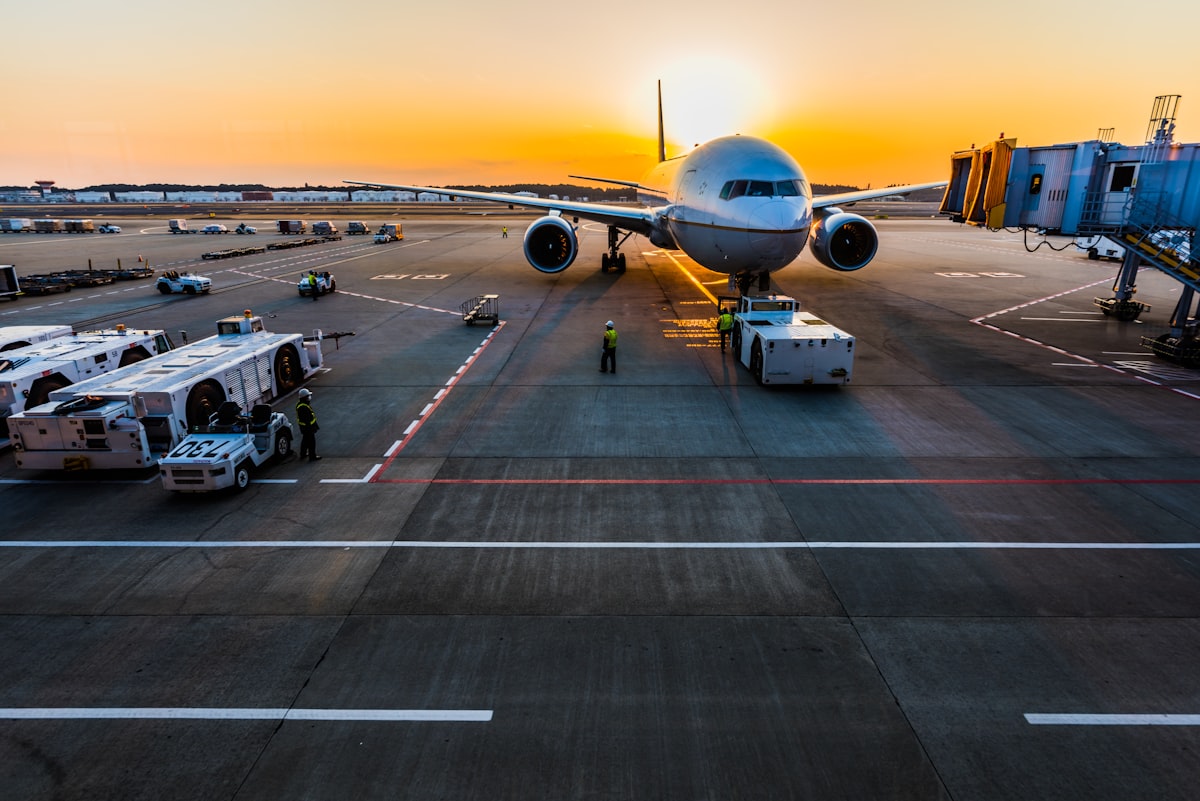
Shannon Airport is the smartest inbound airport for any golf trip centered on the southwest of Ireland. The 3,199-meter runway, Ireland’s longest, was originally built to handle the heaviest transatlantic aircraft, and Shannon retains full pre-clearance facilities for US-bound passengers. For summer 2026, Aer Lingus operates daily Shannon-to-Boston and Shannon-to-New York (JFK) services, with three additional weekly Boston flights running mid-May to August 20, bringing total North American seat capacity from Shannon to over 350,000 for the season, the highest since 2018. United also operates seasonal Shannon-to-Newark service.
What makes Shannon unique for golfers is the geography. From the terminal exit, Lahinch is 50 minutes by car. Doonbeg is 60 minutes. Ballybunion is 75 minutes via the Killimer-Tarbert ferry. Tralee Golf Club is 90 minutes. The Killarney courses sit two hours south. Even Old Head of Kinsale, traditionally a Cork Airport target, is 2.5 hours from Shannon. A four-day southwest links itinerary that begins and ends at Shannon eliminates two long drives, the four-hour Dublin-to-Lahinch transit you’d otherwise face on day one and again on departure day.
Shannon’s compact size is a feature, not a limitation. Walk-times from gate to baggage claim run 5-10 minutes, and rental car desks sit immediately past the carousel. For groups of four with golf bags, the simplicity beats Dublin’s larger footprint. The airport also handles charter and private aviation traffic, useful for groups large enough to consider chartering directly into the southwest.
Cork Airport (ORK), Cork & West
Cork Airport is Ireland’s second-largest airport by passenger volume and serves as the gateway for the south coast, Cork city, Kinsale, Old Head, Fota Island, and onward to the Ring of Kerry. As of 2026, Cork has no direct transatlantic services. The last US route, a Norwegian Air seasonal Boston/Providence flight, ended in 2019. Cork Airport leadership has publicly courted American Airlines, JetBlue, Aer Lingus, and Breeze Airways for restored transatlantic service, but no carrier has committed for the 2026 season.
That doesn’t make Cork irrelevant. American golfers flying to Cork typically transit through London Heathrow, London Gatwick, Amsterdam, or Paris on a one-stop itinerary. Aer Lingus operates frequent Cork-Heathrow and Cork-Amsterdam services that connect smoothly with US-origin flights. The trade-off is a two-hop journey that adds three to five hours versus a Dublin or Shannon direct, in exchange for landing within 30 minutes of Old Head, 45 minutes of Fota Island, or two hours of the Killarney area.
If your trip is exclusively south Munster, Old Head, Fota, Killarney, Waterville, the Ring of Kerry, Cork is worth the connection. If you’re combining south Munster with the Lahinch–Ballybunion stretch, Shannon usually wins on total travel time even though it’s slightly farther from Cork city.
Belfast Airports (BFS, BHD)
Northern Ireland operates two airports, and the distinction matters for golf trip planning. Belfast International (BFS) sits 18 miles northwest of the city and handles longer-haul aircraft, charter operations, and most leisure traffic. Belfast City (BHD), formally George Best Belfast City Airport, sits four miles from city center and primarily serves UK and Irish regional traffic via shorter runways unsuitable for transatlantic widebodies.
For US travelers, Belfast International is the practical option. United Airlines and Delta have operated seasonal direct service in past summers, and connections through London Heathrow on British Airways or Aer Lingus partner services bring you in on a one-stop. From BFS, Royal Portrush sits 60 minutes by car, Portstewart 65 minutes, Castlerock 70 minutes, and Royal County Down about 75 minutes south. For a Causeway Coast and County Down trip, BFS eliminates the 2.5-3.5-hour drive from Dublin entirely.
Belfast City (BHD) makes sense for golfers connecting from London. Aer Lingus Regional, operated by Emerald Airlines, runs frequent BHD service to Heathrow, London City, Manchester, Edinburgh, Glasgow, and Birmingham. If you’re flying to London first for business or leisure and then on to golf, BHD’s central location can save an hour at each end versus BFS. Bag fees and check-in cutoffs follow the operating partner, not Aer Lingus mainline.
Knock & Donegal Airports, Regional Connections
Two regional airports serve the northwest and far west of Ireland, and both are worth knowing about for specialist itineraries. Ireland West Airport Knock (NOC) in County Mayo is on track for one million passengers in 2026, a 40 percent increase over pre-pandemic levels. Ryanair and Aer Lingus operate the bulk of Knock’s 18 destinations, all within Europe, primarily UK cities (London Stansted, Manchester, Birmingham, Edinburgh), plus seasonal Mediterranean leisure routes. There are no direct US flights from Knock.
For golfers, Knock makes sense if you’re targeting the northwest links circuit, Carne Golf Links (35 minutes), Enniscrone (50 minutes), County Sligo at Rosses Point (75 minutes), and onward to Ballyliffin (3 hours). The typical routing from the US is JFK or Boston to London Stansted on a budget carrier, then Ryanair Stansted-Knock. Total travel time is 14-16 hours, but you arrive within an hour of your first tee.
Donegal Airport (CFN) at Carrickfinn is one of the most scenic landings in Europe and has been voted among the world’s most beautiful approaches. Loganair operates limited service to Glasgow and Dublin. For a Ballyliffin-focused trip, Donegal offers the absolute shortest transfer, under an hour to the courses, but flight options are constrained and most US golfers reach Ballyliffin via Belfast (3 hours) or Dublin (3.5 hours).
Direct Routes from the US 2026
Summer 2026 is the largest transatlantic season in Irish aviation history. Aer Lingus alone operates 20 US routes, 18 from Dublin and two from Shannon, and US carriers add another dozen direct services. The table below summarizes the primary nonstop options for golf travelers.
| US Origin | Destination | Airlines | Frequency |
|---|---|---|---|
| New York (JFK) | Dublin | Aer Lingus, Delta, JetBlue (seasonal) | Multiple daily |
| New York (EWR) | Dublin | United, Aer Lingus | 2x daily |
| Boston (BOS) | Dublin | Aer Lingus, Delta, JetBlue (seasonal) | Daily |
| Boston (BOS) | Shannon | Aer Lingus | Daily + 3 extra weekly summer |
| New York (JFK) | Shannon | Aer Lingus | Daily seasonal |
| Newark (EWR) | Shannon | United | Daily seasonal |
| Chicago (ORD) | Dublin | Aer Lingus, United, American | Multiple daily |
| Atlanta (ATL) | Dublin | Delta | Daily |
| Minneapolis (MSP) | Dublin | Delta | Seasonal daily |
| Detroit (DTW) | Dublin | Delta | Seasonal daily |
| Washington (IAD) | Dublin | United, Aer Lingus | 2x daily summer |
| Philadelphia (PHL) | Dublin | American | Year-round daily |
| Charlotte (CLT) | Dublin | American | Daily seasonal |
| Dallas (DFW) | Dublin | American, Aer Lingus | Daily seasonal |
| Los Angeles (LAX) | Dublin | Aer Lingus | Daily seasonal |
| San Francisco (SFO) | Dublin | Aer Lingus, United | Daily seasonal |
| Seattle (SEA) | Dublin | Aer Lingus | Daily seasonal |
| Orlando (MCO) | Dublin | Aer Lingus | Daily seasonal |
| Miami (MIA) | Dublin | Aer Lingus | Daily seasonal |
| Raleigh-Durham (RDU) | Dublin | Aer Lingus (new 2026) | Seasonal |
| Pittsburgh (PIT) | Dublin | Aer Lingus (new 2026) | Seasonal |
The list rewards planning. Golfers in the Carolinas finally have a direct option in 2026 with the Raleigh-Durham launch. Pittsburgh and the western Pennsylvania catchment gains a same. The summer-only nature of many routes, Detroit, Minneapolis, San Francisco, Seattle, Orlando, Miami, means winter golfers (March, October, November) often need to connect through New York, Boston, or Chicago.
Best Airline for Golfers: Aer Lingus
Aer Lingus is the default choice for most American golf travelers, and the reasons go beyond brand familiarity. Three hubs, Dublin, Shannon, Manchester, give Aer Lingus the only network that lets you fly direct to multiple Irish entry points without a transatlantic connection. The carrier’s transatlantic fleet is modern (A321XLR and A330-300), the cabin crew is consistently rated, and the Dublin and Shannon pre-clearance facilities make the homeward journey dramatically smoother than a return through London or Amsterdam.
For golfers specifically, the Aer Lingus sports equipment policy is the practical advantage. On long-haul transatlantic routes, sporting equipment, including a single golf bag, can be carried as part of your standard checked baggage allowance at no additional charge, provided it falls within your standard bag count and weight (typically 23 kg for economy, 32 kg for AerSpace and business). If your golf bag is in addition to your standard luggage, the long-haul fee is £75 per item. Business class tickets carry sports equipment free regardless of count. Aer Lingus does cap golf bags at 12 per flight, so groups of four or more should call to confirm availability when booking.
The other practical Aer Lingus advantage is loyalty mileage. AerClub partners with American Airlines AAdvantage, Alaska Mileage Plan, British Airways Avios, and JetBlue TrueBlue, giving golfers a wide redemption ecosystem. Award availability on Aer Lingus through AAdvantage and Avios partners is generally better than direct redemptions on US carriers for the same routes.
US Carriers: Delta, United, JetBlue, AA
The four major US carriers all serve Dublin, with varying degrees of commitment and product quality. Each has trade-offs worth understanding before you book.
United Airlines operates the largest US-carrier presence in Ireland with 35 weekly departures and three nonstop Dublin destinations: Newark (EWR, twice daily in summer), Chicago (ORD, daily), and Washington Dulles (IAD, doubled to twice daily for summer 2026). United also operates seasonal Newark-Shannon service. The Polaris business class on the 757-200 transatlantic fleet is well-regarded; United’s economy product is standard-issue domestic carrier. Star Alliance redemption breadth makes United useful for golfers using United MileagePlus or partner programs like Air Canada Aeroplan.
Delta Air Lines serves Dublin from Atlanta (ATL), Boston (BOS), New York (JFK), Minneapolis (MSP), and a 2025-launched Detroit (DTW) route, five total routes in summer 2026. Delta’s transatlantic widebodies (A330, A350) carry a stronger Premium Select premium economy product than United, and the SkyMiles partnership with Virgin Atlantic offers connecting flexibility through London if needed. Delta is the strongest US carrier for golfers based in the southeast.
JetBlue operates seasonal Boston-Dublin (resumes April 16, 2026) and JFK-Dublin (resumes April 29, 2026) on the A321LR. JetBlue’s Mint business class is the value pick on transatlantic, fully flat suites at fares typically below Aer Lingus, Delta, and United business class. The economy “Core” product on transatlantic A321LRs is also genuinely competitive. The catch: JetBlue’s Dublin service is summer-only, so March/April/October trips usually require a different carrier.
American Airlines operates year-round Philadelphia-Dublin and seasonal summer routes from Chicago (ORD), Charlotte (CLT), and Dallas (DFW). American’s Boeing 777 and 787 product is consistent with its transatlantic fleet generally. AA’s AAdvantage program is the strongest US partner for Aer Lingus, so even if you fly American on the metal, your miles cross-credit smoothly.
Connecting Through London
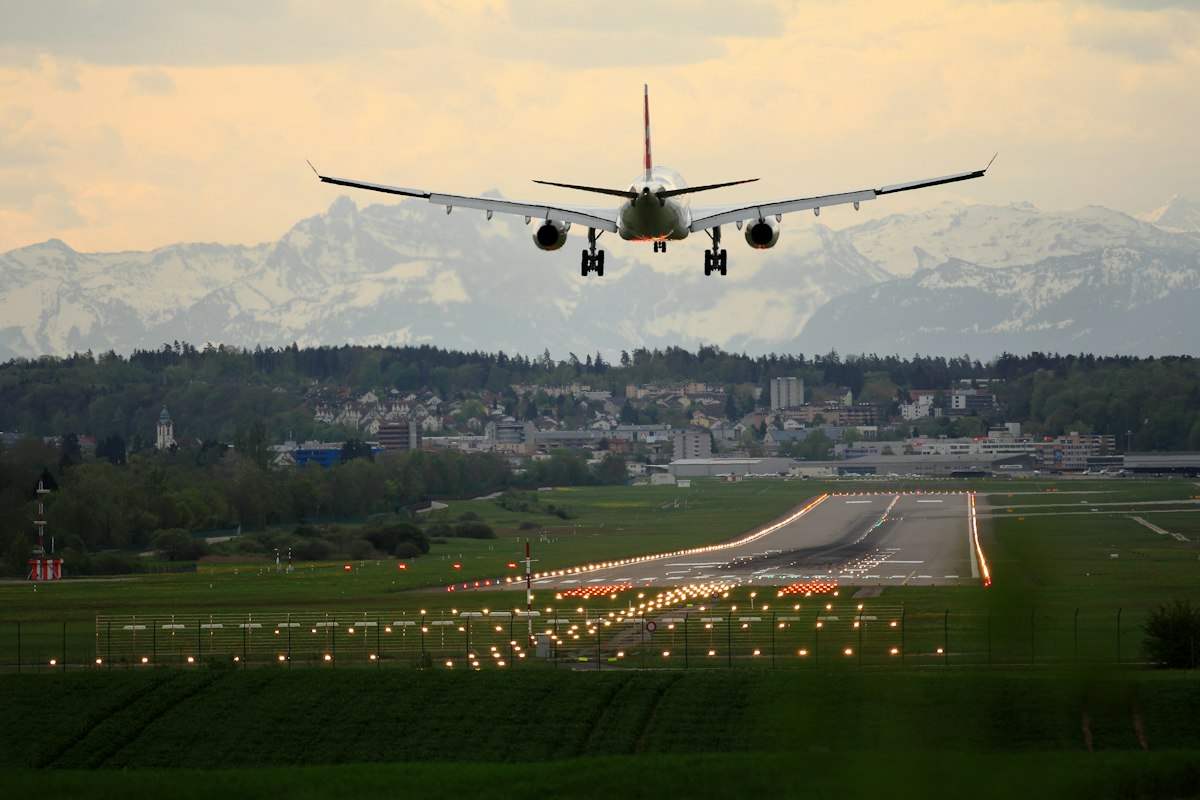
For golfers in cities without a direct Ireland flight, Houston, Denver, Phoenix, Salt Lake, Portland, Nashville, Tampa, much of the West outside California, connecting through London is often the only or cheapest option. The two viable London transit airports for Ireland-bound traffic are Heathrow (LHR) and, less frequently, Gatwick (LGW).
British Airways operates the densest LHR-Dublin schedule (12+ daily), with frequent service to Cork, Belfast City, and Shannon. Aer Lingus also runs LHR-Dublin and LHR-Belfast City service. Connection times at Heathrow can be deceiving, minimum legal connection is 90 minutes between terminals, but T2 (Star Alliance) to T5 (BA) transfers via the inter-terminal bus eat 45 minutes alone. Build at least 2.5 hours into any Heathrow connection involving a terminal change, and 3 hours if you’re flying with golf bags that require gate-checking confirmation.
Heathrow’s main downside for golfers is bag connectivity. London is the world’s worst airport for short-connection misconnects, particularly during summer thunderstorms and the November/December weather window. If your golf clubs miss your Dublin connection, you might play your first round in rentals while AA, BA, or Aer Lingus locates the bag. Travel insurance with baggage delay coverage and a backup pair of golf shoes in your carry-on are sensible precautions when transiting Heathrow.
Booking Strategy
Transatlantic fares to Ireland follow a predictable seasonality. Summer (June, July, August) is peak, fares run $1,200-$1,800 economy roundtrip from East Coast hubs, $1,500-$2,200 from Midwest, $1,800-$2,500 from West. Shoulder season (May, September) typically saves 25-30 percent. October and April-early May are even better, often $700-$1,000 East Coast economy roundtrip. November-February is cheapest but most golf courses are at winter rates with limited daylight.
Book transatlantic golf trips 8-11 months out for the best combination of fare and seat selection. Fares typically bottom 10-11 months from departure for premium economy and business class, and 6-9 months for economy. The “myth” that booking in the final 21 days delivers savings rarely holds for transatlantic, it’s a domestic rule that breaks down on long-haul. Use Google Flights or Kayak fare-tracking with flexible date searches to identify the cheapest week within your travel window.
Mileage strategy depends on which credit card and airline ecosystems you already participate in. AAdvantage and Alaska Mileage Plan offer the best Aer Lingus award availability and pricing, typically 57,500-60,000 miles for economy roundtrip and 110,000-130,000 miles for business class. Avios (BA, Iberia, Aer Lingus, Qatar) are valuable for short-haul UK-Dublin segments. United MileagePlus saver-level Polaris awards to Dublin start at 60,000 miles each way but vary by date. JetBlue TrueBlue redemptions on the seasonal Dublin route can be exceptional value when fare is high.
Premium Economy & Business Class
The case for upgrading to premium economy or business class on the Ireland flight is unusually strong, and it comes down to the schedule. Most US-Ireland flights are red-eyes, wheels-up around 5-9 PM East Coast time, arrival in Dublin or Shannon at 5-9 AM local. After that landing, you’re driving 90 minutes to two hours to your hotel, possibly heading directly to a tee time that afternoon. Sleep on the plane is the difference between Day 1 being a golf day and Day 1 being a shower-and-nap day.
Aer Lingus AerSpace (premium economy) typically prices $300-$700 above economy on transatlantic routes. The seat is a standard 38-inch pitch recliner, not flat, but the differential to a real bed is the differential between sleeping fitfully and not sleeping at all. Aer Lingus business class is full flat-bed and runs $2,500-$4,500 above economy, often $1,000-$2,000 above premium economy. For a once-in-a-decade golf trip with an early Day 1 tee time, the math frequently works.
Delta Premium Select on the A330 is the strongest premium economy product to Dublin. JetBlue Mint business is the strongest value business class, frequently $1,500-$2,500 above economy, with fully flat seats and direct aisle access. United Polaris is solid; American Flagship Business is solid. For a four-person group splitting the cost difference, business class translates to roughly $300-$500 per person per night of “saved” sleep, close to what a luxury hotel night runs in Killarney or County Down.
Flying With Golf Clubs
Every transatlantic carrier serving Ireland accepts golf bags, but fees and policies differ. The summary below covers economy fares; business and premium cabins typically include golf equipment free.
| Airline | Golf Bag Fee (Economy, Transatlantic) | Oversize Policy | Notes |
|---|---|---|---|
| Aer Lingus | £75 / €87 if extra; included if within standard allowance | 62 linear inches accepted as standard | Max 12 golf bags per flight; book early |
| Delta | Standard checked bag fee (~$75 first international bag) | Up to 115 linear inches; 50 lb weight | Oversize fee waived for golf bags |
| United | Standard checked bag fee | Hard or soft case required | One set of clubs, balls, shoes per passenger |
| American | Standard checked bag fee (~$75 first international bag) | 1 bag, 14 clubs max, 12 balls, 1 pair shoes | Free if within weight allowance |
| JetBlue | Standard checked bag fee | Up to 80 linear inches | Mint includes 2 free checked bags |
| British Airways (connecting) | Standard checked bag fee | 190 cm length, 23 kg weight | Sports equipment counts as one bag |
Two universal rules apply regardless of airline. First, use a hard or hybrid case, the Sun Mountain ClubGlider, Club Glove Last Bag, and SKB Roto-Molded cases are the proven options. Soft travel bags fail at transatlantic baggage handling rates. Second, photograph your clubs before check-in and remove anything fragile (electronics, range finders, watches) to your carry-on. Damage claims require evidence, and transit insurance only pays out with documentation.
Pre-Clearance at Dublin & Shannon
US Customs and Border Protection operates pre-clearance facilities at both Dublin Airport and Shannon Airport, a significant advantage that affects your homeward planning. Pre-clearance means you complete US immigration and customs inspection in Ireland before boarding your flight home. When you land in the United States, you arrive as a domestic passenger and walk straight off the jetway to baggage claim or your connecting flight.
The practical benefits are substantial. If your final destination is connected via JFK, Boston, Newark, Atlanta, Chicago, Detroit, or any other US airport, you’re not standing in immigration lines after a seven-hour flight, you’re transferring as a domestic passenger with significantly shorter connection time minimums. For tight connections, pre-clearance often makes the difference between making your connection and missing it.
The trade-off is that pre-clearance requires earlier airport arrival on the outbound side from Ireland. Plan to be at Dublin or Shannon three hours before US-bound flights, two for check-in and bag drop, plus a full hour for pre-clearance processing during peak periods. The pre-clearance facility includes its own security check (separate from the standard airport security you cleared on arrival), so allow time for shoe-off, laptop-out screening. Shannon’s pre-clearance is generally faster than Dublin’s because of lower volume.
Connecting to Your Region After Landing
The cost of choosing the wrong airport shows up as drive time. The numbers below are realistic estimates including typical traffic and a reasonable rest stop, not Google Maps best-case figures.
From Dublin Airport:- The K Club: 45 minutes
- Carton House: 30 minutes
- Druids Glen: 40 minutes
- Royal County Down: 1 hour 45 minutes
- Royal Portrush: 3 hours 15 minutes
- Lahinch: 3 hours 30 minutes
- Old Head: 3 hours 45 minutes
- Ballybunion: 4 hours
- Tralee: 4 hours 30 minutes
- Lahinch: 50 minutes
- Doonbeg: 1 hour
- Adare Manor: 45 minutes
- Ballybunion: 1 hour 15 minutes
- Tralee: 1 hour 30 minutes
- Killarney: 2 hours
- Old Head: 2 hours 30 minutes
- Royal Portrush: 1 hour
- Portstewart: 1 hour 5 minutes
- Castlerock: 1 hour 10 minutes
- Royal County Down: 1 hour 15 minutes
- Ardglass: 1 hour 30 minutes
- Ballyliffin: 3 hours
The Dublin-to-Lahinch and Dublin-to-Ballybunion drives are the most commonly underestimated. Both involve crossing the country on routes that include single-carriageway sections, and the actual door-to-door time after a 7-hour overnight flight is closer to 4-4.5 hours than the 3.5 hours Google suggests. If you’re flying overnight and tackling that drive, plan a coffee stop and ideally a 30-minute nap at a service area.
Open-Jaw Itineraries
An open-jaw ticket, flying into one airport and out of another, is the single most underused strategy for Ireland golf trips, and it’s worth more than most travelers realize. Aer Lingus, Delta, United, and American all sell open-jaw bookings through their main websites. The fare typically prices as a one-way + one-way combination, which is sometimes more expensive but often nearly identical to a roundtrip into a single airport.
The classic Ireland open-jaw is Belfast-in, Shannon-out (or the reverse). You begin in Northern Ireland, Royal Portrush, Royal County Down, the Causeway Coast, then drive south through County Down, the midlands, and into the southwest, ending at Lahinch, Doonbeg, or Ballybunion before flying home from Shannon. This eliminates the backtrack drive that a roundtrip itinerary forces. A six-day Belfast-in-Shannon-out trip plays Royal Portrush, Royal County Down, the K Club (or skip), Lahinch, and Doonbeg with no double-driving.
The trade-offs are rental car drop fees and slightly more complex logistics. Most rental car companies charge €100-€200 for one-way returns within Ireland, significant but cheaper than a half-day of fuel and a hotel night you’d otherwise spend retracing your route. Larger groups should price both the open-jaw and the roundtrip-with-internal-flight scenarios. For shorter trips (4-5 days), open-jaw rarely pays off; for 6+ days covering more than two regions, it almost always does.
Common Mistakes
The mistakes below are the recurring patterns that turn good golf itineraries into logistical headaches.
- Booking Dublin for a southwest trip: The single most common error. Lahinch, Ballybunion, and Doonbeg are all 3.5-4+ hours from Dublin. Shannon adds a small fare premium but saves roughly seven hours of driving across an inbound and outbound day.
- Ignoring the connection on day-of-arrival: If your flight lands in Dublin at 6 AM and you’re due at Lahinch by 1 PM, you’re banking on perfect motorway conditions, no baggage delay, and aggressive driving. Build in margin or accept that Day 1 may be a transit day.
- Not booking with Aer Lingus when traveling with golf clubs: Aer Lingus’s standard transatlantic baggage allowance accommodates a golf bag at no fee for most fare classes, while US carriers charge $75-$200 for the same bag. Across four travelers, that’s $600-$1,600 in fees on the cheaper carriers.
- No flexibility on dates: Tuesday-Wednesday departures from the US to Ireland and Sunday-Monday returns are typically $200-$600 cheaper per ticket than Friday-Saturday. Two-day flexibility on each end frequently saves a four-figure sum on a group trip.
- Skipping pre-clearance benefit math: Choosing a London connection over a slightly more expensive Dublin direct ignores the homeward-side time savings of pre-clearance. The Dublin direct often gets you home sooner and with less customs friction.
- Underestimating Heathrow connections: 90 minutes is theoretically legal between Heathrow terminals, but baggage transfers fail regularly. Build 2.5 hours minimum for terminal-change connections and check golf-bag handling protocol with the operating airline.
- Not accounting for return-day pre-clearance: Pre-clearance requires 3 hours at Dublin or Shannon. Don’t book a 7 AM departure that requires a 4 AM hotel checkout after a late dinner the night before.
- Skipping travel insurance: A canceled outbound, a missed connection, or a lost golf bag on a $5,000-$10,000 group trip is a financial event that insurance handles for $50-$150 per ticket. Worth it.
Related guides
- Ireland Golf Travel Guide (2026) — Practical Tips for Visitors
- Tipping Etiquette in Ireland — Caddie, Hotel & Restaurant Guide
- Getting Between Golf Courses in Ireland — Distances & Routes
- Irish Golf Etiquette & Dress Codes — What Visitors Need to Know
- Ireland Currency & Money Guide for Golfers — Euro vs Pound & Tips
- Phone & WiFi on an Ireland Golf Trip — Staying Connected Abroad
FAQ
Should I fly to Dublin or Shannon for an Ireland golf trip?
If your itinerary is centered on the southwest, Lahinch, Doonbeg, Ballybunion, Tralee, Killarney, fly Shannon. If it covers the east, Causeway Coast, or a multi-region tour, fly Dublin. Open-jaw between the two often beats either single-airport option for trips of six days or more.
Does Aer Lingus charge for golf bags on transatlantic flights?
Sporting equipment, including a golf bag, can travel as part of your standard transatlantic checked baggage allowance at no charge if it falls within your bag count and weight allowance. If carried in addition to your standard bag, the fee is £75 per item. Business class includes sports equipment free of charge regardless of count.
What is US pre-clearance, and where is it available in Ireland?
Pre-clearance is a US Customs and Border Protection facility that lets you complete US immigration and customs in Ireland before boarding your flight home. It’s available at Dublin Airport (Terminal 2) and Shannon Airport. Upon landing in the US, you’re treated as a domestic passenger with no further immigration checks.
Can I fly directly to Belfast from the US?
Direct US-to-Belfast service has been intermittent in recent years. Most US travelers reach Belfast via a connection through Dublin (1-hour flight or 2-hour drive), London Heathrow, or via United/Aer Lingus connecting itineraries. Check current schedules at booking time, as Belfast routes change seasonally.
Are direct flights from the US to Cork available?
No direct US-to-Cork flights operate as of 2026. Cork Airport is actively pursuing transatlantic carriers, but no service is confirmed for the season. American golfers reach Cork via connections through Dublin, London, Amsterdam, or Paris.
How much extra is business class on an Ireland flight, and is it worth it?
Business class typically costs $2,500-$4,500 above economy roundtrip. The case for upgrading is strongest on the outbound red-eye flight, flat-bed sleep means you arrive ready to play golf the same day. JetBlue Mint is the value option; Aer Lingus, Delta One, and United Polaris are all strong products. For multi-passenger groups, the per-person calculus often works.
How early should I book a transatlantic golf trip?
Book 8-11 months out for the best fare and seat availability, particularly for premium cabins. Tee times at the most popular courses (Royal County Down, Old Head, Adare Manor) often book 12+ months out, so flight booking should follow tee time confirmation by a few weeks.
What happens if my golf clubs don’t arrive when I do?
Most major Irish courses, including Lahinch, Adare Manor, Ballybunion, and Royal Portrush, offer rental club sets at €60-€100 per round. File a property irregularity report (PIR) at the arrival airport before leaving, keep your baggage tag, and note the airline’s claim portal. Travel insurance with baggage delay coverage typically reimburses rental costs and basic clothing for the first 24-48 hours.
Final Thoughts
Choosing the right airport for an Ireland golf trip is the single most consequential planning decision you make, and it’s the one most travelers default on. Dublin is the natural choice for east coast and Causeway Coast trips and offers the broadest US route map. Shannon is the unambiguous winner for any southwest itinerary, with the bonus of US pre-clearance and shorter terminal walks. Belfast saves hours for Causeway Coast and County Down trips. Cork makes sense for south Munster trips when you accept the connection. Knock and Donegal serve specialist northwest itineraries.
Aer Lingus is the default airline for most golfers because of its golf-friendly baggage policy, dual hubs at Dublin and Shannon, and US pre-clearance access. Delta, United, American, and JetBlue all add useful capacity from specific US cities; the right pick is whichever combines schedule, fare, and existing loyalty status. For 2026 specifically, the new Aer Lingus Raleigh-Durham and Pittsburgh routes deserve attention from southeast and Mid-Atlantic golfers, the JetBlue Mint Boston-Dublin product is the value sleeper for premium travelers, and American’s continued Philadelphia-Dublin year-round service remains the most reliable Mid-Atlantic option.
The best golf trip you can plan starts with a flight that drops you within an hour of your first tee. Match the airport to the itinerary, lock in tee times before flights, and use the open-jaw structure when your route covers more than one region. The flight is the foundation; everything that follows, courses, hotels, restaurants, drives along the Wild Atlantic Way, is built on top of getting the airport right.